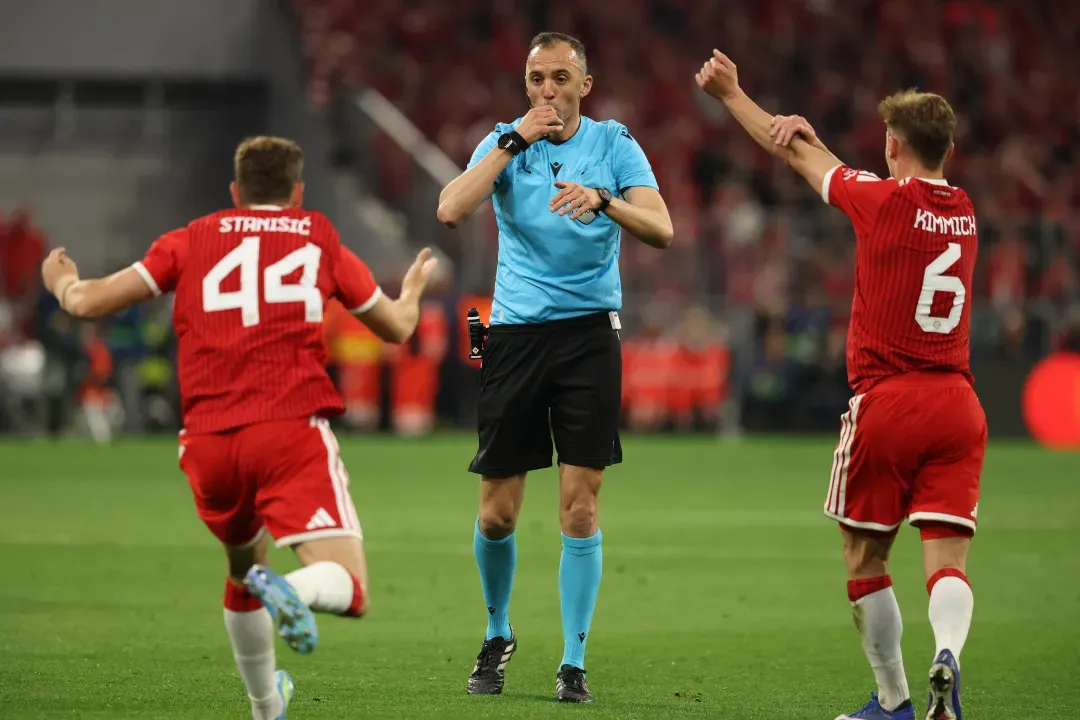
FC Barcelona are closely monitoring the evolving situation surrounding Julián Álvarez as the Argentine forward’s disappointing European campaign could influence his long-term future. Alvarez had reportedly prioritized competing for major continental honors this season after previously missing out on domestic silverware, but recent setbacks have intensified speculation regarding his next career move. Barcelona, meanwhile, are believed to be strategically positioning themselves to capitalize on the situation despite ongoing financial limitations. The developing transfer narrative highlights the increasingly calculated nature of elite football recruitment, where sporting ambition, financial pressure, and long-term squad planning intersect within Europe’s highly competitive transfer economy.
Barcelona Reassess Transfer Strategy Around Julian Alvarez
Barcelona’s long-standing interest in Julián Álvarez appears to be gaining momentum as shifting competitive circumstances potentially reshape the Argentine forward’s future.
The Catalan club has reportedly maintained admiration for Alvarez’s tactical versatility, pressing intelligence, and attacking efficiency for several seasons. However, financial constraints and squad restructuring priorities previously complicated any realistic pursuit of the Argentine international.
Now, circumstances may be changing.
Recent disappointments in major competitions have intensified speculation surrounding Alvarez’s ambitions and long-term sporting objectives. Sources close to the European football market suggest the player had hoped to compete for the UEFA Champions League title this season after earlier falling short in domestic cup competition.
Those setbacks have inevitably triggered renewed discussions surrounding career trajectory, competitive ambition, and future opportunities at the elite level.
Barcelona appear determined to position themselves strategically should a transfer window of opportunity emerge.
Sporting Frustration Could Influence Alvarez’s Next Move
For elite footballers operating at the highest level, career decisions are increasingly shaped by access to major trophies and long-term project stability.
Alvarez, widely regarded as one of world football’s most complete modern forwards, has rapidly established himself as a player capable of influencing matches at both club and international level. His work rate, positional intelligence, technical precision, and tactical adaptability have elevated his market value significantly within Europe’s transfer ecosystem.
However, top-level football is also driven by timing.
Players entering their peak competitive years often prioritize clubs capable of consistently challenging for major honors, particularly the UEFA Champions League. The inability to secure key trophies can alter internal dynamics, reshape career priorities, and accelerate transfer speculation.
Industry analysts believe Alvarez’s current situation reflects a broader trend in elite football, where ambitious players increasingly evaluate not only financial packages, but also sporting direction, managerial stability, and project credibility.
Barcelona are believed to view this moment as strategically significant.
Barcelona’s Financial Constraints Demand Tactical Recruitment
Despite their continued global stature, Barcelona remain constrained by financial realities that have fundamentally altered the club’s transfer strategy in recent years.
The Spanish giants continue to navigate salary limitations, financial restructuring pressures, and regulatory constraints linked to La Liga’s financial control mechanisms. As a result, Barcelona are no longer able to dominate the transfer market through unrestricted spending as they once did.
Instead, the club has increasingly adopted a more calculated recruitment model focused on timing, market inefficiencies, and long-term squad value.
Pursuing Alvarez under the current circumstances would likely require patience, negotiation leverage, and tactical financial engineering rather than direct bidding aggression.
Reports suggest Barcelona’s leadership believes sporting frustration and evolving player priorities could eventually create conditions favorable for negotiation. Rather than rushing into an expensive pursuit, the club appears willing to wait for a strategically advantageous moment.
This approach reflects the modern reality of football economics, where even historically dominant clubs must increasingly operate with financial discipline.
Alvarez Represents the Modern Elite Forward Profile
Barcelona’s interest in Alvarez is also rooted in the changing tactical demands of elite football.
Modern attacking systems increasingly prioritize forwards capable of combining technical creativity with relentless pressing intensity and positional flexibility. Alvarez fits that profile exceptionally well.
The Argentine is comfortable operating centrally, drifting into wider channels, or functioning within fluid attacking structures — qualities highly valued in possession-oriented systems historically associated with Barcelona’s football philosophy.
Additionally, Alvarez’s age profile aligns with the club’s broader emphasis on building a younger, sustainable core capable of competing over the long term rather than relying exclusively on short-term superstar acquisitions.
Football executives across Europe increasingly prioritize players who offer both sporting impact and long-term asset value, particularly in an era shaped by financial sustainability concerns.
The Transfer Market Enters a More Strategic Era
The Alvarez situation illustrates how modern football transfers have evolved beyond simple financial competition.
Elite recruitment now involves timing, contractual leverage, project presentation, and psychological positioning as much as raw spending power. Clubs frequently monitor player morale, competitive circumstances, and institutional instability before intensifying transfer efforts.
Barcelona’s reported patience reflects this changing landscape.
Rather than engaging in financially reckless negotiations, top clubs increasingly attempt to create favorable market conditions through strategic timing and long-term relationship management. Sporting disappointment, managerial transitions, or institutional uncertainty can all influence a player’s openness to change.
For Alvarez, future decisions are likely to depend on multiple variables, including sporting guarantees, tactical fit, managerial vision, and the broader competitive trajectory of his current club.
Barcelona’s Rebuilding Project Faces Defining Phase
Barcelona’s pursuit of players like Alvarez also reflects the club’s broader rebuilding ambitions.
After several turbulent seasons marked by financial instability and inconsistent European performances, the Catalan side is attempting to restore itself as a sustainable long-term contender at the highest level of European football.
Recruiting players entering or approaching their prime years has become central to that strategy.
The club’s leadership understands that future competitiveness will depend not only on commercial recovery, but also on assembling a balanced squad capable of competing consistently in the Champions League era dominated by financially powerful rivals.
An acquisition of Alvarez’s stature would therefore carry symbolic significance beyond tactical improvement alone.
Uncertainty Keeps the Market Watching
For now, Alvarez’s immediate future remains uncertain, and no formal transfer developments appear imminent. However, the growing speculation surrounding his long-term ambitions has ensured that Europe’s leading clubs remain attentive.
Barcelona’s calculated positioning suggests the club believes patience could eventually produce opportunity.
In modern football, where sporting disappointment often reshapes transfer markets as dramatically as financial negotiation, situations can evolve rapidly. What begins as competitive frustration frequently develops into strategic movement behind the scenes.
As Europe’s transfer landscape prepares for another high-stakes summer, Julián Alvarez’s future may emerge as one of the market’s most closely watched storylines — particularly for a Barcelona side searching for the next cornerstone of its sporting revival.
Comments