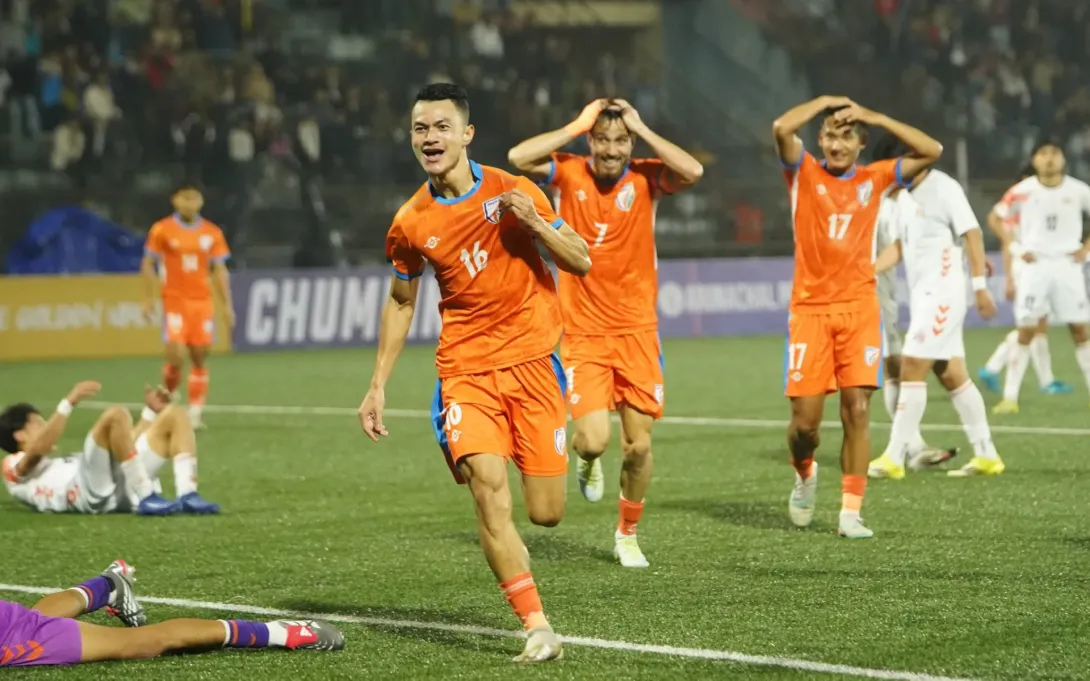
India’s youth football side, often referred to as the Blue Colts, endured a disappointing finish as they fell short in the final against Tajikistan despite entering the match as clear favourites. An early goal by Khaitov Azizbek in the ninth minute set the tone for a tightly contested encounter. While India dominated phases of play, inefficiencies in midfield coordination and attacking execution proved costly. Tajikistan, though wasteful with additional chances, held firm defensively to secure victory. The result highlights tactical gaps in India’s game management and underscores the fine margins that define outcomes in high-stakes international fixtures.
Early Blow Alters Match Dynamics
The final began on an unexpected note for the Indian side, widely tipped to lift the trophy following their dominant run in the tournament. Tajikistan seized early momentum when Khaitov Azizbek found the net in the ninth minute, capitalizing on defensive lapses to deliver a decisive early advantage.
This goal not only shifted the tactical balance but also placed India under immediate pressure, forcing them to chase the game for the remainder of the contest.
India’s Struggles in the Final Third
Despite controlling significant portions of possession, the Blue Colts were unable to translate dominance into tangible results. A lack of synchronization between midfield build-up and attacking movement hindered their ability to penetrate Tajikistan’s defensive structure.
The absence of clinical finishing further compounded the issue, with multiple opportunities going unconverted. From a performance analysis standpoint, these shortcomings reveal structural inefficiencies in both creative playmaking and execution under pressure.
Tajikistan’s Missed Opportunities but Defensive Resilience
While Tajikistan maintained their lead, they too had several opportunities to extend their advantage through counterattacks and open-play situations. However, inefficiency in front of goal prevented them from capitalizing on India’s defensive vulnerabilities.
Nevertheless, their defensive discipline and ability to absorb pressure proved sufficient to secure the win, reflecting a pragmatic approach often seen in high-stakes finals.
Expectations vs. Outcome: A Tactical Reality Check
India entered the final buoyed by a commanding 5-0 victory over Bhutan, a result that reinforced their status as tournament favourites. However, the final exposed critical gaps in adaptability and in-game decision-making.
High expectations, while indicative of progress, can also amplify the consequences of tactical lapses. The inability to adjust strategy after conceding early ultimately defined the outcome.
Broader Implications for Indian Football Development
The defeat serves as a valuable learning curve for India’s emerging football talent pipeline. While the team demonstrated technical capability and competitive intent, the match highlighted the need for improved cohesion, strategic flexibility, and composure in decisive moments.
From a broader perspective, consistent exposure to international competition and enhanced focus on tactical discipline will be crucial for India to transition from strong contenders to consistent champions on the global stage.
Conclusion
Although the loss will be viewed as a missed opportunity, it also provides critical insights into areas requiring refinement. The Blue Colts’ journey to the final reflects growing potential, but the inability to capitalize on key moments underscores the importance of precision and coordination in elite football.
For Tajikistan and Khaitov Azizbek, the victory represents a well-earned triumph built on early initiative and defensive resilience—hallmarks of championship-winning performances.
Comments