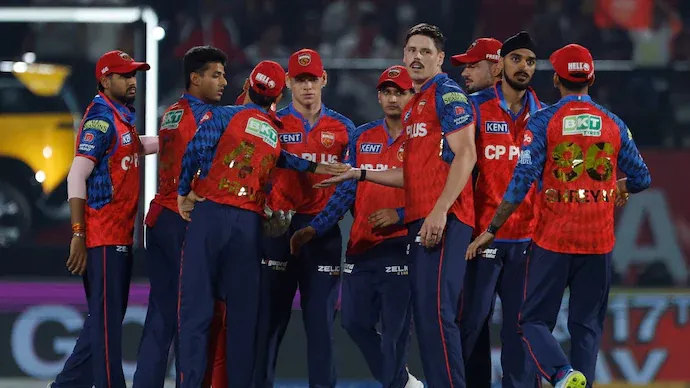
Punjab Kings endured a difficult outing at the HPCA Stadium in Dharamshala on May 11, as their bowling discipline unraveled against Delhi Capitals in an IPL 2026 fixture. Despite favorable conditions, Punjab Kings struggled to maintain line and length, conceding a costly 17 runs in wides along with a no-ball, allowing Delhi Capitals to stabilize a previously shaky middle order. The match highlighted Punjab’s ongoing issues with execution under pressure, while raising broader questions about tactical discipline and game management in high-stakes T20 cricket. The lapse proved decisive in a contest where small margins ultimately shaped momentum and control.
Punjab Kings Lose Control in Crucial Dharamshala Encounter
The IPL 2026 clash at the HPCA Stadium in Dharamshala exposed familiar vulnerabilities in the bowling unit of Punjab Kings.
Operating in conditions that typically assist disciplined seam and swing bowling, Punjab Kings instead struggled to maintain accuracy and composure. Their inability to consistently hit disciplined lengths allowed Delhi Capitals to recover from early pressure and rebuild their innings.
What should have been a phase of sustained bowling pressure instead turned into a sequence of avoidable extras, significantly easing the batting side’s burden during a critical stage of the match.
Extras Prove Costly in High-Pressure T20 Environment
One of the defining features of the contest was Punjab Kings’ lack of control over basic bowling discipline.
The team conceded 17 runs through wides along with a no-ball, a figure that proved particularly damaging in a tightly contested T20 match. In a format where margins are often razor-thin, such unnecessary concessions can decisively alter the balance of play.
For Punjab Kings, the issue was not merely the runs conceded but the timing of those errors, which arrived at moments when pressure on the batting side was beginning to build.
Instead of consolidating dominance, the bowling unit inadvertently provided relief to a struggling opposition middle order.
Delhi Capitals Capitalize on Bowling Lapses
Delhi Capitals demonstrated resilience by capitalizing on Punjab’s lack of discipline, using the additional deliveries and scoring opportunities to stabilize their innings.
What initially appeared to be a precarious batting situation gradually shifted as the Capitals benefited from inconsistent execution by the opposition attack. The extra runs not only improved the scoreboard position but also reduced psychological pressure on the batting unit.
In T20 cricket, such momentum shifts are often decisive. Once batting sides are given additional scoring opportunities, rebuilding phases become significantly easier, especially in the middle overs where risk management is crucial.
Tactical Concerns for Punjab Kings Continue to Mount
The performance has once again highlighted ongoing concerns around execution and tactical discipline within the Punjab Kings setup.
Despite possessing a competitive bowling attack on paper, the franchise has repeatedly struggled with consistency in execution under pressure situations. The inability to maintain disciplined lines and lengths has been a recurring theme throughout the IPL 2026 season.
Cricket analysts often emphasize that in modern T20 leagues, strategic clarity must be matched by technical precision. Punjab’s performance in Dharamshala suggested a gap between planning and execution that continues to undermine their competitiveness.
Shreyas Iyer’s Side Faces Execution Pressure
Under the leadership of Shreyas Iyer, Punjab Kings have shown flashes of strategic intent but have struggled to sustain consistency across full matches.
While leadership decisions often focus on field placements and bowling rotations, execution remains the ultimate determinant of outcomes in franchise cricket. In this match, even well-structured plans were undermined by repeated bowling errors and lapses in control.
The result reinforces the challenge facing leadership groups in converting tactical frameworks into disciplined on-field execution, particularly in high-pressure environments like the IPL.
The Fine Margins of IPL Cricket
The Dharamshala encounter once again illustrated the razor-thin margins that define outcomes in the Indian Premier League.
In a format where even a handful of deliveries can shift momentum, teams cannot afford lapses in discipline. Extras, missed lengths, and inconsistent execution often prove more decisive than individual moments of brilliance.
For Punjab Kings, the match served as another reminder that structural weaknesses in execution can outweigh tactical intent.
Conversely, for Delhi Capitals, the ability to capitalize on opposition errors reinforced the value of patience and opportunistic batting in T20 cricket.
Conclusion: Discipline Remains Punjab Kings’ Core Challenge
As IPL 2026 progresses, the performance in Dharamshala will likely be viewed as part of a broader pattern rather than an isolated lapse for Punjab Kings.
While talent and intent remain present within the squad, execution under pressure continues to define their season. Until those inconsistencies are addressed, the franchise risks repeating familiar outcomes in tightly contested matches.
For now, the contrast between Punjab’s erratic bowling and Delhi’s composed capitalization stands as a clear illustration of how discipline, more than raw ability, often determines success in modern T20 cricket.
Comments