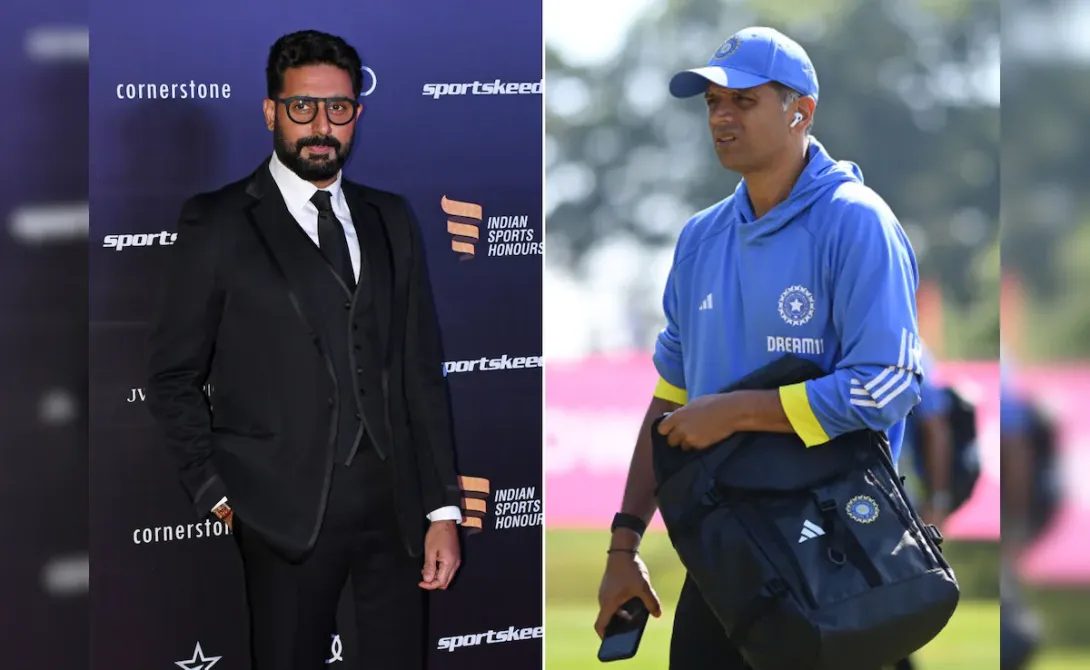
The European T20 Premier League (ETPL) marked a significant milestone in its global expansion strategy with the official unveiling of former India cricket captain Rahul Dravid as the owner of its Dublin-based franchise ahead of the league’s 2026 launch. The announcement, made in an understated manner in Dublin, reflects the league’s intent to position itself as a credible international cricket property rather than a spectacle-driven venture. ETPL co-owner Abhishek Bachchan emphasized Dravid’s reputation for integrity, leadership, and long-term vision as key reasons behind his inclusion. The development underscores the growing commercialization of franchise cricket in Europe and highlights the increasing convergence of sport, entertainment, and global investment strategies.
Rahul Dravid’s Quiet but Significant Move into Franchise Ownership
In a development that has drawn attention across global cricketing circles, former India captain Rahul Dravid has been officially announced as the owner of the Dublin franchise in the European T20 Premier League (ETPL), scheduled to launch in 2026.
The unveiling took place in Dublin and was marked by a deliberately understated presentation, reflecting the league’s broader philosophy of positioning itself as a serious sporting enterprise rather than a theatrically driven entertainment product.
Dravid’s entry into franchise ownership represents a notable shift in his post-playing career trajectory, further extending his influence within global cricket beyond coaching and administration into the commercial and strategic domain of franchise sport.
ETPL Positions Itself as a Credible Global Cricket Property
The European T20 Premier League has been steadily building its identity as an emerging international cricket competition aimed at expanding the sport’s footprint beyond traditional strongholds.
By securing high-profile cricketing figures such as Rahul Dravid, the league is signaling its intention to anchor credibility, experience, and institutional trust at the core of its business model.
Unlike many entertainment-heavy sporting ventures, ETPL appears to be focusing on long-term sustainability, governance structure, and strategic brand positioning. The inclusion of globally respected cricket personalities is central to that vision.
The Dublin franchise announcement is therefore not merely a personnel update, but part of a broader effort to establish legitimacy in an increasingly competitive global sports investment landscape.
Abhishek Bachchan Highlights Dravid’s Leadership Value
Commenting on the development, Abhishek Bachchan, co-owner of the ETPL, emphasized that Dravid’s involvement was driven by his reputation for discipline, credibility, and strategic foresight.
According to Bachchan, Dravid was selected not just as a symbolic figurehead but as a foundational influence capable of shaping the franchise’s long-term sporting philosophy.
Dravid’s career has long been associated with consistency, technical excellence, and leadership under pressure—qualities that align closely with the league’s ambition to build structurally sound and globally respected franchises.
The endorsement underscores a growing trend in franchise sport, where ownership groups increasingly prioritize reputational capital alongside financial investment.
Franchise Cricket’s Expanding European Footprint
The ETPL’s expansion into Europe reflects a broader transformation in global cricket economics. Traditionally dominated by South Asia, Australia, and the United Kingdom, franchise-based cricket is now actively exploring new markets with high commercial potential.
Europe, with its strong sporting infrastructure, multicultural audience base, and growing interest in T20 formats, represents a strategic growth frontier for the sport.
The Dublin franchise announcement signals a calculated effort to position cricket within mainstream European sporting culture, where football has historically dominated commercial and audience attention.
If successful, the league could open new revenue channels through broadcasting rights, sponsorship partnerships, digital streaming platforms, and cross-market fan engagement strategies.
The Business Logic Behind High-Profile Sporting Appointments
The appointment of Rahul Dravid also reflects a broader shift in the economics of franchise sport.
Modern sporting leagues increasingly rely on the credibility of iconic athletes to attract investors, sponsors, and audiences. These individuals bring not only brand recognition but also institutional trust, which is critical in early-stage league development.
For emerging competitions like ETPL, such appointments serve multiple purposes: enhancing legitimacy, accelerating market penetration, and strengthening stakeholder confidence.
From a business perspective, Dravid’s involvement is expected to contribute significantly to the franchise’s valuation narrative and long-term commercial positioning.
Sport, Entertainment, and Investment Converge
The collaboration between sports figures and entertainment industry stakeholders such as Abhishek Bachchan highlights the increasingly hybrid nature of modern sports ecosystems.
Franchise leagues today operate at the intersection of athletics, media production, branding, and global investment flows. Success is no longer determined solely by on-field performance but also by narrative building, audience engagement, and strategic capital deployment.
The ETPL’s approach reflects this reality, combining cricketing expertise with entertainment industry experience to build a commercially viable sporting property from the ground up.
A Measured but Ambitious Step for Global Cricket Expansion
The unveiling of Rahul Dravid as the Dublin franchise owner represents a carefully calibrated step in the ETPL’s broader expansion strategy.
While the announcement was understated in tone, its implications are significant. It signals the league’s intention to establish itself not as a short-term commercial experiment, but as a structured, globally relevant cricketing institution.
As the 2026 launch approaches, the ETPL’s ability to integrate sporting credibility with commercial scalability will determine its long-term viability.
For now, Dravid’s entry into franchise ownership adds both symbolic weight and strategic depth to a league attempting to carve out space in an increasingly crowded global sports marketplace.
Comments