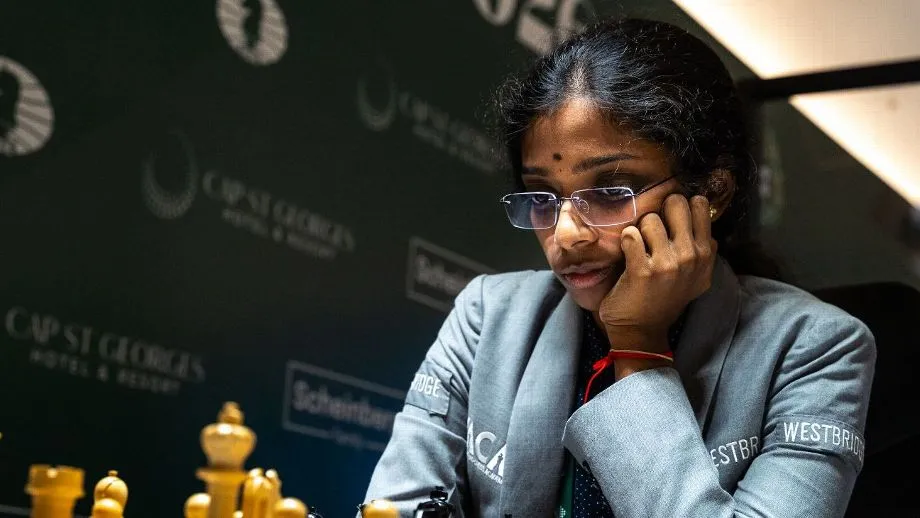
A new generation of chess prodigies is reshaping the global hierarchy, with R Vaishali, R Praggnanandhaa, and Javokhir Sindarov emerging as central figures in this transformation. Their recent performances in elite tournaments highlight a shift toward youthful dominance, characterized by precision, resilience, and strategic innovation. As established veterans face increasing pressure, these rising stars are not only securing victories but also redefining competitive benchmarks. Their ascent carries broader implications for the sport’s global dynamics, talent pipelines, and commercial viability, marking a pivotal phase in the evolution of professional chess.
A Generational Shift in Competitive Chess
The global chess ecosystem is undergoing a structural transition, driven by a cohort of exceptionally talented young players. Among the most prominent are R Vaishali, R Praggnanandhaa, and Javokhir Sindarov, whose performances have consistently disrupted established hierarchies.
Vaishali’s steady rise in women’s and open competitions reflects her adaptability and psychological resilience. Praggnanandhaa, already recognized for his victories against top-ranked players, continues to demonstrate an advanced understanding of positional play and endgame mastery. Meanwhile, Sindarov’s aggressive style and tactical sharpness have positioned him as one of the most formidable young contenders on the international stage.
Performance Metrics and Competitive Edge
What distinguishes these players is not merely their results but the efficiency and consistency underlying their performances. In high-level tournaments, where margins are minimal, their ability to convert advantages into wins has proven decisive.
Praggnanandhaa’s gameplay often reflects a balance between calculated risk and long-term planning, enabling him to outperform more experienced opponents. Vaishali’s strategic discipline allows her to maintain stability under pressure, while Sindarov’s dynamic approach frequently places adversaries on the defensive early in matches.
Such attributes are increasingly valuable in modern chess, where preparation, psychological endurance, and adaptability are critical success factors.
Economic and Commercial Implications
The emergence of these young grandmasters carries significant implications beyond the board. Chess, traditionally viewed as a niche intellectual sport, is experiencing renewed commercial interest driven by digital platforms, sponsorships, and global viewership.
Players like R Praggnanandhaa and R Vaishali contribute to India’s growing prominence in the chess economy, attracting institutional support and investment. Similarly, Javokhir Sindarov represents the strengthening of Central Asia’s presence in elite chess circuits.
Their success enhances marketability, influences sponsorship dynamics, and reinforces the sport’s appeal to younger audiences globally.
Strategic Depth and Evolving Playstyles
Modern chess is increasingly defined by hybrid playstyles that integrate classical principles with advanced computational preparation. These players exemplify this evolution.
Vaishali’s positional solidity, Praggnanandhaa’s deep preparation, and Sindarov’s tactical aggression collectively illustrate the diverse approaches shaping contemporary chess. Their games often feature complex middlegame structures, innovative opening choices, and precise endgame execution—hallmarks of next-generation mastery.
Future Outlook: Sustained Growth and Global Influence
As these players continue to mature, their influence on the global chess landscape is expected to expand significantly. Their trajectories suggest sustained competitiveness at the highest levels, potentially challenging long-standing dominance by established grandmasters.
For stakeholders—including federations, sponsors, and digital platforms—the rise of such talent presents opportunities to further commercialize and globalize the sport. Increased visibility, enhanced engagement, and expanding revenue streams are likely outcomes of this generational shift.
Conclusion
The ascent of R Vaishali, R Praggnanandhaa, and Javokhir Sindarov signals more than individual success—it represents a transformative phase in professional chess. Their performances embody a blend of intellectual rigor, strategic innovation, and competitive resilience. As they continue to redefine benchmarks, the sport itself stands poised for a new era of global relevance and economic expansion.
Comments