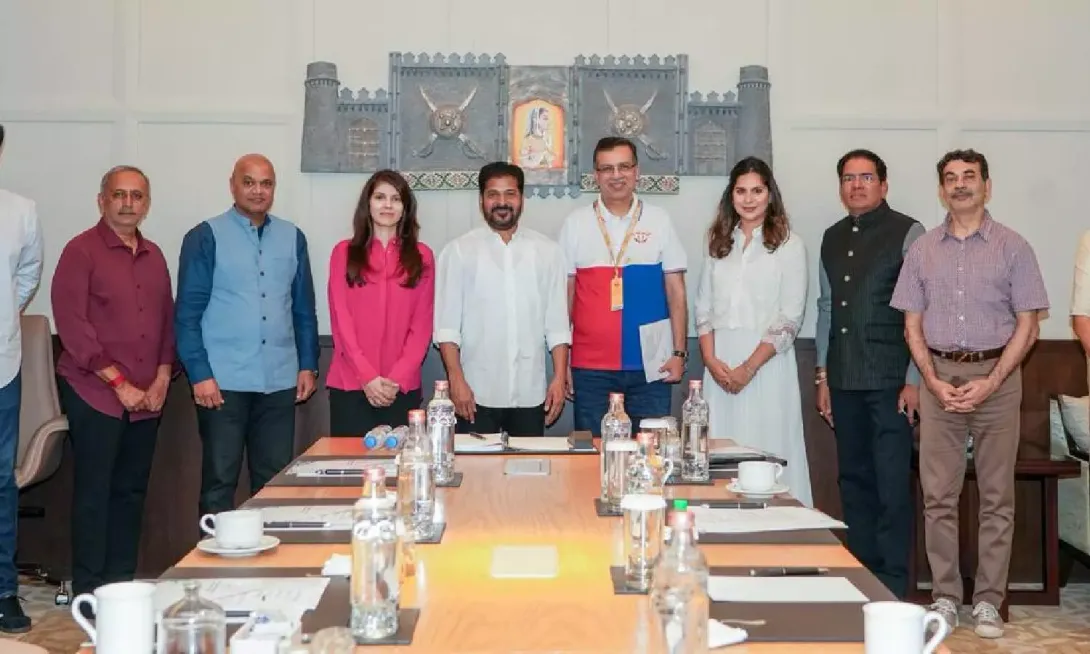
The Telangana government convened a high-level review meeting to strategize the development of Gachibowli Stadium, signaling a renewed focus on enhancing the state’s sports infrastructure. Chaired by the Chief Minister, the session included key stakeholders from Telangana Sports Hub, including Chairman Sanjiv Goenka, Co-Chairperson Upasana Konidela, and board members Kavya Maran and C. Shashidhar, alongside Special Chief Secretary Jayesh Ranjan and Sports Authority Managing Director Soni Bala. The discussion outlined a roadmap aimed at modernizing the stadium to meet national and international sporting standards.
Strategic Review of Gachibowli Stadium
The meeting underscored the Telangana government’s commitment to positioning Gachibowli Stadium as a premier venue for national and international sporting events. Attendees discussed infrastructure upgrades, technological enhancements, and facility expansion to accommodate multi-disciplinary sports.
Emphasis was placed on aligning the stadium’s development with broader urban and sports planning initiatives, ensuring accessibility, sustainability, and modern amenities for athletes and spectators alike.
Key Stakeholders and Governance
The session brought together leaders from both the Telangana Sports Hub and government administration, reflecting a collaborative approach to sports infrastructure development. Chairman Sanjiv Goenka and Co-Chairperson Upasana Konidela provided strategic oversight, while members Kavya Maran and C. Shashidhar contributed insights on operational management.
Special Chief Secretary Jayesh Ranjan and Sports Authority Managing Director Soni Bala highlighted policy frameworks and regulatory considerations, ensuring that the stadium’s modernization adheres to both national standards and international best practices.
Roadmap for Development
Key discussion points included upgrading seating, lighting, and training facilities, enhancing digital and broadcast infrastructure, and introducing athlete-centric amenities. Plans also focus on sustainability initiatives, such as energy-efficient systems and water conservation, aligning with Telangana’s broader urban development goals.
The roadmap aims to make Gachibowli Stadium a hub for talent development, hosting national leagues, international fixtures, and high-performance training programs.
Implications for Telangana’s Sports Ecosystem
Modernizing Gachibowli Stadium is expected to strengthen Telangana’s position as a leader in Indian sports infrastructure. Improved facilities will attract top-tier competitions, foster grassroots development, and provide a world-class environment for athletes.
By integrating strategic planning with operational excellence, the project also has the potential to enhance tourism, generate revenue through events, and catalyze the growth of the state’s sports economy.
Conclusion
The Telangana government’s proactive engagement with the Sports Hub and key stakeholders signals a focused, forward-looking approach to sports infrastructure. As Gachibowli Stadium undergoes modernization, it is poised to become a flagship venue that supports elite performance, broadens spectator engagement, and reinforces Telangana’s commitment to sports development at both national and international levels.
Comments