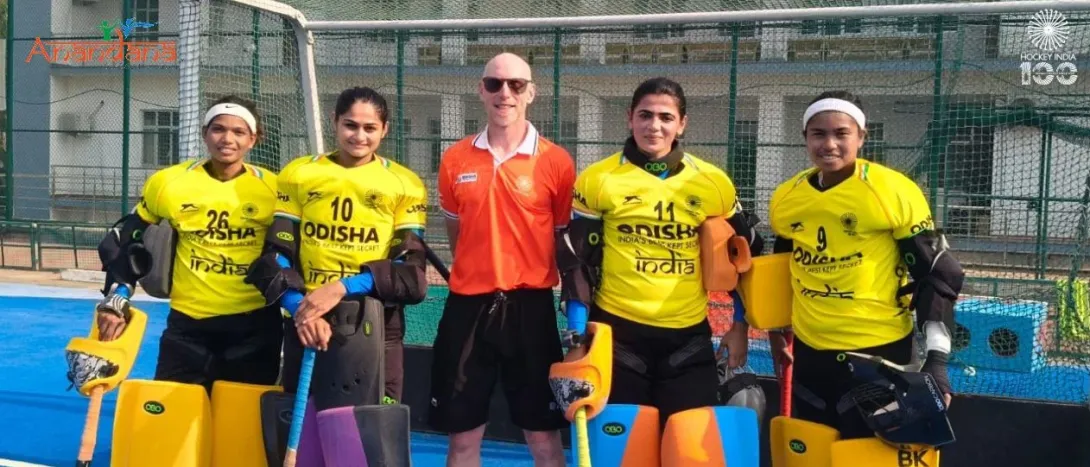
India’s women’s hockey ecosystem received a timely boost with the conclusion of a specialized goalkeeping camp in Bengaluru on May 2, 2026. Led by expert coach David Williamson under the supervision of Chief Coach Sjoerd Marijne, the 11-day program focused on refining elite-level skills among national team goalkeepers. Backed by Anandana, the Coca-Cola India Foundation, the initiative reflects a growing convergence between corporate philanthropy and high-performance sport. The camp not only enhanced technical preparedness but also underscored India’s long-term ambitions in global women’s hockey through structured investment in specialized training and athlete development.
Strategic Training Initiative Elevates Goalkeeping Standards
The Indian Women’s Hockey Team concluded an intensive goalkeeping camp at the Sports Authority of India (SAI) centre in Bengaluru, marking a significant step in strengthening one of the most critical positions in modern hockey. Conducted from April 22 to May 2, 2026, the program was designed to deliver high-performance, position-specific training to national-level goalkeepers.
Renowned goalkeeping coach David Williamson spearheaded the sessions, bringing global expertise and technical precision to the camp. His approach emphasized reflex enhancement, situational awareness, and decision-making under pressure—skills that are indispensable in high-stakes international competition.
Leadership Oversight and Tactical Alignment
The camp operated under the supervision of Chief Coach Sjoerd Marijne, ensuring alignment with the broader tactical framework of the national team. Marijne’s involvement reflects a cohesive strategy where specialized training modules are integrated seamlessly into the team’s overall competitive philosophy.
By focusing on goalkeepers in isolation, the coaching staff addressed a longstanding gap in Indian hockey’s development model—position-specific excellence. This targeted intervention is expected to translate into improved defensive resilience and match-winning performances on the global stage.
Corporate Backing and the Economics of Sports Development
The initiative was supported by Anandana, the Coca-Cola India Foundation, highlighting the increasing role of corporate social responsibility (CSR) in sports infrastructure and athlete development. Such partnerships are becoming pivotal in bridging funding gaps and enabling access to world-class coaching resources.
From a financial perspective, investments in niche training programs like this one yield high returns in terms of performance outcomes, international rankings, and brand equity for Indian sports. Corporate-backed initiatives not only enhance training quality but also contribute to building a sustainable sports ecosystem.
Building Competitive Depth for the Future
Beyond immediate skill enhancement, the camp served as a platform for building depth in India’s goalkeeping roster. With international tournaments becoming increasingly competitive, having multiple high-caliber goalkeepers is essential for squad rotation and injury management.
The structured, high-intensity nature of the program indicates a shift toward data-driven and performance-oriented training methodologies. This evolution aligns India’s preparation standards with global best practices, ensuring that the team remains competitive against top-tier nations.
A Forward-Looking Approach to Excellence
The successful conclusion of this goalkeeping camp underscores a broader transformation within Indian women’s hockey—one that prioritizes specialization, strategic investment, and global benchmarking. As the sport continues to gain prominence, such initiatives will play a crucial role in shaping India’s trajectory on the international stage.
In an era where marginal gains often determine outcomes, targeted programs like this are not merely training exercises but strategic assets in India’s pursuit of sporting excellence.
Comments