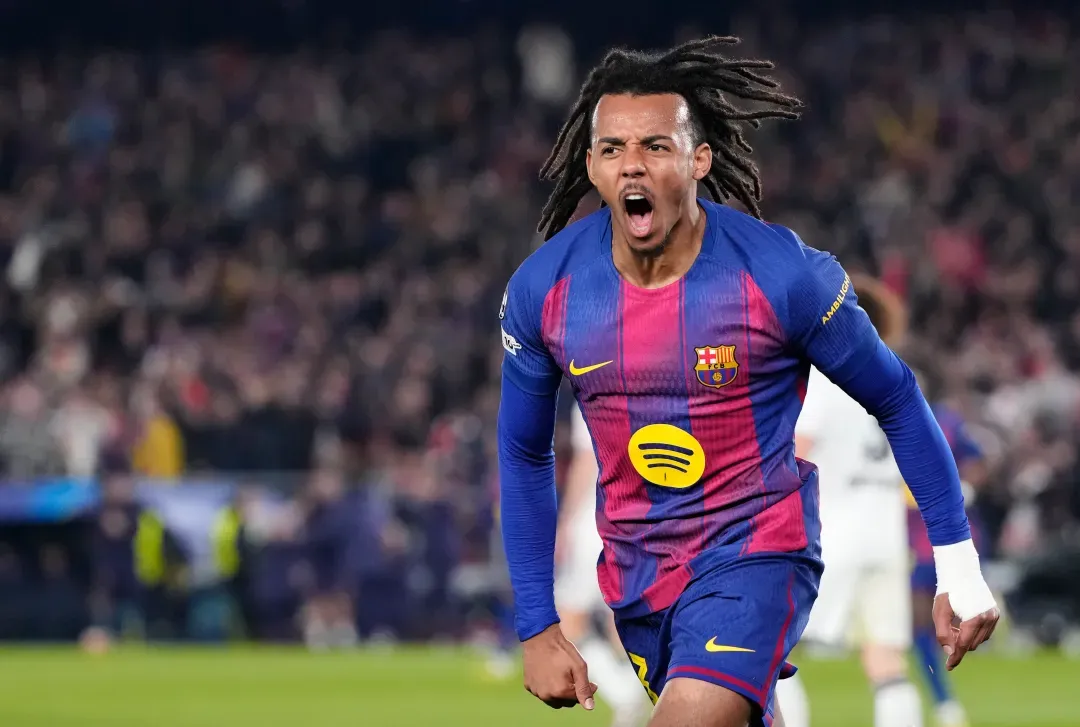
Ahead of a crucial UEFA Champions League encounter, Hansi Flick has reportedly tested a revised defensive structure for FC Barcelona, positioning Jules Kounde centrally alongside Gerard Martin. The adjustments, made during a closed training session in the Spanish capital, also saw Ronald Araujo deployed at right-back and Joao Cancelo on the opposite flank. The reshaped lineup underscores Barcelona’s tactical flexibility as they prepare to face Atletico Madrid, reflecting a data-driven approach to maximizing performance in high-stakes European competition.
Tactical Experimentation Ahead of a Defining Fixture
Barcelona’s preparations for their pivotal Champions League clash have centered on strategic recalibration. Manager Hansi Flick appears to be exploring alternative defensive combinations, signaling a proactive approach to countering Atletico Madrid’s tactical strengths.
During a closed-door training session, Flick tested a central defensive pairing featuring Jules Kounde and Gerard Martin—an unconventional setup that highlights the manager’s willingness to adapt based on opponent analysis and situational demands.
Defensive Restructuring and Positional Fluidity
One of the most notable adjustments involved shifting Ronald Araujo to the right-back position, while Joao Cancelo operated on the left flank. This configuration suggests an emphasis on defensive solidity combined with attacking width from the full-back positions.
Kounde’s deployment in central defense is particularly significant. Known for his versatility, the French international offers both defensive resilience and ball-playing ability—qualities essential for maintaining composure under high pressing scenarios.
Midfield Balance and Attacking Depth
In midfield, Flick reportedly paired Eric Garcia with Pedri, creating a blend of defensive awareness and creative distribution. This combination is designed to control tempo while providing a stable platform for attacking transitions.
Further forward, the lineup featured a dynamic attacking unit comprising Lamine Yamal, Dani Olmo, Marcus Rashford, and Robert Lewandowski. This quartet offers a mix of pace, creativity, and finishing efficiency, positioning Barcelona as a formidable offensive force.
Strategic Implications in a High-Value Competition
At the Champions League level, tactical decisions carry both sporting and financial consequences. Match outcomes can influence revenue streams tied to broadcasting rights, sponsorship deals, and prize distributions—often amounting to hundreds of millions of rupees.
Flick’s willingness to experiment reflects an understanding that marginal tactical advantages can yield significant returns, both on the pitch and in the club’s broader financial ecosystem.
A Data-Driven Approach to Modern Football
Barcelona’s tactical adjustments underscore the increasing reliance on analytics and opponent-specific strategies in modern football. Managers are no longer bound by rigid formations; instead, they employ flexible systems tailored to exploit weaknesses and mitigate risks.
This approach aligns with broader industry trends, where clubs invest heavily in performance data, scouting intelligence, and sports science to gain a competitive edge.
Preparing for a Tactical Battle
As Barcelona prepares to face Atletico Madrid, the emphasis on adaptability and precision will be critical. Flick’s experimental lineup suggests a readiness to deviate from convention in pursuit of optimal performance.
Whether these tactical adjustments translate into success remains to be seen. However, the strategy itself reflects a forward-thinking philosophy—one that prioritizes innovation, resilience, and calculated risk in the pursuit of European success.
Comments