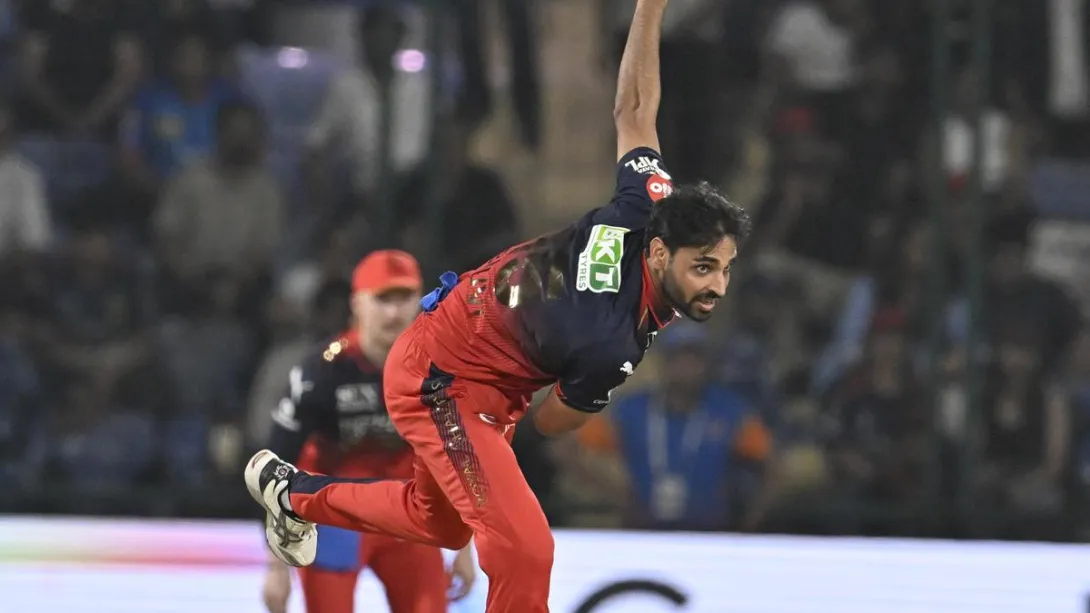
Bhuvneshwar Kumar has articulated a defining transition in professional priorities, emphasizing team success over individual milestones during the IPL 2026 season with Royal Challengers Bengaluru. The veteran pacer’s remarks reflect both personal evolution and a broader cultural shift within high-performance sport, where collective outcomes increasingly outweigh personal accolades. As franchises operate within a commercially intensive ecosystem, such leadership perspectives carry strategic significance. Kumar’s stance underscores the importance of cohesion, efficiency, and long-term value creation—principles that resonate across both sporting and business domains.
Career Inflection Point: From Individual Metrics to Collective Goals
At an advanced stage of his career, Bhuvneshwar Kumar’s outlook reflects a seasoned professional recalibrating priorities. Where early-career athletes often focus on personal statistics and milestones, experienced players tend to shift toward team-oriented outcomes.
Kumar’s statement signals this transition clearly. His emphasis on team success highlights a mature understanding of impact—recognizing that sustained contributions to collective victories ultimately define legacy more than isolated achievements.
Strategic Value to Royal Challengers Bengaluru
For Royal Challengers Bengaluru, Kumar’s mindset carries tangible strategic benefits. Veteran players who prioritize team objectives often enhance dressing room culture, fostering accountability and alignment.
In high-pressure tournaments like the IPL, such alignment can translate into improved on-field execution. Bowlers operating within a collective framework tend to focus on role clarity—whether controlling run flow, taking key wickets, or adapting to match situations—rather than pursuing individual recognition.
Leadership Without Designation: Influence Beyond Titles
While not necessarily holding formal captaincy, players like Kumar exert significant influence within the squad. Leadership in modern sport increasingly extends beyond designated roles, encompassing experience-driven guidance and situational awareness.
Kumar’s approach exemplifies this model. By prioritizing team outcomes, he reinforces a performance culture centered on shared responsibility. This form of implicit leadership often proves critical in navigating high-stakes moments.
Performance Economics: Aligning Incentives With Outcomes
The IPL operates within a sophisticated financial ecosystem, where player valuations, sponsorships, and franchise revenues are closely tied to team performance.
A player prioritizing team success aligns naturally with this economic structure. Victories enhance brand equity, drive audience engagement, and strengthen commercial partnerships—benefits that extend beyond individual metrics. Kumar’s philosophy, therefore, reflects not only sporting maturity but also an understanding of the league’s underlying financial dynamics.
Experience as Strategic Capital
Veteran players bring intangible assets that are difficult to quantify—composure, adaptability, and contextual decision-making. Kumar’s emphasis on team success leverages these qualities effectively.
In volatile match situations, such experience can stabilize performance and guide younger players. This mirrors corporate environments, where senior professionals often function as stabilizing forces during periods of uncertainty.
Broader Implications: Redefining Success Metrics
Kumar’s remarks contribute to a broader redefinition of success in professional sport. While individual milestones remain important, their relative significance is increasingly contextualized within team outcomes.
This shift parallels trends in business, where organizations prioritize collaborative performance and long-term value creation over short-term individual gains. The emphasis on collective achievement reflects an evolving understanding of sustainable success.
Conclusion: A Mature Vision for Modern Cricket
Bhuvneshwar Kumar’s perspective encapsulates the ethos of a seasoned professional operating within a high-performance, commercially driven environment. By placing team success above personal milestones, he reinforces a culture of accountability and shared purpose.
As IPL 2026 progresses, such leadership philosophies may prove निर्णative in shaping outcomes. In both cricket and business, it is often the alignment of individual contributions with collective objectives that ultimately defines enduring success.
Comments