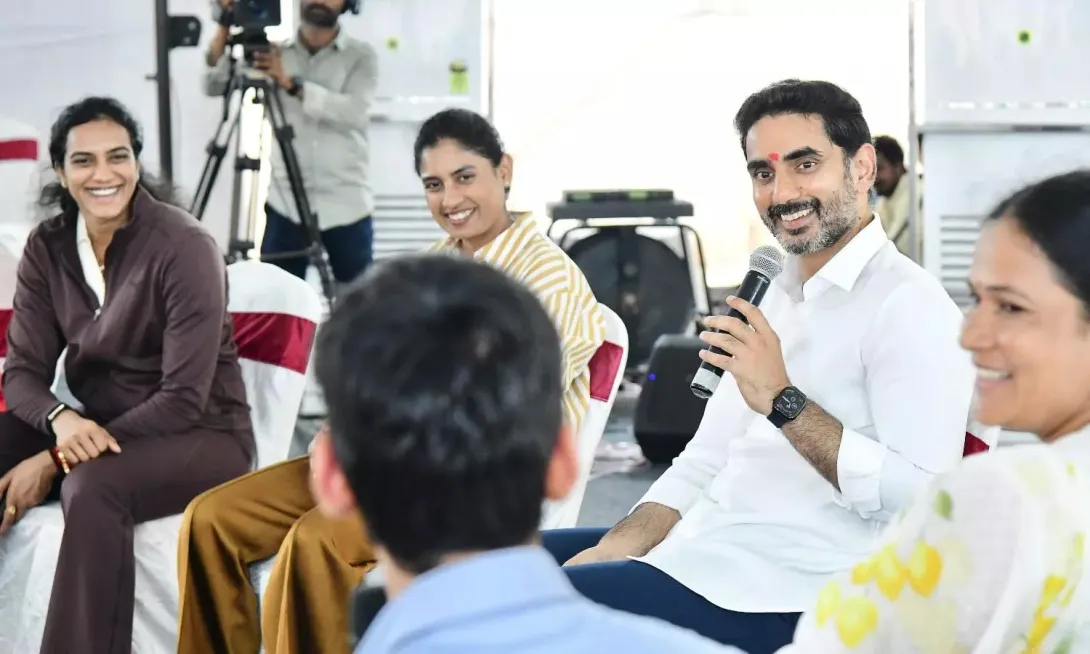
Andhra Pradesh government has unveiled an ambitious 90-day roadmap aimed at transforming the state’s sports ecosystem into a globally competitive framework. Spearheaded by Nara Lokesh, the initiative emphasizes grassroots talent identification, infrastructure development, and institutional reforms. Drawing insights from consultations with athletes and past developmental models, the plan seeks to position regions like Rayalaseema as emerging sports hubs. With policy backing, job creation through sports quotas, and potential corporate partnerships, the strategy reflects a structured push to integrate sports into economic and social development. The move underscores a broader vision to nurture athletic excellence while strengthening long-term sports governance.
Strategic Vision for Sports Development
The Andhra Pradesh government is advancing a structured and time-bound strategy to elevate its sports ecosystem. At the center of this initiative is a 90-day action plan designed to create a robust, world-class sporting infrastructure. Education Minister Nara Lokesh emphasized that the policy framework will prioritize long-term sustainability, grassroots engagement, and international competitiveness.
The initiative reflects a growing recognition that sports development is not merely recreational but also a driver of economic opportunity, employment, and regional branding. By aligning policy with performance outcomes, the government aims to create a scalable model for sports excellence.
Grassroots Focus and Regional Aspirations
A key pillar of the roadmap is the identification and nurturing of talent at the grassroots level. The government plans to build structured pathways that enable young athletes from rural and semi-urban areas to access training, coaching, and competitive exposure.
Lokesh highlighted his extensive outreach during a 3,132-km statewide tour, which provided firsthand insight into youth aspirations. Based on these interactions, the administration has set its sights on transforming Rayalaseema into a dedicated sports hub. This regional focus is expected to decentralize opportunities and reduce the concentration of facilities in urban centers.
Institutional Support and Employment Linkages
The strategy also integrates sports with employment generation. More than 421 candidates have recently secured government positions under the sports quota, signaling a policy shift toward recognizing athletic achievement as a viable career pathway.
This approach not only incentivizes participation but also strengthens the broader sports ecosystem by embedding trained athletes within institutional frameworks. Over time, such measures are likely to improve coaching standards, mentorship availability, and administrative efficiency.
Infrastructure Development and Corporate Participation
Infrastructure remains a critical component of the government’s vision. Existing facilities, such as the cricket ground developed in Tirupati under the Sports Authority of Andhra Pradesh, are being positioned as benchmarks for future projects.
The administration is also exploring partnerships with private enterprises to ensure sustainable maintenance and operational efficiency. Corporate involvement is expected to bring financial discipline, technological integration, and professional management practices into the sector.
Learning from Past Models
The roadmap draws inspiration from earlier initiatives, including a sports village established in Hyderabad during the tenure of N Chandrababu Naidu. That model successfully produced athletes who competed at national and international levels, offering a template for replication and scaling.
By combining historical insights with contemporary policy tools, the government aims to avoid fragmented execution and instead adopt a cohesive, data-driven approach to sports development.
Outlook: Sports as an Economic and Social Lever
The proposed reforms signal a broader shift in how sports are perceived within the policy ecosystem. Beyond medals and tournaments, the sector is increasingly being viewed as a catalyst for economic growth, youth engagement, and social mobility.
If executed effectively, Andhra Pradesh’s 90-day roadmap could set a precedent for other states, demonstrating how targeted investment and strategic planning can transform sports into a high-impact development sector.
Comments