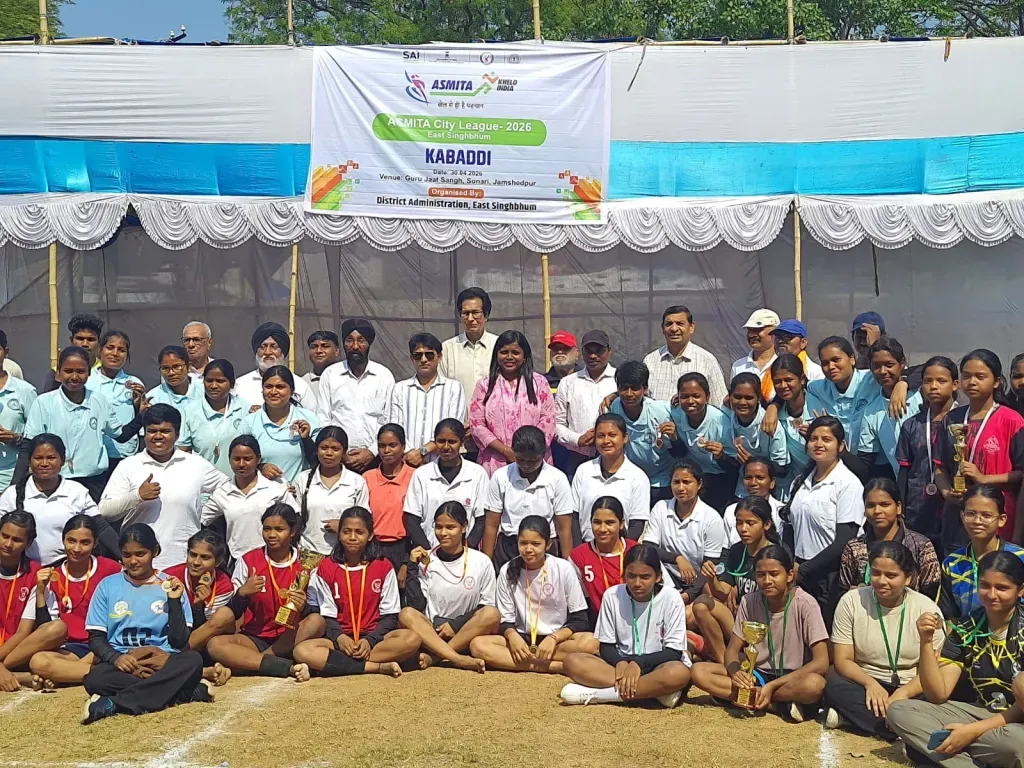
The Asmita City League 2026 concluded with a competitive kabaddi showcase at Guru Jat Sangh Sonari, highlighting the growing momentum of grassroots women’s sports in India. Organized under the guidance of the Ministry of Youth Affairs and Sports and aligned with the Khelo India program, the event featured 10 teams and approximately 140 young athletes. The tournament underscored increasing institutional support for female participation in sports, while delivering competitive outcomes across age categories and reinforcing long-term talent development strategies.
Event Overview: Grassroots Development in Focus
The Asmita City League 2026 brought together emerging talent in a structured competitive environment, reflecting the growing emphasis on grassroots sports development. Hosted in Jamshedpur, the kabaddi competition served as a platform for young female athletes to demonstrate skill, discipline, and teamwork.
The participation of 10 teams, comprising around 140 players, illustrates expanding engagement levels and the success of targeted initiatives aimed at promoting women’s sports at the district level.
Institutional Backing: Policy Meets Execution
The tournament was conducted under the aegis of the District Administration (Sports Wing), East Singhbhum, in alignment with the Ministry of Youth Affairs and Sports and the Khelo India program.
Such institutional backing is critical in transforming policy objectives into actionable outcomes. By providing infrastructure, funding, and organizational support, these frameworks ensure sustainable growth in participation and performance.
Competition Results: Emerging Champions
In the Under-17 category, Dayanand Public School, Jamshedpur secured the top position, followed by Kerala Public School, Jamshedpur in second place. Vivek Vidyalaya, Jamshedpur completed the podium with a third-place finish.
In the Above-17 category, Guru Jat Sangh, Sonari emerged as champions, with Ghatshila finishing second and Jamshedpur Women’s University securing third place.
These results highlight the competitive depth across institutions and the increasing standard of play among young athletes.
Talent Pipeline: Building Future Competitors
Events like the Asmita City League play a crucial role in identifying and nurturing talent at an early stage. Structured competitions provide athletes with exposure to match conditions, enabling skill refinement and psychological preparedness.
From a strategic perspective, such tournaments act as feeder systems for higher-level competitions, ensuring a steady pipeline of talent for state and national representation.
Socio-Economic Impact: Expanding Opportunities
The rise of women’s kabaddi at the grassroots level carries broader socio-economic implications. Increased participation contributes to empowerment, skill development, and community engagement.
Moreover, as visibility grows, so does the potential for sponsorships, media coverage, and financial investment. This aligns with the broader objective of creating a sustainable sports ecosystem with measurable economic impact, often quantified in crores (Rs.) at higher competitive levels.
Strategic Outlook: Strengthening the Ecosystem
The success of the Asmita City League underscores the importance of consistent investment in grassroots infrastructure. Continued collaboration between government bodies, educational institutions, and local organizations will be essential to sustain momentum.
By integrating training programs, competitive exposure, and financial support, stakeholders can accelerate the development of women’s sports and enhance India’s global competitiveness.
Conclusion: A Step Forward for Women’s Kabaddi
The conclusion of the Asmita City League 2026 marks a significant milestone in the advancement of grassroots women’s kabaddi. With strong participation, competitive results, and institutional support, the event reflects a positive trajectory for the sport.
As India continues to invest in its sporting future, initiatives like this will play a pivotal role in shaping the next generation of athletes—bridging the gap between grassroots participation and elite performance.
Comments