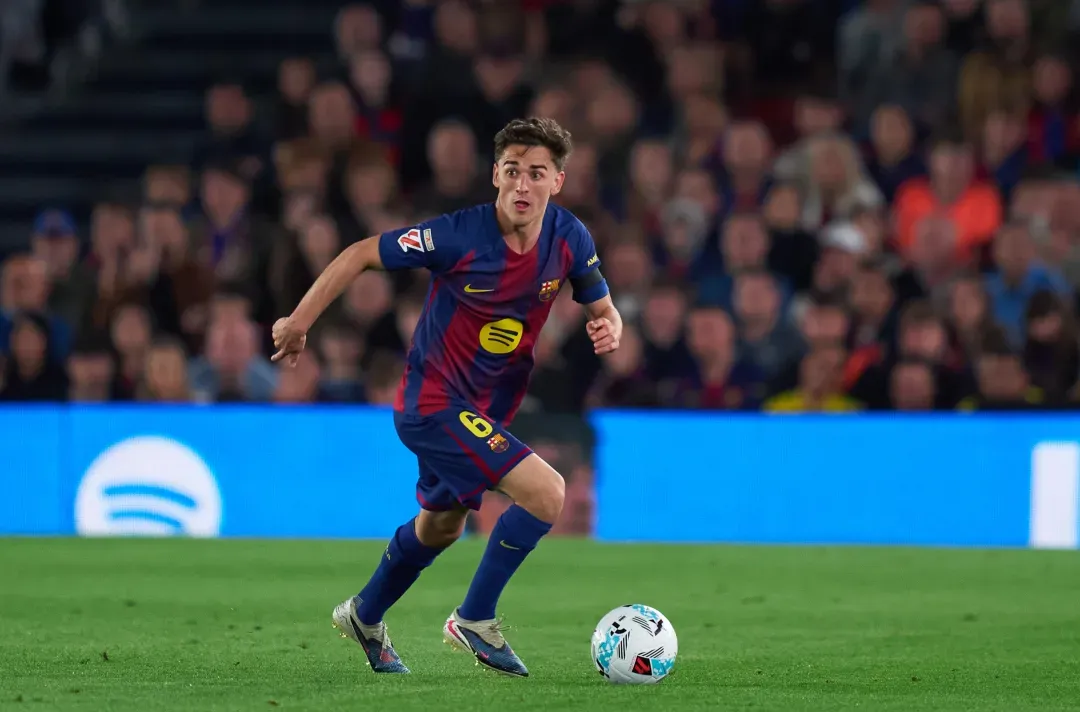
Barcelona enter Sunday’s high-stakes Clasico against Real Madrid with a commanding opportunity to secure the LaLiga title with three matches remaining in the season. Under manager Hansi Flick, the Catalan club requires only a draw to mathematically confirm the championship, while Real Madrid arrive amid instability, inconsistent performances, and internal tensions. Preparations at the Santiago Bernabéu have reportedly been disrupted by a training-ground altercation involving Federico Valverde and Aurélien Tchouaméni, leaving Valverde unavailable for the decisive fixture. Combined with recent domestic setbacks and UEFA Champions League disappointment, the turbulence surrounding Madrid has intensified pressure ahead of one of European football’s most consequential encounters.
Barcelona Stand on the Brink of Another LaLiga Triumph
Barcelona travel into Sunday’s Clasico knowing that a single point against Real Madrid would be enough to officially secure the LaLiga title with three fixtures still remaining in the campaign.
The opportunity reflects the remarkable transformation engineered under Hansi Flick, whose tactical discipline and squad management have restored Barcelona’s consistency in both domestic and European competition.
For much of the season, Barcelona have demonstrated superior balance, defensive organization, and attacking efficiency compared to their principal rivals. The club’s ability to sustain momentum during critical phases of the campaign has positioned them firmly at the top of the standings entering the decisive weekend.
Winning the title at the expense of Real Madrid in a direct confrontation would also carry symbolic significance, reinforcing Barcelona’s resurgence after several seasons of transition and financial uncertainty.
Real Madrid Enter Clasico Amid Internal Turmoil
Real Madrid approach the match under mounting pressure following reports of a training-ground confrontation involving Federico Valverde and Aurélien Tchouaméni.
The incident, which has reportedly resulted in Valverde suffering a head injury severe enough to rule him out of the Clasico, has intensified scrutiny around the atmosphere within the squad at a critical point in the season.
While elite clubs frequently experience internal tensions during high-pressure periods, the timing of the reported altercation could not be more damaging for Madrid. Losing a player of Valverde’s intensity and tactical versatility weakens the team structurally ahead of a match that may ultimately determine the emotional narrative of the season.
The episode has also raised broader questions regarding dressing-room stability, player fatigue, and psychological management following a difficult stretch of results across multiple competitions.
Champions League Exit Deepens Madrid’s Difficult Month
Real Madrid’s recent struggles extend well beyond the reported training-ground dispute.
The club’s UEFA Champions League elimination against Bayern Munich significantly intensified pressure around the squad and coaching structure, particularly given the expectations traditionally associated with European competition at the Santiago Bernabéu.
Domestically, Madrid have also suffered damaging setbacks in LaLiga, dropping valuable points against Mallorca, Real Betis, and Girona during a period when consistency was essential.
Those results have gradually eroded their title challenge and shifted momentum decisively in Barcelona’s favor. More importantly, they have exposed recurring tactical and psychological vulnerabilities that opponents have increasingly exploited in recent weeks.
For a club historically defined by resilience and late-season dominance, the current run represents an unusually unstable phase.
Hansi Flick’s Barcelona Project Gains Validation
Barcelona’s position at the top of LaLiga reflects the effectiveness of Hansi Flick’s managerial approach since taking charge of the Catalan giants.
The German coach has introduced greater tactical clarity, defensive structure, and collective discipline, enabling Barcelona to navigate a demanding campaign with relative stability.
Unlike previous seasons, where inconsistency and financial uncertainty frequently disrupted progress, Barcelona have appeared strategically coherent under Flick’s leadership. Younger players have integrated effectively alongside experienced figures, while the team’s pressing structure and midfield control have become defining characteristics of their success.
Securing the league title against Real Madrid would provide powerful validation of Flick’s rebuilding process and further strengthen confidence in the club’s long-term sporting direction.
Clasico Carries Financial and Institutional Significance
Beyond sporting rivalry, Sunday’s Clasico carries broader financial and institutional implications for both clubs.
For Barcelona, securing the LaLiga title would reinforce commercial momentum at a time when the club continues to navigate long-term financial restructuring. Success on the pitch remains central to restoring sponsorship growth, global brand strength, and commercial confidence.
For Real Madrid, however, failure to prevent Barcelona’s title celebrations could intensify pressure surrounding squad planning and future investment decisions heading into the summer transfer window.
Elite European football increasingly operates within a landscape where sporting success directly influences commercial leverage, broadcasting visibility, and global market positioning. Consequently, the Clasico’s implications extend far beyond league standings alone.
Tactical Battle Could Define the Match
From a footballing perspective, the contest is likely to revolve around midfield control and defensive organization.
Barcelona have excelled this season when dictating tempo through structured possession and coordinated pressing. Their ability to maintain tactical discipline has frequently neutralized opponents during high-pressure fixtures.
Real Madrid, by contrast, have recently struggled to sustain midfield compactness, particularly during transition phases. The absence of Valverde could further weaken the side’s defensive intensity and ball progression.
If Barcelona successfully control possession early, Madrid may find themselves exposed both physically and psychologically in front of a demanding home crowd.
At the same time, Clasico fixtures have historically produced unpredictable moments regardless of form, meaning Madrid’s attacking quality still presents a substantial threat.
A Defining Night for Spanish Football
Sunday’s Clasico arrives as one of the most consequential meetings between Barcelona and Real Madrid in recent seasons.
For Barcelona, the match represents an opportunity to formally complete a remarkable domestic campaign and reassert dominance within Spanish football. For Real Madrid, it is a chance to restore pride and disrupt their rival’s celebrations despite a turbulent period.
The contrasting emotional trajectories of the two clubs have added further intensity to an already historic rivalry. Barcelona arrive with momentum, stability, and confidence, while Madrid face scrutiny, uncertainty, and growing internal pressure.
Regardless of the result, the fixture is likely to shape the narrative surrounding both clubs heading into the summer — influencing managerial authority, transfer strategies, and the broader balance of power within European football.
As the Santiago Bernabéu prepares for another chapter in football’s most iconic rivalry, the stakes extend far beyond three points.
Comments