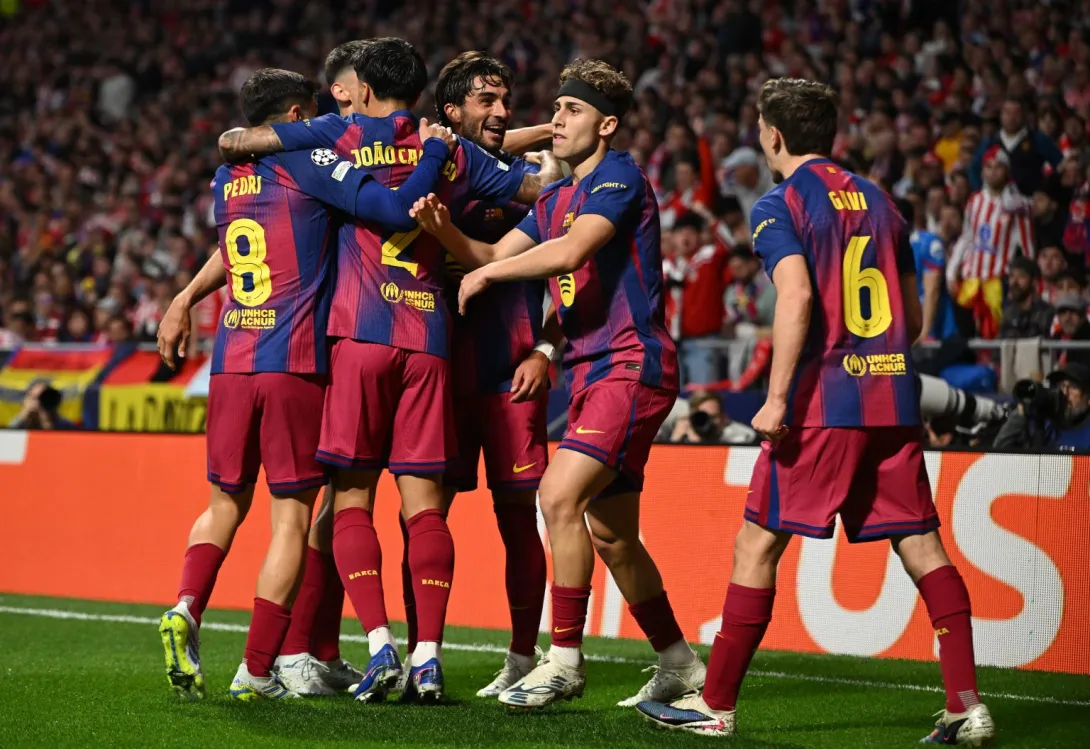
FC Barcelona fell short in a high-stakes UEFA Champions League clash against Atletico Madrid, despite showcasing resilience, attacking intent, and emerging talent. The defeat was not rooted in lack of effort but in critical margins, defensive vulnerabilities, and tactical shortcomings. Under Hansi Flick, Barcelona’s evolving project reflects long-term promise, driven by a young core led by Lamine Yamal. However, recurring issues such as defensive inconsistency, disciplinary lapses, and limited bench impact continue to hinder progress. The result underscores both the club’s upward trajectory and the structural refinements needed to compete at Europe’s elite level.
Match Overview: Fine Margins Define Outcome
Barcelona entered the decisive European fixture with a clear objective—secure progression into the semi-finals. Early momentum suggested they were capable of achieving that goal, as the team quickly neutralized the aggregate deficit and dictated the tempo for significant stretches.
Despite their dominance in possession and attacking phases, the contest ultimately hinged on marginal moments—defensive lapses, critical decisions, and situational discipline. These factors, rather than a deficiency in intent or quality, determined the outcome.
Positives: Signs of a Resurgent Project
Identity, Intensity, and Tactical Progress
Under the leadership of Hansi Flick, Barcelona demonstrated a renewed tactical identity characterized by urgency, structured pressing, and offensive fluidity. The team’s early response in the match highlighted a shift in mentality, reflecting resilience and belief often absent in previous European campaigns.
The attacking unit functioned cohesively, creating multiple scoring opportunities and sustaining pressure. This performance signals a broader evolution in the club’s playing philosophy.
Emergence of a New Generation
A defining feature of Barcelona’s current phase is the prominence of youth talent, particularly Lamine Yamal. At just 18, Yamal has become a central figure in high-pressure fixtures, demonstrating composure, creativity, and leadership beyond his years.
Supported by a core of academy-developed players, the squad benefits from a shared identity rooted in the club’s developmental philosophy. This internal pipeline represents both a sporting and financial advantage in an increasingly competitive transfer market.
Long-Term Structural Promise
The broader project under Flick appears strategically aligned with sustainable growth. The blend of youth, tactical clarity, and incremental squad development suggests a foundation capable of competing at the highest level in the coming years.
While immediate success remains elusive, the underlying trajectory points toward long-term competitiveness across domestic and European competitions.
Challenges: Structural Weaknesses Persist
Defensive Instability
Despite offensive improvements, Barcelona’s defensive frailties remain a critical concern. The inability to maintain clean sheets in successive Champions League fixtures highlights systemic issues in defensive organization and execution.
At the elite level, defensive consistency is non-negotiable. Repeated lapses not only undermine attacking efforts but also erode confidence in high-stakes scenarios.
Discipline and Game Management
Another recurring issue is disciplinary control. Red cards in consecutive matches against Atletico Madrid placed the team at a tactical disadvantage, disrupting momentum and forcing reactive adjustments.
Historically, Barcelona’s disciplinary record in European competitions has been a concern, and recent incidents reinforce the need for improved decision-making under pressure.
Limited Impact from Substitutions
Depth remains an area requiring attention. While the starting lineup exhibited cohesion and intensity, the introduction of experienced players failed to sustain the same level of performance.
In knockout competitions, effective substitutions often determine outcomes. Barcelona’s inability to maintain rhythm following changes underscores a gap in squad depth and adaptability.
Conclusion: A Defining Moment in Transition
Barcelona’s exit from the Champions League serves as both a setback and a strategic checkpoint. The performance revealed a team in transition—one capable of competing with Europe’s elite yet still grappling with structural inefficiencies.
The emergence of players like Lamine Yamal and the tactical direction under Hansi Flick provide a compelling foundation. However, addressing defensive vulnerabilities, discipline, and squad depth will be essential for translating promise into silverware.
In modern football’s high-stakes environment, progress is often incremental. For Barcelona, this defeat may ultimately serve as a catalyst for a more complete and resilient future.
Comments