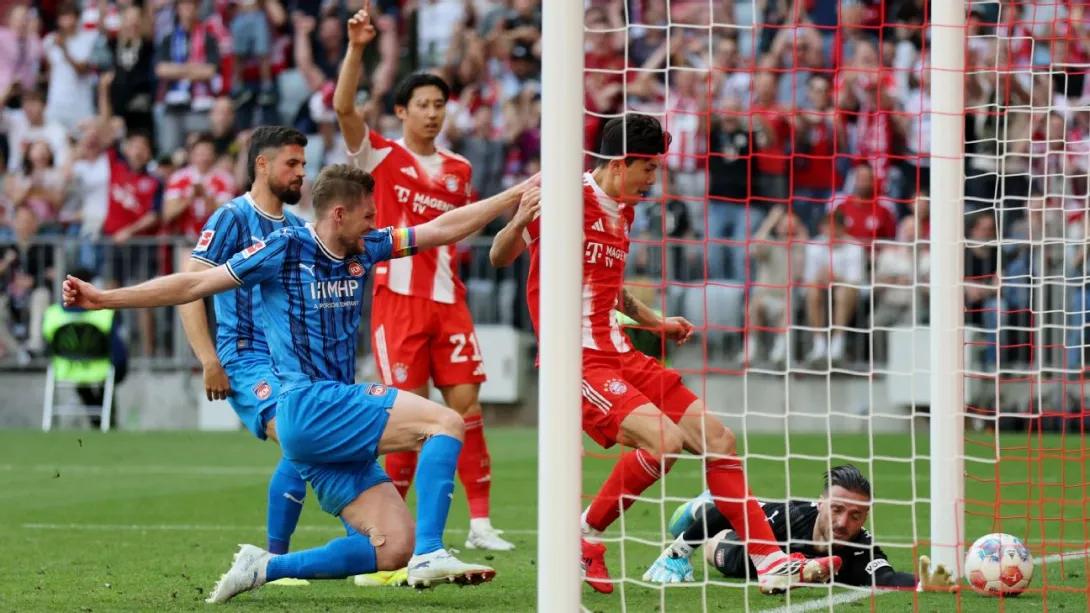
A heavily rotated FC Bayern Munich side, managed by Vincent Kompany, endured an early setback against 1. FC Heidenheim following significant lineup changes after a demanding European fixture. Resting key players, including Harry Kane, Bayern struggled to maintain defensive cohesion. Heidenheim seized the opportunity, with Budu Zivzivadze converting from close range after a second-phase set-piece. The development highlights the risks associated with squad rotation during congested schedules, where balancing domestic priorities with European ambitions remains a critical managerial challenge.
Strategic Rotation Reflects European Priorities
Vincent Kompany opted for extensive squad rotation following Bayern’s high-intensity 5-4 defeat to Paris Saint-Germain in the first leg of their UEFA Champions League semifinal. Introducing seven changes to the starting lineup, the decision underscored a clear strategic emphasis on managing player workload amid a congested fixture calendar.
Key attacking figures, including Harry Kane and Michael Olise, were initially rested, reflecting a calculated approach aimed at preserving fitness for decisive European encounters.
Defensive Lapse Leads to Early Setback
Despite Bayern’s pedigree, the reshuffled lineup struggled to establish defensive stability. Heidenheim capitalized on a poorly cleared corner, with Marnon-Thomas Busch delivering the ball back into a dangerous area.
Budu Zivzivadze reacted quickest, finishing from close range as the ball slipped past goalkeeper Jonas Urbig and into the net via the post. The sequence exposed vulnerabilities in Bayern’s set-piece organization, a recurring risk when defensive units lack continuity.
Tactical Trade-Offs in a Congested Calendar
The decision to rotate heavily reflects broader challenges faced by elite clubs competing across multiple fronts. While prioritizing player fitness is essential, such changes can disrupt rhythm and cohesion, particularly against well-organized opponents.
For Bayern, the early concession illustrates the delicate balance between maintaining domestic dominance and pursuing European success. Dropped points in league fixtures can carry financial implications, influencing prize distributions, sponsorship valuations, and competitive positioning.
Heidenheim’s Opportunistic Execution
Heidenheim’s approach was characterized by discipline and opportunism. Recognizing Bayern’s altered lineup, they applied pressure in key moments and capitalized on defensive uncertainty.
Their ability to convert limited chances into goals demonstrates efficiency—a critical factor for clubs competing against higher-resourced opponents. Performances of this nature can significantly impact league standings and revenue potential tied to final placements.
Outlook: Response Required from Bayern
As the match progresses, Bayern’s ability to respond will depend on tactical adjustments and potential reinforcements from the bench. The introduction of rested players could restore attacking fluidity and defensive structure.
For Kompany, the challenge lies in navigating competing priorities without compromising results. The outcome of this fixture will serve as a test case in squad management strategy, highlighting the broader complexities of modern football’s demanding schedule.
Comments