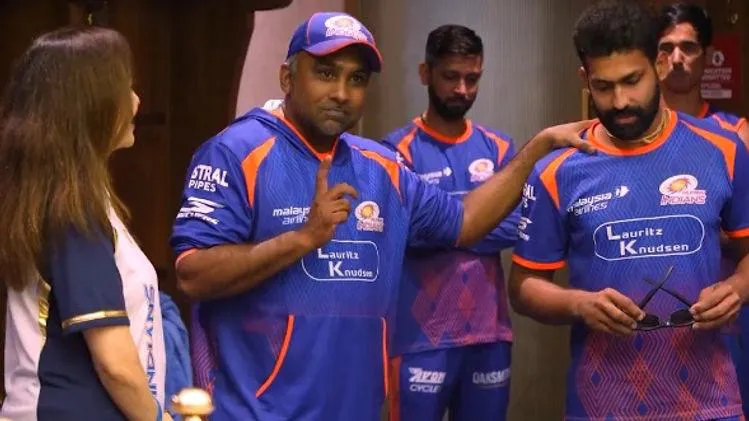
Raghu Sharma’s journey to the Indian Premier League is a study in persistence, delayed gratification, and professional reinvention. The 33-year-old leg-spinner, initially wicketless on debut for Mumbai Indians, responded with a disciplined, economy-driven performance against Lucknow Super Giants. His emotional on-field gesture—displaying a note acknowledging 15 years of struggle—captured the human dimension of elite sport. Backed by head coach Mahela Jayawardene, Sharma’s resurgence reflects the value of long-term investment in skill development and mental resilience.
A Debut Beyond Numbers: Performance as Narrative
In a tournament often dominated by instant impact and high valuations, Raghu Sharma’s IPL debut offered a counter-narrative. While his first outing did not yield wickets, it was his subsequent performance against Lucknow Super Giants that shifted attention from statistics to substance.
Operating in a high-scoring encounter, Sharma demonstrated control and tactical awareness, effectively disrupting the opposition’s scoring rhythm. His dismissal of debutant Akshat Raghuwanshi was a pivotal moment, but it was his overall economy rate that underscored his value. In a format where bowlers are frequently under siege, containment can be as strategically significant as wicket-taking.
The Symbolism of a Note: A Career in One Gesture
Moments after claiming his breakthrough wicket, Sharma produced a handwritten note from his pocket, holding it up to the cameras and crowd. The message—thanking Mumbai Indians and reflecting on 15 years of perseverance—resonated far beyond the stadium.
In an era where professional sport is increasingly transactional, such gestures reintroduce the narrative of human struggle and long-term aspiration. Sharma’s act was not merely celebratory; it was declarative, signaling the culmination of years spent outside the spotlight.
From a broader perspective, this moment highlights the emotional capital embedded in sport—an intangible yet powerful force that shapes fan engagement and brand loyalty within leagues like the IPL.
Institutional Backing and High-Performance Culture
Mumbai Indians’ decision to persist with Sharma after a modest debut reflects a broader organizational philosophy centered on talent incubation. The franchise, known for its structured approach to player development, identified potential beyond immediate returns.
Head coach Mahela Jayawardene revealed that Sharma was not operating at peak condition during the season. In response, the player underwent a 10-day intensive training program in Colombo, Sri Lanka, designed to refine his technique and physical readiness. Training under demanding climatic conditions, Sharma focused on sharpening his leg-spin variations and endurance.
Such investments—both in time and resources—mirror corporate strategies where long-term capability building often outweighs short-term performance metrics. In financial terms, this is akin to prioritizing sustainable returns over immediate gains.
Turning the Tide: Contribution to a Winning Cycle
Mumbai Indians’ victory in the match marked a return to winning ways, with Sharma’s performance playing a stabilizing role. While headline figures often favor batters, matches are frequently decided by those who can control momentum in critical phases.
Sharma’s ability to limit boundary flow in the middle overs provided the platform for Mumbai’s resurgence. His contribution, though understated, exemplifies the importance of role clarity within high-performing teams—whether in sport or business.
Experience as an Asset in a Youth-Driven League
At 33, Sharma represents a demographic often overshadowed in the IPL’s youth-centric ecosystem. However, his journey underscores the enduring relevance of experience, particularly in high-pressure scenarios.
From a market perspective, the IPL continues to balance emerging talent with seasoned professionals, creating a diversified talent portfolio. Sharma’s success reinforces the idea that value is not solely age-dependent but is derived from skill, adaptability, and mental fortitude.
Conclusion: Redefining Success Through Persistence
Raghu Sharma’s emergence is more than a personal milestone; it is a testament to the economics of perseverance in professional sport. His story challenges conventional timelines and redefines success as a function of sustained effort rather than immediate recognition.
As franchises increasingly operate like corporate entities—evaluating talent through performance metrics and return on investment—stories like Sharma’s serve as a reminder that intangible qualities such as resilience and commitment remain indispensable.
In a league measured in crores and contracts, his journey adds a layer of authenticity—one that cannot be quantified in Rs., but is invaluable nonetheless.
Comments