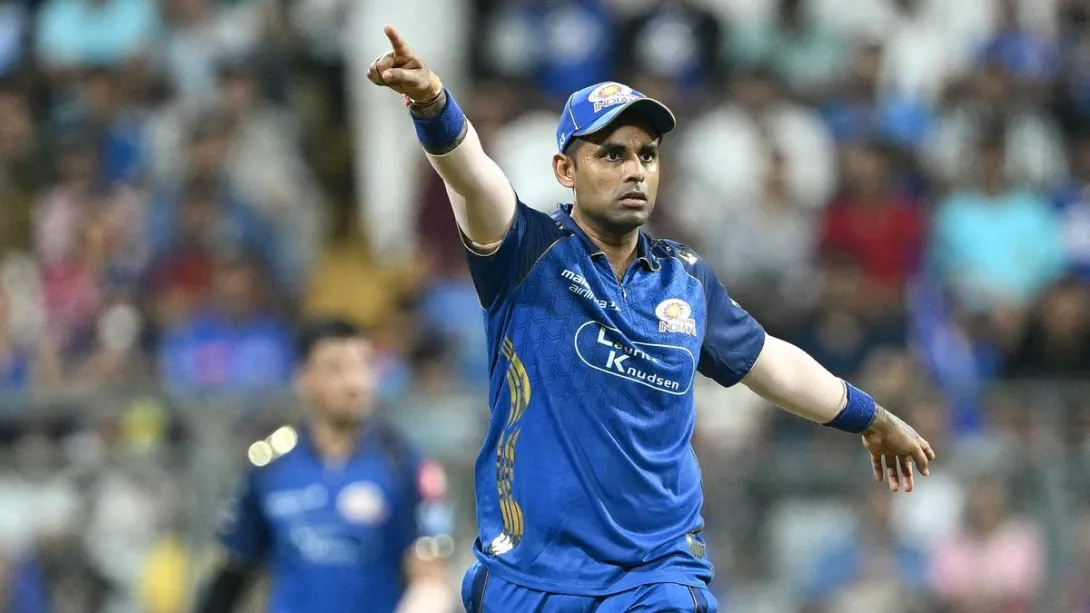
The ongoing unavailability of Hardik Pandya has emerged as a growing concern for Mumbai Indians during a critical phase of the Indian Premier League 2026 season. The regular captain missed another fixture after reportedly suffering a back spasm, with uncertainty surrounding his fitness continuing to dominate discussions ahead of the match. Pandya’s absence from pre-match warmups further reinforced expectations that the all-rounder would remain sidelined. As Mumbai navigate an increasingly competitive playoff race, the prolonged absence of one of their most influential players has intensified questions regarding squad depth, leadership stability, and workload management within high-performance franchise cricket.
Mumbai Indians Continue Without Their Captain
Mumbai Indians entered yet another crucial fixture without regular captain Hardik Pandya, whose injury concerns continue to cast uncertainty over the team’s campaign.
Pandya had already missed the previous match after reportedly suffering a back spasm, and speculation regarding his availability persisted until shortly before the toss. However, his absence during pre-match warmups strongly indicated that the franchise was unwilling to risk aggravating the issue.
The all-rounder had reportedly joined the squad late in Raipur, further suggesting that fitness management remained an ongoing concern behind the scenes.
In a tournament as physically demanding as the Indian Premier League, even minor injuries can quickly become strategic complications, particularly for players carrying leadership and multi-dimensional responsibilities.
Hardik Pandya’s Role Extends Beyond Captaincy
The absence of Hardik Pandya affects Mumbai on multiple levels. Beyond captaincy, Pandya functions as one of the side’s most valuable tactical assets due to his ability to contribute across batting, bowling, and leadership responsibilities.
Modern T20 cricket increasingly relies on adaptable all-rounders capable of influencing matches in multiple phases, making players like Pandya central to franchise planning and balance. His absence forces Mumbai to reconsider combinations, redistribute overs, and adjust batting depth.
Analysts frequently note that teams built around multi-skill cricketers often struggle to replicate the same tactical flexibility when such players are unavailable.
For Mumbai, the challenge is not merely replacing a captain, but compensating for the structural balance Pandya provides to the squad.
Injury Management Under Growing Spotlight
Pandya’s reported back spasm once again brings attention to the physical demands placed on elite cricketers competing across packed international and franchise schedules.
Fast-bowling all-rounders are particularly vulnerable to workload-related injuries due to the intense physical strain associated with repeated high-impact movements. In recent years, player fitness management has become one of the most significant operational priorities for franchises and national teams alike.
Sports performance experts increasingly advocate for stricter workload monitoring, recovery protocols, and rotation systems to protect high-value athletes from recurring injuries that could affect both short-term performance and long-term career sustainability.
Mumbai’s cautious approach toward Pandya’s availability suggests the franchise may be prioritising long-term fitness over immediate competitive pressure.
Mumbai Indians Face Leadership and Tactical Questions
The continued absence of their captain arrives at a sensitive stage of the season for Mumbai Indians, where playoff positioning is becoming increasingly dependent on consistency and momentum.
Leadership uncertainty can influence not only on-field tactics but also dressing-room confidence and overall strategic cohesion. While Mumbai possess one of the league’s most experienced squads, the absence of a central figure such as Pandya inevitably alters team dynamics.
Cricket analysts argue that franchises competing deep into tournaments require leadership stability alongside tactical adaptability. Repeated changes in availability and captaincy can complicate decision-making during pressure-heavy situations.
The coming matches may therefore test Mumbai’s squad depth and institutional resilience as much as their cricketing quality.
IPL’s Demanding Calendar Continues to Challenge Elite Players
Pandya’s situation reflects a broader issue confronting modern franchise cricket: the growing tension between competitive intensity and athlete workload management.
The Indian Premier League remains one of the most commercially valuable and physically demanding sporting competitions in the world, requiring players to maintain peak performance under relentless scheduling pressure.
For franchises, balancing immediate results with player preservation has become increasingly complex, especially when dealing with globally recognised athletes whose fitness impacts both sporting outcomes and commercial value.
As Mumbai Indians await clarity on Hardik Pandya’s recovery, the situation serves as another reminder that in modern T20 cricket, managing player availability can be as critical as tactical execution on the field.
Comments