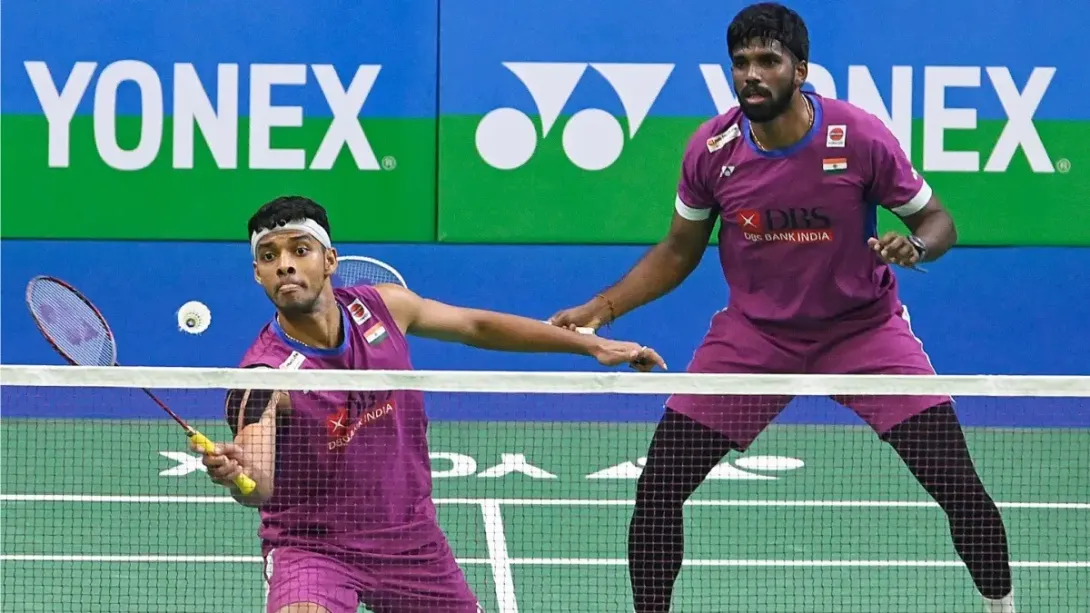
India men's national badminton team are set to face Chinese Taipei men's national badminton team in a decisive quarterfinal clash at the Thomas Cup in Horsens. After finishing second in Group A behind China, India enter the knockout stage with momentum but face a formidable opponent that topped Group C. The encounter represents a critical juncture, where tactical execution and composure will define progression. Beyond sport, the match reflects India’s rising stature in global badminton and the expanding commercial ecosystem surrounding elite international competitions.
Tournament Context: India’s Road to the Quarterfinals
India’s journey through the group stage has been marked by resilience and competitive consistency. Finishing as runners-up in Group A, the team demonstrated its ability to contend with top-tier opposition, particularly against a dominant Chinese side.
While the second-place finish ensured qualification, it also sets up a more challenging knockout pathway. In tournaments like the Thomas Cup, progression often hinges on adaptability and execution under pressure rather than group-stage momentum alone.
Opponent Overview: Chinese Taipei’s Strong Position
Chinese Taipei men's national badminton team arrive as Group C winners, underscoring their consistency and balanced squad composition. Their ability to deliver across both singles and doubles formats makes them a formidable opponent.
For India, this matchup requires a nuanced approach—leveraging strengths in key fixtures while mitigating risks in closely contested encounters. The strategic alignment of player matchups will likely play a decisive role.
Tactical Dynamics: Precision as the Differentiator
Quarterfinal ties in elite badminton competitions are often decided by marginal gains. India’s strategy is expected to emphasize controlled aggression, efficient shot selection, and disciplined court coverage.
Execution efficiency—converting critical points and maintaining composure in high-pressure moments—will be central to success. This mirrors high-performance frameworks in business, where precision and timing determine competitive advantage.
Psychological Edge: Managing Knockout Pressure
The transition from group stages to knockout rounds introduces heightened psychological demands. Unlike league formats, there is limited scope for recovery from errors.
India’s experience in international competitions provides a foundation for managing such pressure. Maintaining focus and tactical clarity against a confident Chinese Taipei side will be essential to sustaining competitive balance.
Commercial and Strategic Implications
India’s advancement in the Thomas Cup carries broader implications beyond the court. Success at this level enhances the sport’s visibility, attracting sponsorships, media attention, and investment.
In a rapidly evolving sports economy, international performance directly influences brand value and market expansion. For Indian badminton, consistent results in global tournaments contribute to long-term ecosystem growth.
Conclusion: A Defining Test of Ambition
The quarterfinal clash between India and Chinese Taipei represents a pivotal moment in the tournament. With both teams entering in strong form, the outcome will hinge on execution, resilience, and strategic discipline.
For India, the opportunity extends beyond reaching the semifinals—it is a chance to reinforce its position as a competitive force in world badminton. In high-stakes environments, it is often the most composed and strategically aligned teams that prevail.
Comments