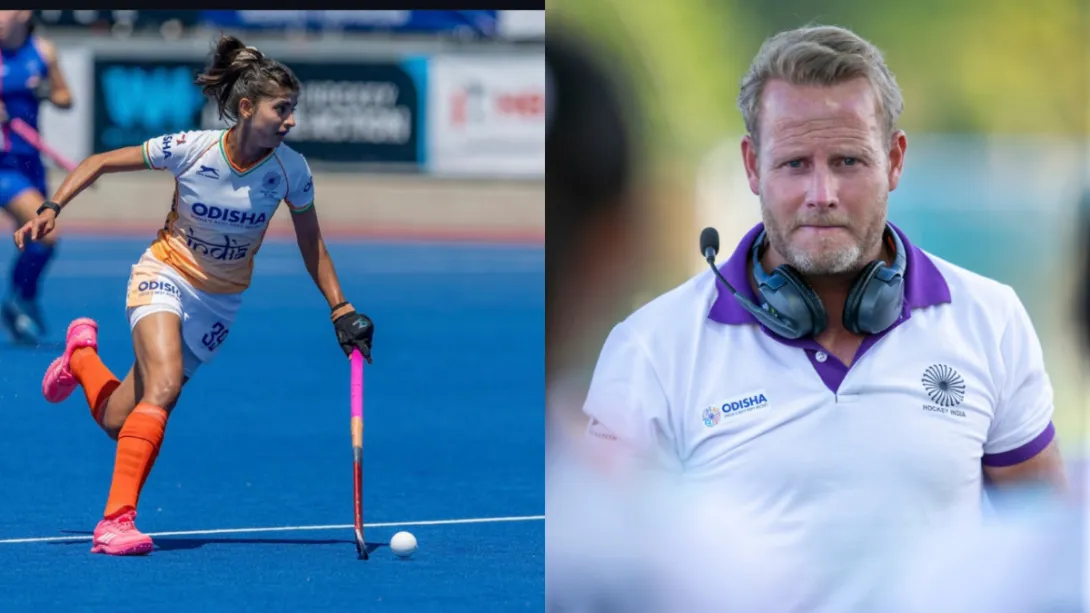
India’s women’s hockey team is entering a decisive preparation phase with a nine-day national coaching camp scheduled from April 1 to April 9, 2026. Following a strong silver-medal finish at the FIH Hockey World Cup Qualifiers, the team has secured its place at the upcoming World Cup in Belgium and the Netherlands. The camp, led by head coach Sjoerd Marijne, aims to refine team combinations, elevate fitness benchmarks, and sharpen tactical execution. With major international tournaments—including the Nations Cup and Asian Games—on the horizon, this structured training initiative is critical to sustaining momentum and enhancing India’s global competitiveness.
Post-Qualification Momentum and Strategic Reset
India’s recent performance at the World Cup qualifiers marked a significant milestone, reinforcing its status as a rising force in international women’s hockey. Securing a silver medal not only ensured qualification but also demonstrated the team’s ability to compete consistently at high levels.
The upcoming camp is designed as a strategic reset—an opportunity to consolidate strengths while addressing performance gaps. In elite sport, such transitional phases often determine whether a team can convert potential into podium finishes.
Leadership and Tactical Evolution Under New Coaching Regime
The training program assumes greater importance under the guidance of head coach Sjoerd Marijne, whose experience brings both continuity and renewed tactical direction. The camp will emphasize structured gameplay, situational awareness, and role-specific execution.
Modern hockey increasingly relies on data analytics, video assessment, and precision training. Integrating these elements into preparation reflects a broader shift toward high-performance management systems, aligning India with global best practices.
Squad Composition: Depth, Experience, and Emerging Talent
The selected group reflects a carefully balanced roster. In goal, Savita Punia anchors the unit alongside Madhuri Kindo, Bansari Solanki, and Bichu Devi Kharibam—recently honored for her goalkeeping excellence.
The defensive line blends experience with youthful energy. Senior players such as Nikki Pradhan and Udita provide stability, while Ishika Chaudhary, Jyoti Singh, Lalthantluangi, and Shilpi Dabas add tactical flexibility and depth. This layered composition is essential for sustaining performance across a demanding tournament calendar.
Packed International Calendar and Competitive Stakes
The timing of the camp aligns with a high-stakes international schedule. India is set to compete in the FIH Women’s Nations Cup in June, followed by the World Cup in August and the Asian Games later in September.
Each tournament carries significant implications—not only for rankings and medals but also for institutional funding, sponsorship visibility, and long-term athlete development pathways. Success at this level increasingly translates into broader economic opportunities within the sports ecosystem.
Economic Lens: Sports as an Emerging Growth Sector
From a business perspective, structured national camps represent targeted investments in human capital. Enhanced performance outcomes can yield measurable returns through endorsements, league participation, and increased spectator engagement.
Women’s hockey, in particular, stands at a pivotal moment. Sustained international success could accelerate commercial interest, attract private investment, and strengthen the case for expanded grassroots programs—creating a virtuous cycle of growth and opportunity.
Outlook: From Preparation to Performance
As the team embarks on this intensive training phase, the focus will remain on cohesion, adaptability, and mental resilience. The ability to translate preparation into consistent match-day execution will define India’s success in the months ahead.
With a blend of experience, emerging talent, and strategic leadership, India’s women’s hockey team appears well-positioned to compete at the highest level. The upcoming camp is not merely preparatory—it is a calculated step toward establishing sustained excellence on the global stage.
Comments