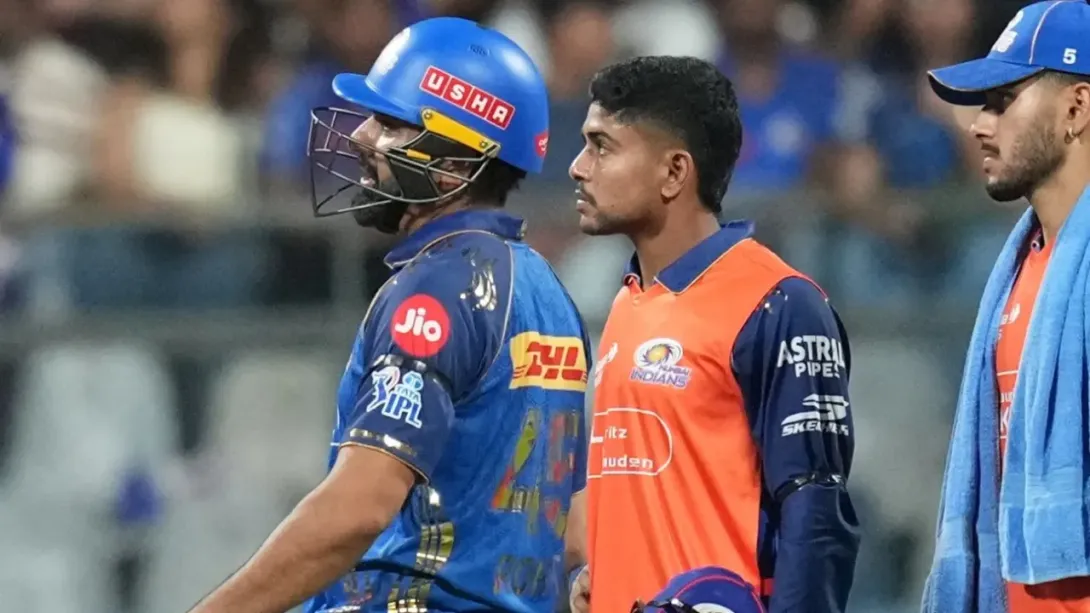
A marquee fixture in the Indian Premier League between Mumbai Indians and Royal Challengers Bengaluru was overshadowed by fitness concerns involving Rohit Sharma and Virat Kohli. Rohit was forced to retire hurt during a steep chase, while Kohli briefly exited with an ankle issue. The match, defined by aggressive scoring and high stakes, ultimately saw Mumbai fall short. However, the spotlight shifted to player welfare, highlighting the growing tension between performance demands and physical sustainability in a tournament ecosystem valued in billions of rupees (Rs.), where star athletes underpin both results and revenue.
High-Scoring Encounter at Wankhede
The clash at Wankhede Stadium lived up to expectations of a high-scoring contest, with Mumbai Indians tasked with chasing a formidable target of 241 against Royal Challengers Bengaluru.
Such contests are emblematic of the Indian Premier League, where aggressive batting and high-risk strategies dominate. However, the narrative quickly shifted from performance to player fitness as key figures encountered physical setbacks.
Rohit Sharma’s Injury Disrupts Momentum
Rohit Sharma began the innings with intent but showed visible discomfort early in his stay at the crease. Just four deliveries into the fifth over, he appeared to be struggling with mobility, prompting medical attention on the field.
Despite attempting to continue, Rohit eventually retired hurt after scoring 19 off 13 balls. His departure created a significant void in Mumbai’s batting lineup, impacting their ability to sustain the required scoring rate. The team ultimately fell short by 18 runs.
Virat Kohli’s Brief Exit Raises Concerns
On the opposing side, Virat Kohli also faced a fitness concern, leaving the field temporarily due to an ankle issue. While he did not retire hurt, the incident added to the broader concern surrounding player workload and injury risk.
For teams and stakeholders, even minor injuries to marquee players can carry disproportionate implications given their central role in both performance and brand value.
Workload Management in a High-Intensity League
The Indian Premier League is characterized by a compressed schedule, frequent travel, and high-intensity competition. These factors collectively increase the likelihood of injuries, particularly for players involved across formats.
Franchises must therefore adopt a strategic approach to workload management, balancing immediate competitive objectives with long-term player health.
Financial Implications of Player Availability
In a league where financial flows run into thousands of crores (Rs.), the availability of players like Rohit Sharma and Virat Kohli is critical. Their presence drives television ratings, sponsorship engagement, and fan interest.
Injury-related absences can disrupt these revenue streams, underscoring the economic importance of player fitness in modern cricket’s business model.
Strategic Outlook: Navigating Risk and Performance
Going forward, both Mumbai Indians and Royal Challengers Bengaluru will need to closely monitor player conditions and implement preventive strategies.
Maintaining squad depth and ensuring adequate recovery periods will be essential to sustaining performance levels throughout the season.
Conclusion
The encounter between Mumbai Indians and Royal Challengers Bengaluru highlighted the fine margins that define elite sport. While the result favored Bengaluru, the injuries to Rohit Sharma and Virat Kohli shifted focus toward player welfare. In a high-value sporting ecosystem, safeguarding athlete fitness remains not just a medical necessity but a strategic and financial imperative.
Comments