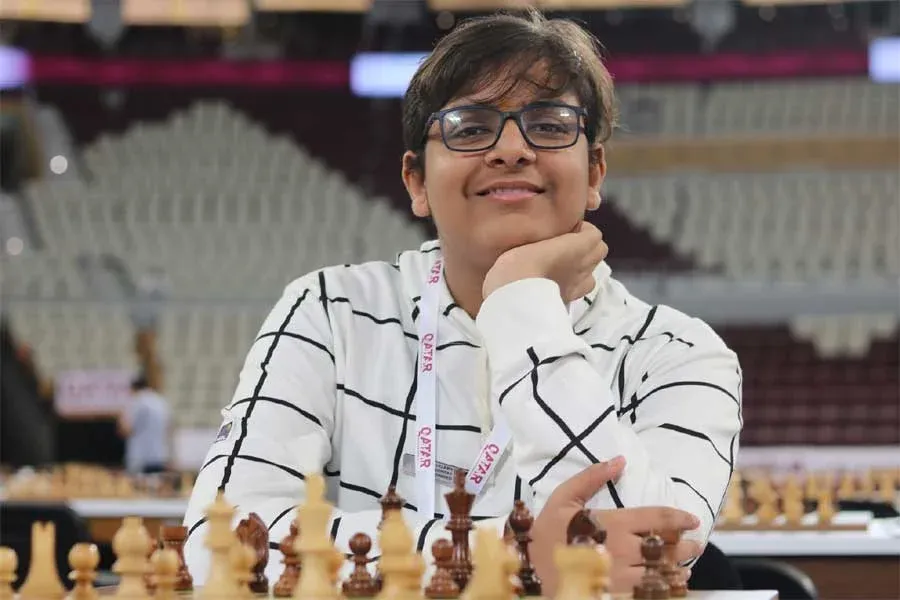
Indian chess has achieved a landmark moment as young prodigy Mayank Chakraborty secured the prestigious Grandmaster title, becoming the first player from India’s North-East region to reach the pinnacle of the sport. The achievement not only highlights Chakraborty’s individual brilliance but also underscores the expanding geographical diversity of India’s chess talent pipeline. Long dominated by metropolitan centers, the nation’s chess ecosystem is now witnessing rising participation from previously underrepresented regions. Analysts view Chakraborty’s success as a transformative moment that could inspire a new generation of players from the North-East, strengthening India’s already formidable presence in global chess.
A Historic Achievement for Indian Chess
The ascent of Mayank Chakraborty to the coveted Grandmaster rank marks a significant milestone for Indian chess. By achieving the sport’s highest title, Chakraborty has become the first player from India’s North-East to reach this elite level, a feat that reflects both personal dedication and the gradual expansion of the country’s chess ecosystem.
The Grandmaster title, awarded by the FIDE (International Chess Federation), represents the pinnacle of competitive chess. Securing the designation requires consistently high ratings and exceptional performances in international tournaments, placing Chakraborty among a select global community of elite players.
Breaking Geographic Barriers in Indian Chess
For decades, India’s chess success stories have largely emerged from major urban hubs such as Chennai and Kolkata, where infrastructure, coaching networks, and tournament exposure have historically been more accessible. Chakraborty’s achievement signals a shift in this dynamic.
His rise demonstrates that elite chess talent can flourish beyond traditional strongholds when provided with the right support systems. The North-East region, known for its rich cultural diversity and sporting enthusiasm, is now beginning to establish a presence within India’s competitive chess landscape.
The Rigorous Path to the Grandmaster Title
Earning the Grandmaster designation involves surpassing a demanding set of benchmarks established by FIDE. Players must achieve a rating of at least 2500 and secure multiple Grandmaster norms in internationally recognized tournaments.
Chakraborty’s journey to this achievement required years of disciplined preparation, strategic refinement, and participation in high-level competitions across the global circuit. His performance trajectory reflects both intellectual resilience and the strategic depth required to compete against seasoned international opponents.
Expanding India’s Global Chess Influence
India has emerged as one of the fastest-growing chess nations in recent years, producing a remarkable number of young Grandmasters. The country’s rising prominence in the sport has been driven by grassroots development, improved coaching infrastructure, and increasing international exposure for emerging players.
Chakraborty’s success adds another dimension to this narrative by demonstrating that talent from India’s North-East can compete at the highest level. His accomplishment further strengthens India’s reputation as a global powerhouse in chess development.
Inspiring the Next Generation
Beyond the competitive arena, Chakraborty’s breakthrough holds significant symbolic value. For aspiring players across the North-East, his achievement represents proof that global recognition in chess is attainable regardless of geographic origin.
Experts believe such milestones can catalyze investment in training facilities, youth academies, and regional tournaments. In turn, this could accelerate the development of a new wave of chess players emerging from the region.
As India continues to expand its footprint in international chess, pioneers like Mayank Chakraborty are redefining the map of opportunity—demonstrating that strategic brilliance and determination can transcend geographic boundaries.
Comments