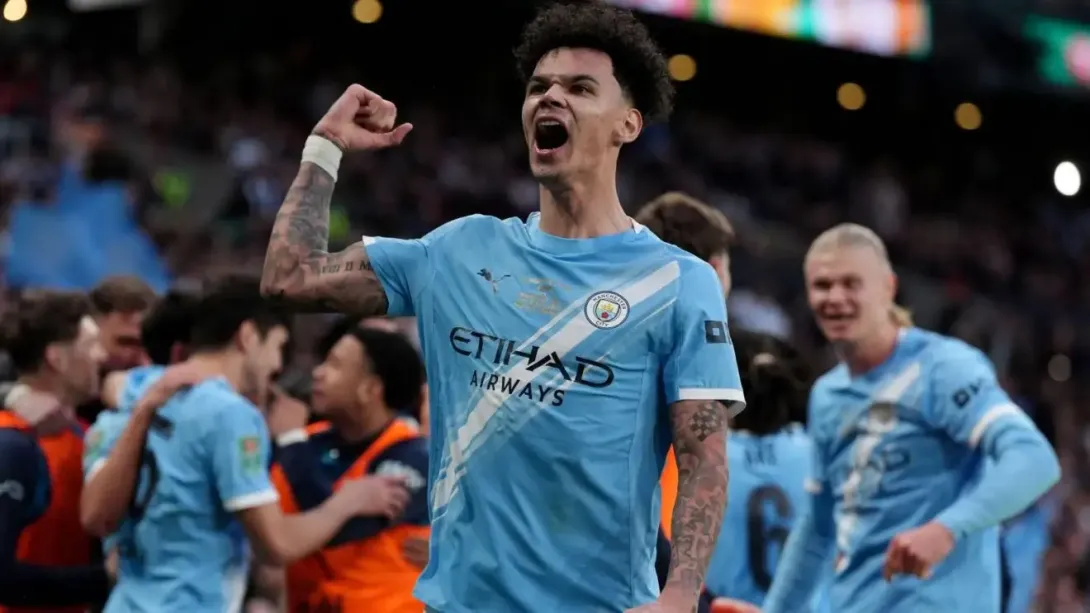
Manchester City delivered a commanding performance to defeat Arsenal in the Carabao Cup final, reinforcing its status as one of Europe’s most dominant football clubs. The victory not only secured another domestic trophy for the Premier League powerhouse but also highlighted the club’s tactical discipline and squad depth. Arsenal, despite moments of attacking promise, struggled to break through City’s structured defensive approach and clinical finishing. The result underscores Manchester City’s continued influence in English football’s competitive hierarchy. Analysts note that the triumph strengthens the club’s winning momentum while raising important questions about Arsenal’s ability to convert strong campaigns into major silverware.
A High-Stakes Final in English Football
The Carabao Cup final delivered a compelling showdown between two of England’s most competitive clubs, Manchester City and Arsenal F.C.. Hosted under intense global attention, the match represented more than a domestic cup contest—it symbolized a battle for momentum in English football’s broader competitive landscape.
Both teams entered the final with strong expectations. Manchester City sought to reinforce its dominance in domestic competitions, while Arsenal aimed to capture a major trophy that could validate its recent progress under a rebuilding phase.
Ultimately, City’s superior execution in crucial moments proved decisive.
Tactical Precision Defines Manchester City’s Victory
From the opening whistle, Manchester City demonstrated the tactical structure and composure that have become hallmarks of its modern playing philosophy. The team controlled possession effectively, dictating the tempo of the match while limiting Arsenal’s opportunities in advanced areas.
City’s attacking unit capitalized on key chances, converting pressure into goals through disciplined movement and precise finishing. Meanwhile, the defensive line maintained composure, neutralizing Arsenal’s forward threats and preventing sustained attacking momentum.
Football analysts emphasized that City’s victory was not merely a product of talent but of systematic planning, positional awareness, and a well-drilled tactical framework.
Arsenal’s Missed Opportunity
For Arsenal F.C., the final represented a significant opportunity to claim silverware and demonstrate competitive maturity. The team displayed periods of attacking intent, particularly during phases when it pressed higher up the pitch.
However, converting possession into decisive goal-scoring opportunities proved challenging. Arsenal’s offensive rhythm was repeatedly disrupted by City’s organized defensive structure, which effectively closed passing lanes and limited space in dangerous areas.
Despite the defeat, analysts suggest that Arsenal’s presence in the final reflects the club’s broader progress and signals potential for stronger performances in future competitions.
The Strategic Value of the Carabao Cup
The EFL Cup—commonly known as the Carabao Cup—plays a strategic role in English football. While it may not carry the global prestige of the Premier League or Champions League, the tournament offers clubs an opportunity to secure early-season silverware and build momentum.
For Manchester City, the trophy reinforces a culture of consistent winning. The club’s ability to compete across multiple competitions highlights the depth of its squad and the effectiveness of its long-term sporting strategy.
Such achievements also contribute to the club’s commercial value, strengthening brand visibility and global fan engagement.
What the Result Means for the Season Ahead
The Carabao Cup victory provides Manchester City with renewed confidence as it pursues additional domestic and European objectives. Success in knockout competitions often fuels psychological momentum that can influence league performance and continental campaigns.
For Arsenal F.C., the defeat offers valuable lessons about competing at the highest levels of English football. Refining attacking efficiency and maintaining composure in decisive moments will remain key priorities.
As the season progresses, both clubs will continue to shape the narrative of English football—one seeking to extend its dominance, the other striving to convert promise into trophies.
Comments