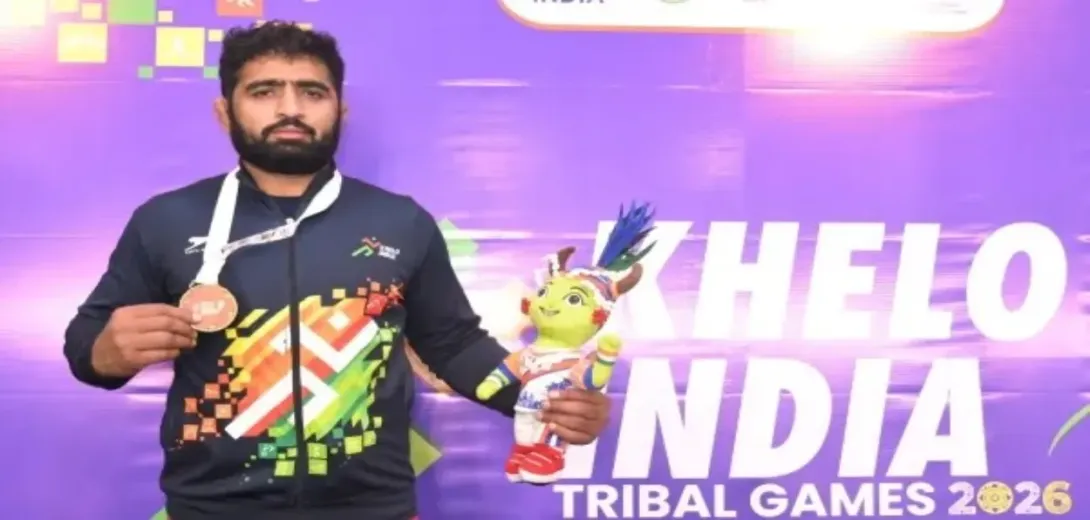
In a remarkable story of perseverance, 28-year-old wrestler Hamam Hussain from Jammu and Kashmir has captured national attention after winning his first gold medal at the Khelo India Tribal Games in Ambikapur. Competing in the men’s 79kg freestyle category, Hussain secured a decisive victory against Mohit Kumar of Himachal Pradesh. The triumph represents the culmination of a 14-year journey shaped by personal sacrifice and financial hardship. After losing his father, Hussain supported his family by selling milk while continuing his training. His achievement highlights not only individual determination but also the transformative potential of India’s expanding grassroots sports ecosystem.
A Breakthrough Victory on the National Stage
The gold medal win by Hamam Hussain at the Khelo India Tribal Games marks a defining moment in the athlete’s long and determined wrestling career.
Competing in the men’s 79kg freestyle division, the 28-year-old wrestler delivered a disciplined performance to defeat Mohit Kumar of Himachal Pradesh in the final bout. The contest, held in Ambikapur, brought together talented athletes from tribal and rural communities across India.
For Hussain, the victory represents far more than a medal—it symbolizes the fulfillment of years of relentless training and perseverance despite severe personal and financial challenges.
A Journey Shaped by Hardship
Hailing from Jorawar village in Jammu, Hamam Hussain began wrestling as a teenager, committing himself to a demanding sport that requires discipline, resilience, and physical endurance.
However, his journey was dramatically altered five years ago following the death of his father. The loss left the family facing financial uncertainty, forcing Hussain and his elder brother to assume responsibility for sustaining the household.
To support the family, the brothers began selling milk using the buffaloes their father had left behind. While the small dairy activity helped cover daily expenses, it also underscored the economic difficulties faced by many aspiring athletes from rural India.
Family Sacrifice Behind the Success
One of the most poignant aspects of Hussain’s story lies in the sacrifice made by his elder brother. Recognizing his sibling’s potential, the brother chose to step away from wrestling and focus entirely on supporting the family business.
This decision allowed Hamam Hussain to continue training and competing, despite the financial pressures at home.
Such family sacrifices remain a common yet often overlooked aspect of India’s sporting ecosystem, where many athletes rely on the support of relatives and local communities to pursue professional aspirations.
Role of the Khelo India Initiative
The Khelo India Tribal Games has emerged as an important platform for identifying and nurturing talent from remote and underserved regions.
By providing competitive opportunities and national exposure, the program helps bridge the gap between grassroots athletes and the mainstream sporting system. For competitors like Hussain, participation in such events can serve as a gateway to professional recognition and institutional support.
Government-backed initiatives under the broader Khelo India framework have increasingly focused on expanding infrastructure, offering scholarships, and strengthening training programs across rural India.
Economic Realities of Grassroots Athletes
Hussain’s story also highlights the economic realities faced by many athletes in developing sporting ecosystems. Unlike professional leagues with large sponsorship deals, grassroots competitors often juggle employment or family responsibilities alongside their training commitments.
Limited access to facilities, equipment, and coaching can create significant barriers to success. Yet stories like Hussain’s demonstrate how determination and community support can overcome these structural challenges.
From a broader perspective, investment in grassroots sports programs can deliver long-term economic benefits by nurturing future champions who contribute to national prestige and inspire broader participation.
A Symbol of Determination for Emerging Athletes
The triumph of Hamam Hussain in Ambikapur offers a powerful message for aspiring athletes across India.
His journey—from selling milk to support his family to standing atop the podium at the Khelo India Tribal Games—illustrates the transformative power of perseverance and opportunity.
As India continues to invest in grassroots sports development, stories like Hussain’s reinforce the importance of identifying talent beyond metropolitan centers. With the right support systems, many more athletes from rural and tribal communities may soon follow a similar path toward national and international recognition.
Comments