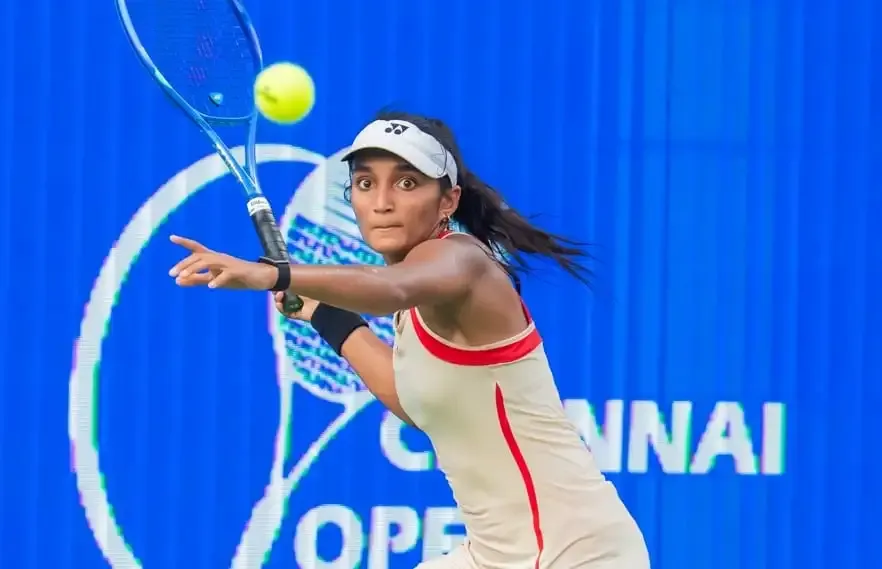
Indian tennis is entering a potential inflection point as the Rs.10.05 crore allocation to the All India Tennis Association for FY 2026–27 signals a shift from reactive funding to long-term system building. Historically defined by individual excellence—from Leander Paes and Mahesh Bhupathi to Sania Mirza—the sport has lacked structural depth. The new approach aims to create a sustainable pipeline, focusing on continuity, bench strength, and resilience. The objective is no longer producing a single star but building a competitive ecosystem capable of consistently delivering elite talent.
A Historical Pattern of Individual Excellence
Indian tennis has traditionally thrived on exceptional individuals rather than institutional strength. From earlier eras shaped by the Krishnan family to the global achievements of Paes, Bhupathi, and Mirza, success has often been episodic rather than systemic.
This model, while producing iconic moments, has limited scalability. Each generation has relied on extraordinary talent emerging despite structural constraints, rather than because of a robust development framework.
The Rs.10.05 Crore Allocation: A Strategic Pivot
The allocation of Rs.10.05 crore to the All India Tennis Association marks a notable departure from past funding patterns. Unlike earlier budgets that often responded to immediate needs, this allocation appears to be guided by a long-term vision.
The emphasis is on building infrastructure, enhancing training systems, and expanding competitive opportunities. This directional funding signals an acknowledgment that sustainable success requires institutional investment rather than reliance on individual brilliance.
Addressing the Core Challenge: Depth and Continuity
At the heart of Indian tennis lies a persistent structural weakness—lack of depth. While the country has produced players capable of breaking into the global elite, the absence of a strong pipeline has resulted in inconsistent performance at the international level.
When top players face injuries, form fluctuations, or financial pressures, there is often insufficient support from a second tier of competitors. This lack of bench strength limits India’s ability to maintain a continuous presence in elite tournaments.
The new funding strategy seeks to address this gap by fostering competitive density and ensuring that emerging players have the resources to progress.
Building a Multi-Layered Talent Pipeline
The shift in approach reflects a broader ambition: transitioning from a star-centric model to a system-driven ecosystem. This involves identifying talent at grassroots levels, providing structured coaching, and ensuring consistent exposure to high-quality competition.
A multi-layered pipeline not only increases the probability of producing top-ranked players but also creates resilience within the system. Success becomes repeatable rather than incidental.
Financial Sustainability and Institutional Accountability
From a business perspective, the allocation also introduces expectations around accountability and outcomes. Investments in sports are increasingly evaluated through measurable returns—whether in terms of performance, participation, or global rankings.
For AITA, the challenge will be to translate funding into tangible progress. Efficient allocation, transparent governance, and strategic execution will be critical in ensuring that the investment yields long-term dividends.
A Broader Shift in Indian Sports Policy
The move reflects a wider evolution in India’s sports policy framework, where emphasis is shifting toward building ecosystems rather than celebrating isolated success stories. Similar trends are visible across other disciplines, indicating a growing recognition of the importance of structural strength.
In this context, tennis serves as a test case for how targeted investment can reshape a sport’s trajectory.
Conclusion
The Rs.10.05 crore allocation to the All India Tennis Association represents more than a financial commitment—it signals a philosophical shift in how Indian tennis is envisioned. By focusing on depth, continuity, and system-building, the sport has an opportunity to move beyond its reliance on exceptional individuals. If executed effectively, this strategy could redefine India’s presence in global tennis, transforming it from a producer of sporadic champions into a consistent force on the international stage.
Comments