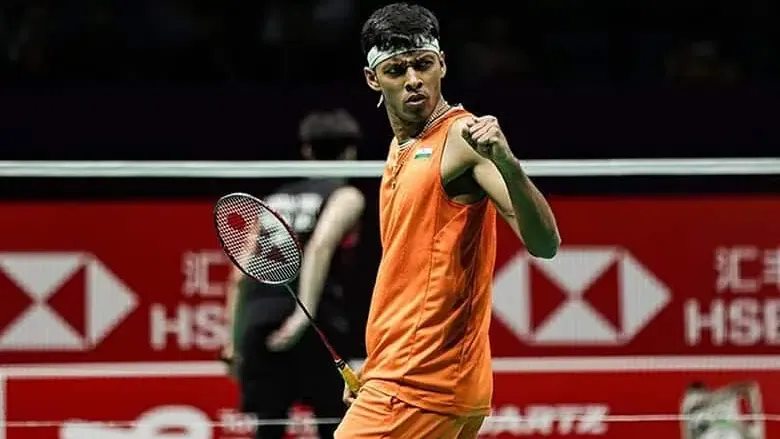
India’s bronze-medal finish at the Thomas Cup should have been celebrated as another defining moment in the nation’s sporting evolution. Instead, the achievement passed with limited public recognition, overshadowed by election rhetoric and the commercial frenzy surrounding cricket. Indian shuttlers delivered one of their finest collective performances in recent years, including a commanding victory over higher-ranked Chinese Taipei, yet their return home was met with silence rather than celebration. In candid remarks, doubles star Chirag Shetty highlighted the emotional disappointment felt by the team. The episode has reignited debate over India’s sporting priorities, media imbalance, and the broader economic ecosystem that determines which athletes receive visibility, investment, and national acknowledgment.
A Historic Campaign Overshadowed by Bigger Headlines
India’s campaign at the Thomas Cup represented another important milestone for Indian badminton. The team’s bronze-medal finish was not merely symbolic; it reflected the country’s growing depth and consistency in one of the world’s most competitive racket sports.
Among the defining moments of the campaign was India’s emphatic victory over Chinese Taipei, a side boasting multiple higher-ranked players and significantly greater international experience. The result demonstrated tactical maturity, composure under pressure, and the continued emergence of India as a credible force in elite badminton.
Yet despite the scale of the achievement, public attention remained muted. The team returned home without the fanfare typically associated with major sporting success. National discourse at the time was dominated by election developments and the commercial spectacle of franchise cricket, leaving little room for sustained attention on badminton.
For many observers, the muted response reflected a deeper structural issue within India’s sporting culture.
Chirag Shetty Voices the Team’s Frustration
Indian doubles specialist Chirag Shetty did not conceal his disappointment while reflecting on the team’s reception after the tournament.
According to Shetty, the players had already anticipated that their accomplishment would receive limited recognition. He noted that even India’s historic Thomas Cup triumph in 2022 — one of the greatest achievements in Indian badminton history — did not result in a major public reception at the airport.
The comments were striking not because they expressed resentment, but because they exposed the emotional disconnect experienced by athletes representing India at the highest level.
For elite athletes, public acknowledgment often serves as validation of years of sacrifice, discipline, and relentless international competition. When landmark achievements pass quietly, it reinforces the perception that only a handful of sports occupy meaningful space within the national imagination.
Shetty’s remarks have since resonated widely across sporting circles, particularly among athletes from non-cricket disciplines who frequently struggle for visibility despite delivering international success.
The Uneven Economics of Indian Sport
The contrast between cricket and other sports in India is not merely cultural — it is deeply economic.
Cricket commands overwhelming dominance across broadcasting rights, advertising revenues, sponsorship deals, and media coverage. Events such as the Indian Premier League operate within a multibillion-rupee commercial ecosystem that attracts corporate investment, political attention, and near-continuous television exposure.
Badminton, despite India producing globally competitive athletes over the past decade, functions within a far smaller commercial framework. Even successful campaigns at prestigious tournaments often struggle to maintain media traction beyond brief news cycles.
This imbalance has long-term implications. Visibility influences sponsorship opportunities, grassroots participation, infrastructure development, and athlete earning potential. A sport that receives limited national attention inevitably faces greater difficulty attracting sustained private investment.
India’s badminton ecosystem has undoubtedly improved, aided by Olympic medals, international titles, and corporate backing for select players. However, the broader recognition gap remains significant.
India’s Sporting Identity Remains Narrow
The comments from Shetty also raise a larger philosophical question: What defines a sporting nation?
Countries with mature sporting cultures celebrate achievements across disciplines, recognizing that international success — regardless of sport — contributes to national prestige and collective identity. In India, however, recognition often remains concentrated around commercially dominant events rather than athletic accomplishment itself.
This creates an environment where extraordinary performances in Olympic sports receive admiration but not necessarily sustained national engagement.
The irony is particularly striking given India’s increasing investment in becoming a global sporting power. The country has expanded funding for elite athletes, strengthened Olympic preparation systems, and expressed interest in hosting major international events, including the Olympic Games.
Yet institutional ambition must eventually align with public sporting culture. Without broader appreciation for athletes across disciplines, India risks building infrastructure without cultivating a genuinely diversified sporting identity.
Badminton’s Rise Deserves Greater Recognition
Over the past decade, Indian badminton has evolved into one of the country’s most successful international sporting disciplines.
Athletes such as P. V. Sindhu, Saina Nehwal, Lakshya Sen, and the doubles pairing of Satwiksairaj Rankireddy and Chirag Shetty have transformed India’s global standing in the sport.
The Thomas Cup performances further reinforced that India is no longer dependent on isolated individual brilliance. The country now possesses a broader competitive structure capable of challenging traditional Asian powerhouses.
That progress should ideally translate into stronger institutional celebration, broader public engagement, and more substantial commercial support.
Beyond Medals: The Need for Cultural Change
The issue highlighted by India’s Thomas Cup campaign extends beyond airport receptions or media headlines. It speaks to how nations choose to value excellence.
Celebrating athletes is not merely symbolic; it shapes aspirations, inspires younger generations, and strengthens the social legitimacy of professional sport outside commercially dominant disciplines.
India’s emergence as a serious multi-sport nation will ultimately depend not only on medal counts or infrastructure spending, but also on whether achievements across sports are acknowledged with equal sincerity.
For now, the Indian badminton team’s bronze-medal campaign stands as both a sporting success and a reminder of the recognition gap that still exists within the country’s athletic ecosystem. As voices like Chirag Shetty’s continue to draw attention to the issue, the conversation around India’s sporting priorities may finally begin to evolve.
Comments