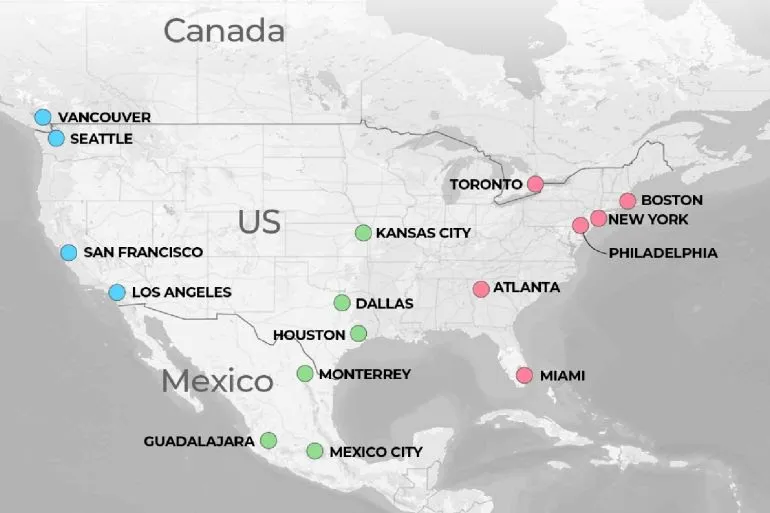
A new chapter in international football is set to unfold as the FIFA World Cup 2026 prepares to become the largest tournament in the competition's history. Scheduled to run from June 11 to July 19 across the United States, Canada and Mexico, the event will feature an expanded field of 48 national teams, marking a significant evolution in the sport's premier competition. The enlarged format promises more matches, greater geographic representation and increased commercial opportunities. With three host nations, a revamped tournament structure and an expanded knockout phase, the 2026 edition is expected to reshape the global football landscape while offering fans an unprecedented month-long spectacle.
A Landmark Moment for World Football
The 2026 FIFA World Cup will represent one of the most ambitious undertakings in football history. For the first time, three countries—the United States, Canada and Mexico—will jointly host the tournament, creating a truly continental event spanning North America.
The competition will also introduce the most substantial expansion since the World Cup adopted its modern format. The number of participating teams will increase from 32 to 48, allowing more nations to compete on football's biggest stage and broadening the tournament's global reach.
Football governing authorities view the expansion as an opportunity to promote the sport in emerging markets while enhancing international competitiveness.
Expanded Tournament Format Creates New Opportunities
The enlarged tournament structure is designed to accommodate the additional participants without compromising the competitive intensity that has defined previous World Cups.
The 48 qualified teams will be divided into 12 groups, each consisting of four nations. Under the revised system, the top two teams from every group will automatically progress to the knockout rounds.
In addition, the eight highest-ranked third-place teams will also advance, creating a 32-team knockout stage. This new Round of 32 will precede the traditional stages of the competition, including the Round of 16, quarterfinals, semifinals and final.
The revised format significantly increases the number of matches and provides more countries with a realistic pathway to the latter stages of the tournament.
Qualification Process Reaches Historic Scale
The qualification campaign for the 2026 World Cup has been one of the most extensive in football history. While the host nations secured automatic entry, the remaining teams earned their places through a rigorous qualification process conducted across FIFA's six continental confederations.
The expanded format has created additional qualification slots for regions including Africa, Asia, North America and Oceania, increasing representation from football markets that have historically faced limited opportunities to participate in the tournament.
This broader inclusion reflects football's growing global footprint and recognizes the sport's rising popularity across developing football nations.
Economic Impact Expected to Reach Record Levels
Beyond the sporting spectacle, the 2026 World Cup is poised to become one of the most commercially valuable sporting events ever staged.
The tournament is expected to generate billions of dollars in economic activity through tourism, broadcasting rights, sponsorship agreements, hospitality services and infrastructure investments. Host cities across the three nations are preparing for an influx of international visitors, with hotels, transportation networks and entertainment venues anticipated to benefit significantly.
The expanded competition will also increase media exposure, creating additional revenue opportunities for sponsors and stakeholders associated with the event.
North America Takes Center Stage
The joint hosting arrangement offers a unique opportunity to showcase the diversity and scale of North America. Matches will be played across numerous world-class stadiums, many of which regularly host major sporting and entertainment events.
For Mexico, the tournament will reinforce its longstanding football heritage. Canada will gain a rare opportunity to host matches on football's biggest stage, while the United States is expected to leverage the event to further accelerate the sport's growth ahead of future international competitions.
The collaboration among the three countries demonstrates an unprecedented level of coordination in international sports hosting.
Competitive Landscape Intensifies
The increase in participating nations is expected to inject fresh unpredictability into the tournament. Emerging football nations will have a greater chance to challenge traditional powers, potentially producing new storylines and breakthrough performances.
Analysts believe the expanded format could alter competitive dynamics, as established football giants may face stronger opposition earlier in the tournament than in previous editions.
At the same time, the larger field increases the likelihood of underdog success, one of the elements that has historically made the World Cup a global phenomenon.
Looking Ahead to a Historic Tournament
As preparations continue, anticipation is building for what promises to be the most expansive World Cup ever staged. The combination of 48 teams, three host nations and a redesigned competition format positions the 2026 tournament as a transformational moment for international football.
With greater inclusivity, increased commercial opportunities and the potential for unforgettable sporting drama, the FIFA World Cup 2026 is expected to set new benchmarks for global engagement and redefine the future of football's most prestigious event.
Comments