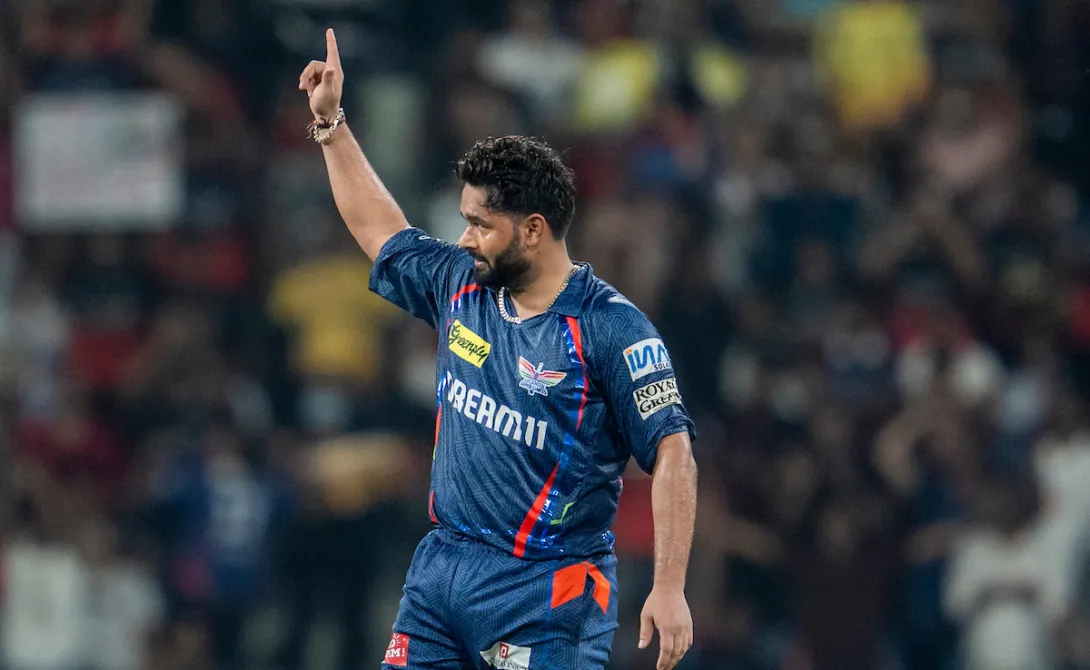
The 2026 season of the Indian Premier League represents a crucial turning point for Rishabh Pant, whose record valuation and leadership responsibilities have placed him at the center of intense scrutiny. Acquired for an unprecedented Rs. 27 crore, Pant enters the tournament as captain of the Lucknow Super Giants, tasked with delivering both individual brilliance and team success. After an inconsistent campaign last season, the franchise has reshaped its batting strategy and leadership approach. As the 2026 edition of the Indian Premier League unfolds, Pant’s performance will not only shape Lucknow’s fortunes but also influence broader conversations around player valuation, leadership accountability, and competitive economics in modern franchise cricket.
A Record Investment in Modern Franchise Cricket
When the Lucknow Super Giants invested Rs. 27 crore to acquire Rishabh Pant, the deal instantly became one of the most significant financial commitments in the history of the Indian Premier League.
In a tournament where player salaries often reflect not only sporting ability but also brand value and leadership potential, Pant’s acquisition represented a strategic gamble. Franchise owners increasingly view marquee players as long-term assets capable of shaping team identity, boosting sponsorship opportunities, and strengthening fan engagement.
Pant’s reputation as an explosive wicketkeeper-batter and charismatic leader made him a natural candidate for such an investment. Yet with record-breaking financial backing comes an equally significant expectation to deliver consistent results.
Performance Pressure After a Challenging Season
The previous IPL season presented a difficult phase for Pant and his team. Despite moments of aggressive batting, the numbers did not fully reflect his reputation as one of India’s most dynamic players.
The Lucknow Super Giants finished outside the playoff positions, highlighting the team’s struggles with consistency across batting and bowling departments. In the highly competitive structure of the Indian Premier League, such results often prompt immediate tactical reassessment.
For Pant, the challenge extends beyond statistics. As captain, his influence is measured not only in runs but also in decision-making, team morale, and the ability to navigate pressure situations—qualities that define successful leadership in franchise sport.
A Tactical Shift in the Batting Order
Heading into the 2026 season, the management of the Lucknow Super Giants has introduced strategic adjustments designed to maximize Pant’s impact. One of the most notable changes involves promoting Rishabh Pant to the No. 3 position in the batting order.
The move reflects a broader tactical philosophy increasingly adopted across T20 cricket: placing high-impact players earlier in the innings to control the tempo of the game. By batting at No. 3, Pant will have the opportunity to stabilize the innings after early wickets while maintaining the aggressive scoring rate required in modern T20 competition.
This decision also reshapes the team’s middle order, potentially allowing other power hitters to operate in specialized finishing roles.
Leadership in the Era of Commercialized Cricket
Captaining a franchise in the Indian Premier League involves far more than tactical planning on match day. The role encompasses media engagement, sponsor relationships, team management, and the constant scrutiny of millions of supporters.
For Rishabh Pant, the 2026 season represents an opportunity to demonstrate maturity as a leader. His journey over the past few years—from emerging talent to established international player—has already showcased resilience and determination.
In professional leagues where financial stakes continue to rise, captains must balance individual performance with the broader commercial and sporting objectives of their franchises.
A Crucial Season for Player and Franchise
As the new season of the Indian Premier League unfolds, both Pant and the Lucknow Super Giants find themselves at a critical juncture. The franchise’s investment signals long-term faith in Pant’s leadership, but success in a results-driven league ultimately depends on performance on the field.
If Pant delivers a strong campaign—both as a batsman and captain—he could reaffirm his status as one of the league’s most valuable players. Conversely, another inconsistent season may intensify debate over the financial strategies that shape modern franchise cricket.
In the evolving economy of global sport, where talent, branding, and leadership intersect, the IPL 2026 campaign could prove to be the defining chapter in Rishabh Pant’s franchise career.
Comments