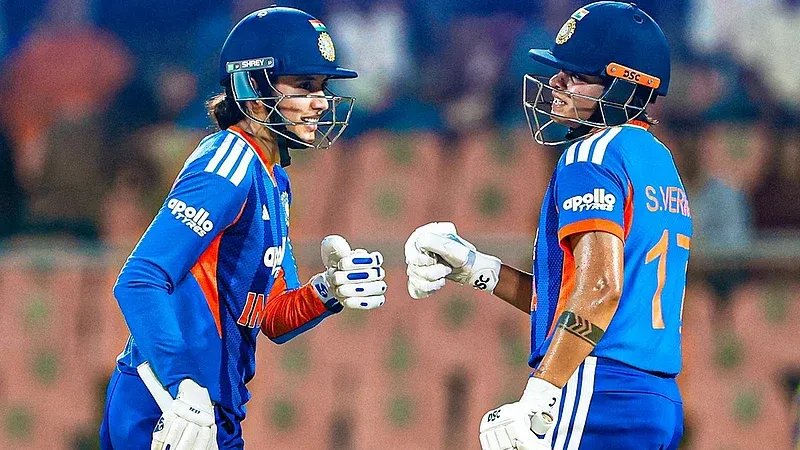
The Indian Women’s cricket team is set to face South Africa in a crucial five-match T20I series from April 17 to April 27, 2026, serving as a final preparatory platform ahead of the ICC Women’s T20 World Cup. With India ranked third and South Africa fifth globally, the series carries significant competitive and strategic weight. Played across varied venues, the contest will test adaptability, tactical depth, and squad resilience. Beyond immediate results, the tour represents a critical phase in performance optimization, offering both teams an opportunity to refine combinations and build momentum ahead of a major global tournament.
A Crucial Pre-World Cup Contest
The upcoming T20I series between the India women's national cricket team and the South Africa women's national cricket team is more than a bilateral engagement—it is a strategic rehearsal ahead of the ICC Women's T20 World Cup scheduled in England and Wales in June 2026.
With India currently ranked third and South Africa fifth in the global standings, the series is expected to deliver high-quality cricket, reflecting the evolving competitiveness in the women’s game.
Tactical Depth and Competitive Balance
The series promises a compelling clash of styles, with both teams bringing distinct tactical approaches to the field. India’s structured batting depth and spin options will be tested against South Africa’s pace-driven attack and aggressive game plans.
From a performance standpoint, such contests provide invaluable insights into match readiness. Teams can evaluate player roles, experiment with combinations, and fine-tune strategies under competitive conditions—an essential process in the lead-up to global tournaments.
Venue Diversity as a Performance Variable
The five-match series has been strategically distributed across multiple venues to test adaptability. The opening matches at Kingsmead Cricket Ground in Durban will present conditions characterized by coastal humidity and swing-friendly pitches.
Such environmental variables are critical in modern cricket, where success often depends on a team’s ability to adjust quickly to changing conditions. Exposure to diverse playing surfaces enhances tactical flexibility and prepares players for the varied challenges of international tournaments.
Highveld Conditions and Skill Calibration
As the series progresses across different venues, including those in the Highveld region, players will encounter bouncier tracks that demand technical precision and physical readiness. These conditions are particularly useful in simulating scenarios similar to those expected in global competitions.
For coaching staff, this provides an opportunity to assess how players adapt to pace, bounce, and pressure—key indicators of readiness for elite-level tournaments.
Strategic and Commercial Implications
Beyond its sporting significance, the series also carries commercial and strategic value. High-profile bilateral contests contribute to the growing visibility of women’s cricket, attracting sponsorships, broadcasting deals, and fan engagement.
Strong performances in such series can enhance team valuations and individual player marketability, reinforcing the sport’s expanding economic footprint. As women’s cricket continues to gain traction globally, these contests play a pivotal role in sustaining momentum.
Conclusion: Building Momentum for the Global Stage
The India-South Africa T20I series represents a critical juncture in both teams’ preparations for the 2026 ICC Women’s T20 World Cup. With rankings, reputation, and readiness at stake, the series offers a comprehensive test of skill, strategy, and resilience.
In elite sport, preparation often defines success. For India and South Africa, this series is not merely about results—it is about refining performance, building confidence, and laying the groundwork for success on the world stage.
Comments