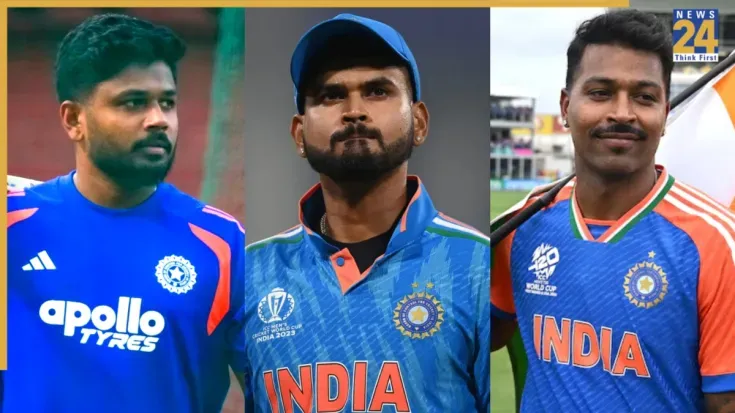
The debate surrounding India’s T20 captaincy has intensified in recent days, drawing widespread media attention and speculation over potential leadership changes. While no official confirmation has been made, discussions across cricketing circles have centered on multiple possible contenders, creating a fluid and uncertain narrative around the future direction of the team. Observers note that the conversation has taken on the character of a “musical chairs” scenario, with names circulating rapidly but no definitive outcome in sight. Amid this speculation, senior voices within the cricketing ecosystem have largely refrained from public comment, reflecting a period of strategic silence as decisions remain pending at the administrative level.
Growing Speculation Around India’s T20 Leadership
The question of India’s T20 captaincy has become a dominant talking point across cricket media platforms, with discussions intensifying in recent days. Despite the volume of speculation, no official announcement has been made regarding a leadership change or confirmation of any successor.
The uncertainty has led to widespread conjecture, with multiple names being discussed in cricketing and media circles. However, much of this remains speculative in nature, with no formal validation from governing authorities or team management.
The absence of clarity has only amplified public interest, turning what is typically an administrative decision into a broader narrative of anticipation and debate.
A “Musical Chairs” Narrative Emerges
The ongoing discourse has increasingly been described as resembling a game of musical chairs, where multiple potential candidates are linked to the leadership role without a clear or confirmed outcome.
This fluid situation reflects the dynamic nature of modern cricket administration, where leadership decisions are often influenced by performance cycles, tournament demands, and long-term strategic planning.
The metaphor highlights the instability of public narratives around team leadership, particularly in high-profile cricketing nations where captaincy decisions attract significant scrutiny and emotional engagement from fans and analysts alike.
Silence From Key Stakeholders
Despite the intensity of speculation, there has been limited public commentary from senior stakeholders within the cricketing ecosystem. One perspective suggests that this silence is deliberate, allowing the decision-making process to unfold without external pressure.
In such situations, governing bodies often prefer to evaluate leadership options internally before making formal announcements. This approach helps ensure that decisions are aligned with broader strategic objectives rather than immediate public sentiment.
The lack of official statements has, however, contributed to increased media speculation, filling the information gap with unverified narratives and projections.
Leadership Decisions in Modern Cricket: A Strategic Asset
In contemporary international cricket, captaincy is no longer viewed solely as an on-field leadership role. It is increasingly treated as a strategic asset that influences team composition, tactical execution, and long-term performance planning.
For a team of India’s scale and commercial significance, leadership decisions carry implications that extend beyond match outcomes. They impact sponsorship narratives, media engagement, fan sentiment, and even broader cricketing economics.
As a result, captaincy transitions are typically managed with considerable caution, ensuring alignment between sporting performance and organizational vision.
Media Dynamics and Speculative Cycles
The current debate also highlights the role of media amplification in shaping cricketing narratives. In the absence of official clarity, speculation often fills the vacuum, leading to rapid circulation of potential scenarios and leadership permutations.
This phenomenon is not unique to cricket but is particularly pronounced in high-profile sporting ecosystems where audience engagement is high and information demand exceeds formal communication cycles.
As discussions continue, the narrative around India’s T20 captaincy has become less about confirmed decisions and more about perceived possibilities.
A Period of Waiting Before Clarity Emerges
At present, the situation remains unresolved, with no official confirmation regarding leadership changes or appointments. The ongoing discourse reflects a transitional phase in which evaluation and internal deliberations are likely still underway.
Until formal communication is issued, speculation is expected to persist, driven by both media interest and public curiosity.
What remains clear, however, is that India’s T20 captaincy continues to be one of the most closely followed leadership positions in international cricket—where every potential change becomes a matter of national sporting significance and sustained public debate.
Comments