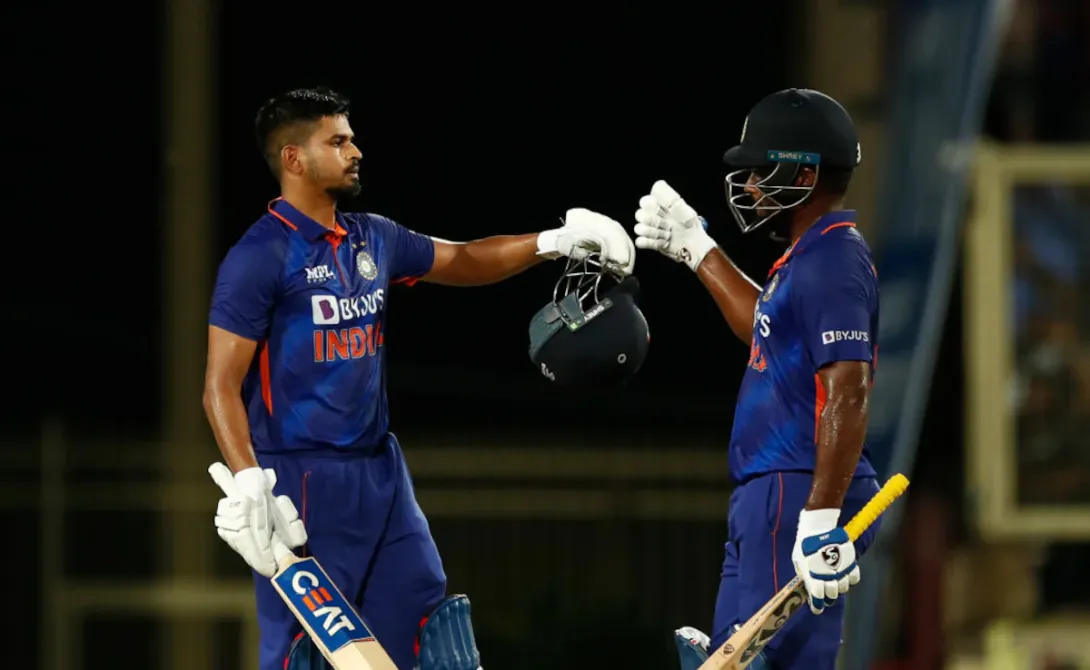
India’s white-ball cricket structure appears to be entering a significant transitional phase as speculation intensifies over the future of the national T20 captaincy. With reports indicating that the current leadership setup may soon undergo a change, attention has shifted toward a new generation of candidates capable of guiding the team into the next competitive cycle. Among the frontrunners are Shreyas Iyer and Sanju Samson, both of whom have strengthened their credentials through strong performances and proven leadership experience. Samson’s impressive form following his move to Chennai Super Kings has further elevated his profile, fueling discussions around India’s evolving leadership strategy in T20 cricket.
India’s T20 Leadership Structure Faces a Defining Moment
Indian cricket appears to be approaching another pivotal leadership transition as discussions surrounding the future of the national T20 captaincy gather momentum. While official confirmation remains absent, mounting reports and internal speculation suggest that selectors and team management are actively evaluating long-term alternatives capable of leading India through the next phase of global white-ball competition.
The debate reflects broader strategic thinking within Indian cricket, where leadership is increasingly viewed not merely as an honorary role but as a critical component of tactical innovation, dressing-room management, and long-term squad development.
Among the leading names under consideration are Shreyas Iyer and Sanju Samson — two players whose recent performances and captaincy credentials have significantly strengthened their standing within the national setup.
Shreyas Iyer Strengthens Case Through Tactical Stability
According to multiple reports, Shreyas Iyer has emerged as a serious candidate for India’s future T20 leadership role. The middle-order batter has steadily built a reputation as a composed tactician capable of handling high-pressure situations while maintaining stability within the batting unit.
Iyer’s leadership profile has evolved considerably over recent seasons, particularly through his franchise cricket experience, where his calm decision-making and strategic clarity have earned praise from analysts and former players alike.
From a selection standpoint, Iyer represents a modern T20 leadership template — aggressive yet calculated, tactically flexible, and capable of balancing data-driven planning with instinctive on-field adjustments.
His growing influence within India’s white-ball setup has naturally positioned him among the foremost contenders should the management decide to initiate a transition in leadership.
Sanju Samson’s Resurgence Changes the Conversation
Equally significant is the rapid rise of Sanju Samson as a viable captaincy candidate. Long regarded as one of India’s most naturally gifted stroke-makers, Samson has added greater consistency and maturity to his game in recent months, transforming perceptions surrounding his role in the national structure.
His performances since joining Chennai Super Kings ahead of the IPL 2026 season have been particularly influential. Although he does not serve as franchise captain, his composure, tactical understanding, and ability to guide younger players have reportedly impressed observers within the cricket establishment.
Samson’s prior experience leading Rajasthan Royals has further strengthened his leadership credentials. During his tenure, he demonstrated an ability to manage diverse personalities while maintaining a balanced and progressive approach to captaincy.
For selectors seeking a leader capable of combining tactical intelligence with attacking intent, Samson’s profile has become increasingly difficult to ignore.
Leadership Transition Reflects Broader Strategic Evolution
The growing focus on alternative T20 captains reflects a wider shift in India’s cricketing philosophy. Modern T20 leadership demands more than individual brilliance; it requires adaptability, analytical thinking, communication skills, and the ability to operate within high-pressure global tournaments where margins are exceptionally narrow.
India’s management appears increasingly aware that the next leadership appointment could shape the team’s competitive identity for several years. With ICC events becoming more frequent and franchise cricket continuing to influence player development, selectors are likely prioritizing leaders who can seamlessly navigate both international and league-based cricket environments.
This evolving framework explains why candidates such as Iyer and Samson are receiving serious consideration despite intense competition for places within the national squad.
Chennai Super Kings’ Environment Enhances Samson’s Credentials
One of the most intriguing aspects of Samson’s rise is the role played by Chennai Super Kings in refining his leadership image.
The franchise is widely regarded as one of the IPL’s most professionally managed organizations, known for cultivating composure, tactical discipline, and role clarity among players. Operating within such an environment appears to have accelerated Samson’s growth as both a cricketer and a decision-maker.
Observers have noted greater maturity in his shot selection, game awareness, and ability to influence dressing-room dynamics — qualities that often separate elite captains from talented individuals.
Even without formally holding the captaincy role at CSK, Samson’s presence within the setup has reportedly enhanced his reputation among selectors and team strategists.
Indian Cricket Enters a New Era of Leadership Competition
The emergence of multiple captaincy candidates signals a healthy evolution within Indian cricket. Rather than depending on a single established figure, the national setup now possesses a broader leadership pool shaped by franchise cricket, international exposure, and tactical specialization.
For Indian cricket administrators, this depth offers strategic flexibility but also introduces complex decision-making challenges. The eventual choice will likely depend on several factors, including long-term squad planning, dressing-room dynamics, workload management, and performance consistency across formats.
Whether the future belongs to Shreyas Iyer, Sanju Samson, or another emerging candidate, the ongoing discussion underscores one undeniable reality: India’s T20 team is preparing for a new leadership chapter shaped by modern cricket’s increasingly sophisticated demands.
Comments