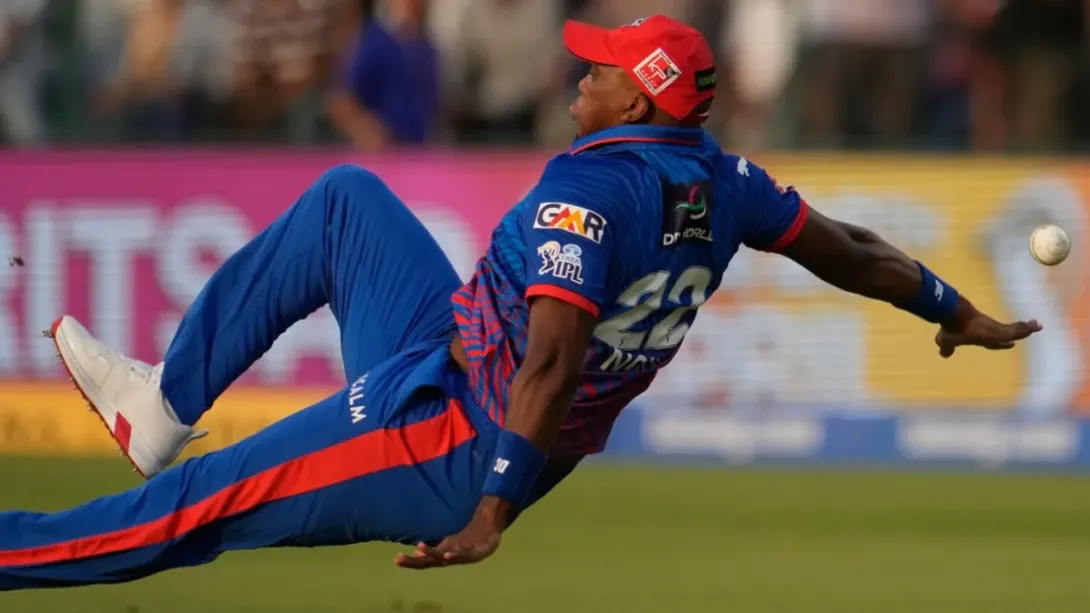
A tense moment unfolded in the Indian Premier League when Lungi Ngidi suffered a concerning on-field injury, leading to a prolonged stoppage in play. Medical staff rushed in as the fast bowler remained motionless, requiring immediate stabilization of his head and neck before being stretchered off and transported to hospital. In a reassuring update issued later, officials confirmed that Ngidi was stable and expected to be discharged shortly. The incident highlights the growing emphasis on player safety, medical preparedness, and risk management within professional cricket’s high-intensity environment.
On-Field Emergency Brings Match to a Halt
The match came to an abrupt pause when Lungi Ngidi collapsed on the field, prompting immediate concern among players and officials. The severity of the situation was evident as medical personnel, including physiotherapists and doctors, rushed to his aid.
Ngidi remained on the ground for an extended period, necessitating careful handling. Given the potential risk associated with head and neck injuries, medical staff followed strict protocols, ensuring minimal movement while assessing his condition.
Such incidents underscore the unpredictable physical demands of professional sport, where player safety remains paramount.
Swift Medical Response and Protocol Execution
The response to the incident demonstrated the IPL’s investment in medical infrastructure and emergency preparedness. Ngidi’s head and neck were stabilized using a brace before he was carefully transferred onto a stretcher and into an ambulance.
These procedures reflect global best practices in sports medicine, particularly in cases involving potential spinal or neurological risk. The presence of trained medical teams and immediate access to emergency transport are critical components of modern sporting events.
The efficiency of the response likely played a key role in ensuring the player’s condition did not worsen.
Reassuring Update Eases Concerns
Approximately an hour after being taken off the field, an official update confirmed that Ngidi was stable and expected to be discharged shortly from the hospital. The news provided significant relief to teammates, fans, and stakeholders.
While the exact nature of the injury was not immediately disclosed, the positive update suggests that initial fears of a serious condition were mitigated. Nevertheless, such incidents often require follow-up evaluations to ensure there are no underlying complications.
Player Safety as a Strategic Priority
The incident highlights the increasing focus on player welfare within the IPL and global cricket. Beyond performance metrics, leagues are investing heavily in safety protocols, medical staffing, and infrastructure to mitigate risks.
From a governance perspective, ensuring player safety is not only an ethical responsibility but also a strategic imperative. Injuries to key players can impact team performance, league competitiveness, and commercial outcomes.
As the sport evolves, the integration of advanced medical practices will continue to play a crucial role in sustaining athlete longevity and performance.
Commercial and Operational Implications
High-profile injury incidents can influence multiple aspects of the sports business ecosystem. Temporary stoppages affect broadcast schedules, while player availability impacts team strategy and fan engagement.
However, effective handling of such situations can reinforce trust among audiences and stakeholders. Demonstrating a commitment to safety enhances the league’s credibility and long-term brand value.
In this context, the IPL’s response to Ngidi’s injury serves as a case study in balancing operational continuity with player welfare.
Conclusion: A Reminder of Sport’s Fragility
Lungi Ngidi’s on-field injury serves as a stark reminder of the physical risks inherent in professional cricket. While the immediate outcome appears positive, the incident underscores the importance of preparedness, rapid response, and ongoing medical vigilance.
As the IPL continues to grow as a global sporting and commercial entity, maintaining high standards of player safety will remain central to its success.
Comments