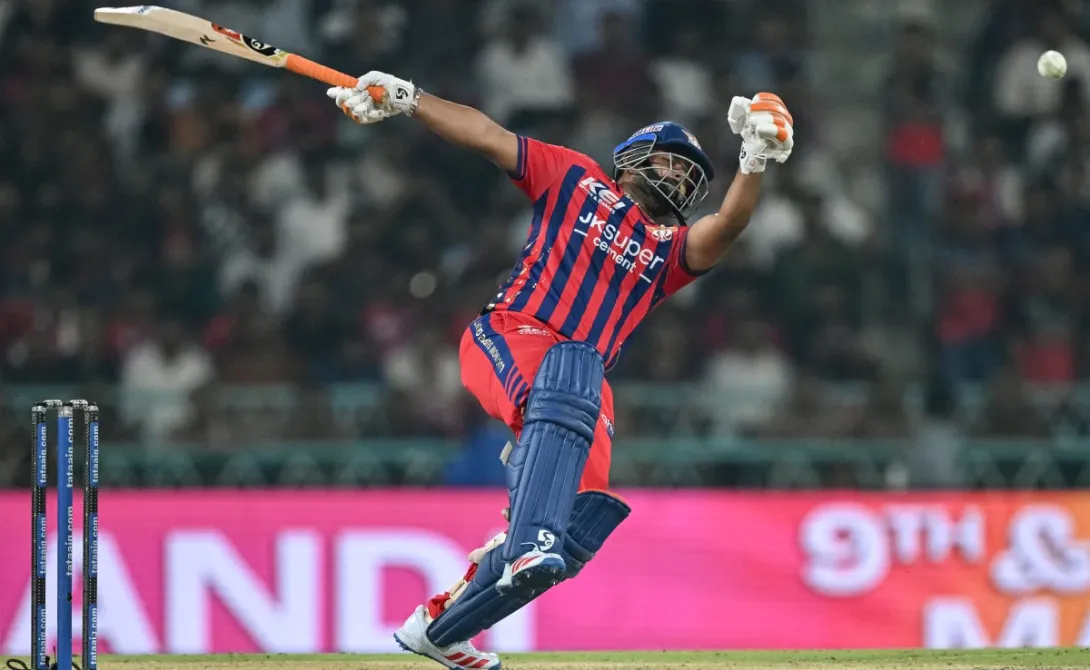
The leadership landscape of the Indian Premier League could witness significant changes after reports suggested that captains Axar Patel, Ajinkya Rahane, and Rishabh Pant are facing mounting scrutiny following disappointing campaigns. With playoff qualification increasingly unlikely for their respective franchises, questions are emerging over leadership effectiveness, squad management, and long-term strategic planning. Lucknow Super Giants have already been eliminated, intensifying pressure on Pant, while Kolkata Knight Riders and Delhi Capitals also appear headed toward underwhelming finishes. The developments reflect the increasingly high-stakes and commercially demanding environment surrounding franchise cricket leadership.
IPL Captains Under Intensifying Scrutiny
The 2026 season of the Indian Premier League may conclude with major leadership reshuffles across several franchises as mounting pressure builds on captains whose teams have failed to meet expectations.
According to sources monitoring developments within league franchises, Axar Patel, Ajinkya Rahane, and Rishabh Pant are all facing uncertainty regarding their captaincy futures after disappointing campaigns that have left their teams struggling outside playoff contention.
The situation reflects the unforgiving nature of modern franchise cricket, where leadership performance is increasingly evaluated not only through tactical decision-making but also through commercial expectations, brand value, and postseason qualification.
Rishabh Pant Faces Sharpest Pressure
Among the three captains, Rishabh Pant appears to be under the greatest pressure following the official elimination of Lucknow Super Giants from playoff contention.
The franchise entered the season with considerable expectations, supported by a balanced squad and substantial investment in player recruitment. However, inconsistent performances, tactical instability, and failure to capitalize on key moments resulted in another disappointing campaign.
Pant’s leadership has consequently come under heightened scrutiny, particularly because this marks a second consecutive underwhelming season for the franchise under his captaincy.
Industry observers note that IPL franchises increasingly prioritize immediate competitive returns, especially given the league’s massive financial ecosystem and the commercial consequences associated with poor performances.
Rahane and Axar Also Under Cloud
While Kolkata Knight Riders and Delhi Capitals remain mathematically alive in the tournament, insiders suggest both teams are unlikely to remain serious contenders during the final stages of the competition.
That reality has intensified speculation surrounding the futures of Ajinkya Rahane and Axar Patel as captains.
Rahane, widely respected for his calm temperament and traditional cricketing approach, has struggled to generate sustained momentum for Kolkata Knight Riders despite moments of individual promise within the squad. Questions have reportedly emerged regarding tactical adaptability and consistency in high-pressure situations.
Similarly, Delhi Capitals’ campaign under Axar Patel has failed to produce the stability and competitive intensity expected from a franchise seeking to establish itself among the IPL’s elite teams.
Franchise Cricket Becoming Increasingly Results-Driven
The pressure facing IPL captains reflects the broader transformation of franchise cricket into a highly commercialized and performance-driven industry.
The Indian Premier League is no longer simply a sporting tournament; it operates as a global entertainment and business ecosystem involving billion-rupee valuations, multinational sponsorships, digital broadcasting rights, and massive fan engagement metrics.
In such an environment, team leadership is evaluated through a multidimensional lens that includes results, dressing-room management, tactical innovation, player development, and public perception.
Franchises increasingly seek captains capable not only of winning matches but also of managing high-profile squads under relentless public scrutiny.
Leadership Stability Emerging as Competitive Advantage
Recent IPL history has shown that franchises with stable leadership structures often perform more consistently over longer competitive cycles.
Teams with clearly defined strategic direction, stable coaching environments, and strong captain-coach alignment tend to navigate pressure situations more effectively. Conversely, frequent leadership changes can create uncertainty regarding tactical identity and squad culture.
However, the commercial urgency associated with the IPL often shortens organizational patience, particularly when playoff qualification is repeatedly missed.
Analysts believe franchises are becoming more willing to pursue aggressive leadership changes in pursuit of immediate competitive revival.
Changing Expectations Around Captains
The evolving demands placed on IPL captains also reflect broader changes within modern cricket.
Today’s franchise leaders must operate within highly data-driven environments while balancing tactical responsibilities, media commitments, player management, and commercial expectations. Leadership quality is increasingly measured through adaptability, communication skills, and decision-making under pressure.
Captains are expected to manage international stars, emerging domestic players, analytics teams, and coaching staff simultaneously — all while operating within one of the most intensely scrutinized sporting leagues in the world.
The growing complexity of the role means even established players are vulnerable when results decline.
Crucial Weeks Ahead for Franchise Decision-Makers
As the league approaches its conclusion, franchise owners and management groups are expected to begin internal reviews assessing both player performance and leadership structures.
For Rishabh Pant, Ajinkya Rahane, and Axar Patel, the coming weeks could prove decisive in determining their futures as IPL captains.
While leadership changes remain speculative at this stage, the mounting scrutiny surrounding these franchises highlights the increasingly ruthless competitive standards governing modern franchise cricket.
In a tournament where success and commercial relevance are deeply intertwined, underperformance rarely escapes long-term consequences.
Comments