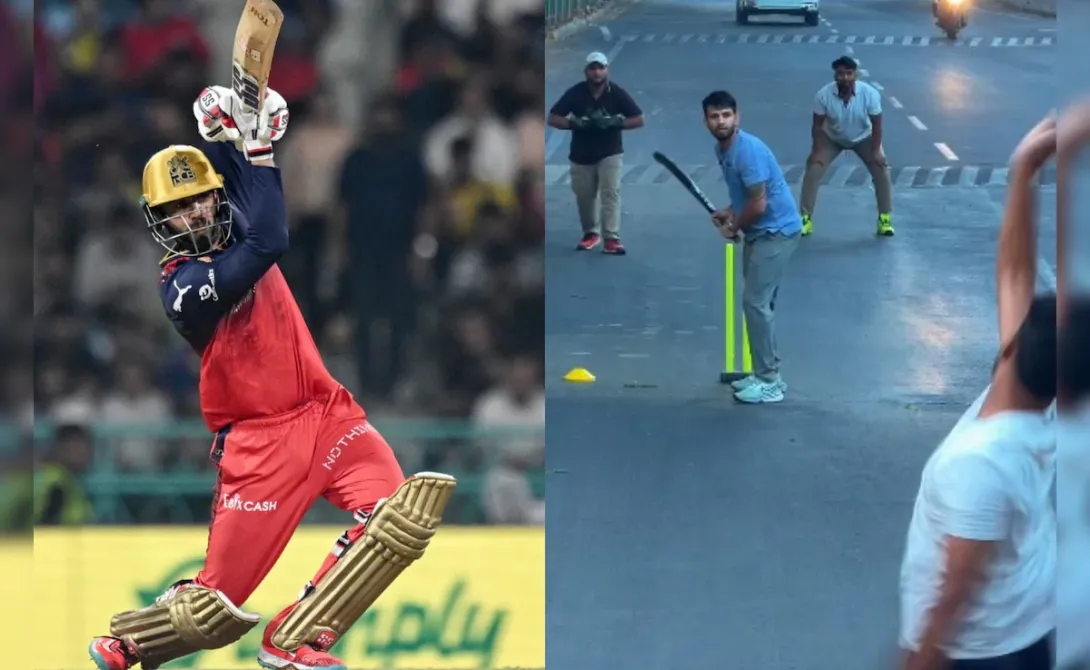
Emerging Indian wicketkeeper-batter Jitesh Sharma has begun a unique preparation routine ahead of the **Indian Premier League 2026 season, incorporating gully cricket-style challenges to sharpen reflexes and situational awareness. The unconventional training emphasizes hand-eye coordination, improvisation, and high-pressure decision-making—skills vital for T20 cricket. Analysts note that such adaptive practices highlight how modern athletes blend traditional techniques with creative approaches to maintain competitive edges. Beyond personal performance, Sharma’s preparation has potential commercial visibility, drawing attention from sponsors and fans alike, underscoring how IPL players increasingly integrate performance optimization with branding and market engagement strategies.
A Creative Approach to T20 Readiness
Jitesh Sharma’s IPL preparation has taken an innovative turn by integrating elements of gully cricket—a street-style format renowned for improvisation and rapid decision-making. By simulating unpredictable deliveries, narrow spaces, and high-pressure scenarios, Sharma aims to refine reflexes and batting adaptability.
This approach allows him to practice creativity and anticipation in conditions mimicking live match intensity. Coaches suggest that such methods foster instinctive responses crucial in T20 cricket, where split-second decisions often determine outcomes. By blending grassroots techniques with professional rigor, Sharma exemplifies a modern athlete’s adaptive training philosophy.
Skill Development Through Unconventional Training
The gully cricket challenge targets several key competencies:
- Hand-Eye Coordination: Responding to unexpected ball trajectories enhances precision.
- Situational Awareness: Limited playing space mirrors match scenarios requiring quick thinking.
- Improvisation: Developing innovative shot-making under pressure prepares the batter for unpredictable deliveries.
Analysts note that this form of functional training complements conventional nets and fitness regimes, providing holistic preparation that improves agility, focus, and mental resilience—critical components for high-pressure IPL matches.
Commercial and Market Implications
Sharma’s unique preparation approach has drawn attention from media and sponsors, highlighting the intersection of performance and personal branding in modern cricket. In a T20-centric marketplace, IPL players increasingly leverage off-field narratives—training techniques, social engagement, and personal initiatives—to amplify visibility and commercial value.
For franchises, players demonstrating innovative training methods reinforce fan engagement, digital content generation, and sponsor activation opportunities, effectively converting athletic discipline into marketable assets.
Building Confidence for IPL 2026
Sharma’s preparation strategy aligns with broader competitive objectives for IPL 2026. By enhancing reflexes, decision-making, and improvisation skills, he positions himself to contribute effectively under pressure—whether opening, middle-order, or finishing roles.
Coaches highlight that early-season readiness often translates into stronger performance consistency, especially in the fast-paced T20 format. This preparation not only benefits individual performance but also strengthens team dynamics and on-field adaptability for his franchise.
Conclusion: Blending Tradition with Modern Strategy
Jitesh Sharma’s gully cricket challenge illustrates how contemporary athletes integrate unconventional methods into professional training. By merging grassroots creativity with elite T20 demands, he exemplifies a new paradigm in sports preparation: one that balances technical mastery, mental acuity, and market visibility.
As IPL 2026 approaches, such innovative approaches may offer competitive advantages while simultaneously enhancing player branding and fan engagement—highlighting the dual focus of modern cricket on performance and commercial strategy.
Comments