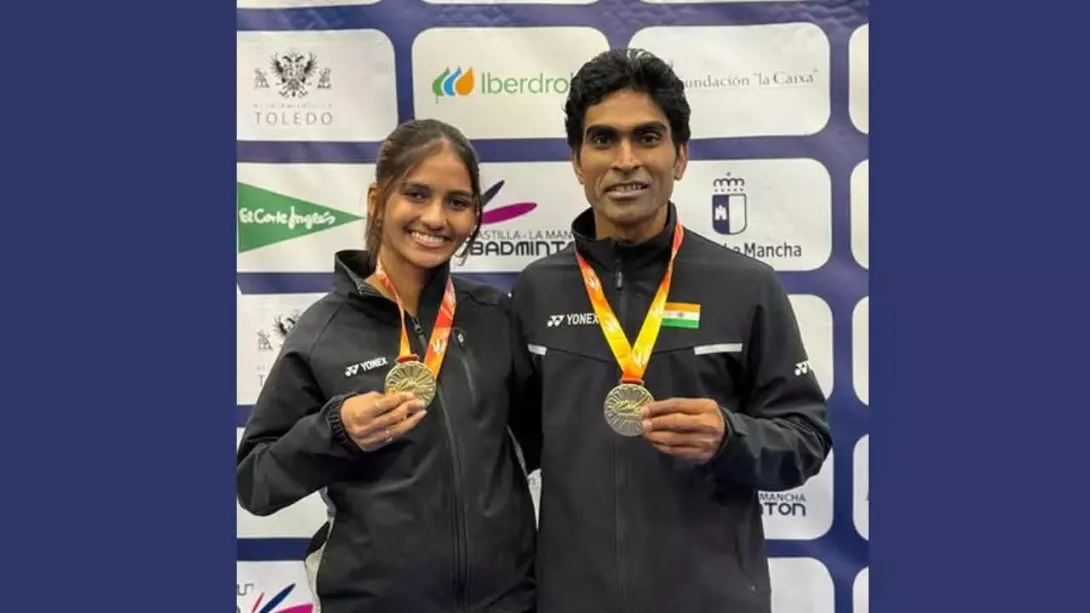
India delivered a commanding performance at the Spanish Para Badminton International 2026 – Level 1 in Toledo, reinforcing its rising stature in global para sports. Leading the charge was Paralympic champion Pramod Bhagat, who secured one gold and two silver medals across categories. His standout victory in mixed doubles, alongside Manisha Ramdass, underscored India’s growing depth and consistency. The tournament not only highlighted individual excellence but also reflected the broader evolution of India’s para badminton ecosystem, driven by structured investment, talent development, and increasing international competitiveness.
A Defining Performance on the International Stage
India’s campaign in Toledo marks another milestone in its ascent within the global para badminton circuit. Competing in a high-caliber Level 1 tournament, Indian athletes demonstrated technical precision, mental resilience, and strategic maturity.
The multi-medal haul reinforces the country’s expanding footprint in adaptive sports, where consistent performances are translating into sustained global recognition. Such outcomes also signal the effectiveness of India’s evolving sports infrastructure and athlete support systems.
Pramod Bhagat’s Golden Triumph
At the center of India’s success was Pramod Bhagat, whose campaign combined tactical intelligence with competitive composure. His gold medal came in the Mixed Doubles SL3-SU5 category, where he partnered with Manisha Ramdass.
The pair delivered a clinical performance in the final, overcoming Nitesh Kumar and Thulasimathi Murugesan in straight games. After a comfortable 21-15 opening set, they held their nerve in a tightly contested second set, edging it 24-22 to secure victory. The match showcased their synergy and ability to perform under pressure.
Intense Domestic Rivalry Elevates Standards
The tournament also highlighted the depth of India’s para badminton talent pool. In the Men’s Singles SL3 final, Bhagat faced compatriot Nitesh Kumar, ultimately securing silver after a hard-fought contest that ended 10-21, 17-21.
Such all-Indian matchups underscore a competitive domestic ecosystem where athletes consistently challenge each other, raising overall performance standards. This internal competition is increasingly becoming a cornerstone of India’s success on the global stage.
Strategic and Economic Implications
India’s continued success in para badminton carries broader implications beyond sport. Strong international performances enhance athlete visibility, attracting sponsorships, endorsements, and institutional funding. This, in turn, contributes to the commercialization and sustainability of para sports.
Moreover, these achievements validate ongoing investments in inclusive sports policies, training infrastructure, and grassroots development. The ripple effect extends to increased participation and greater societal recognition of para athletes.
Looking Ahead: Sustaining Momentum
With momentum firmly on its side, India is well-positioned to build on its success in upcoming international tournaments. Maintaining a focus on performance analytics, global exposure, and athlete welfare will be critical to sustaining this trajectory.
For athletes like Bhagat, consistency remains key as competition intensifies. If current trends persist, India is poised to further consolidate its position as a dominant force in para badminton.
India’s performance in Toledo is more than a medal tally—it is a reflection of strategic progress, resilience, and the growing economic and competitive significance of para sports in the global arena.
Comments