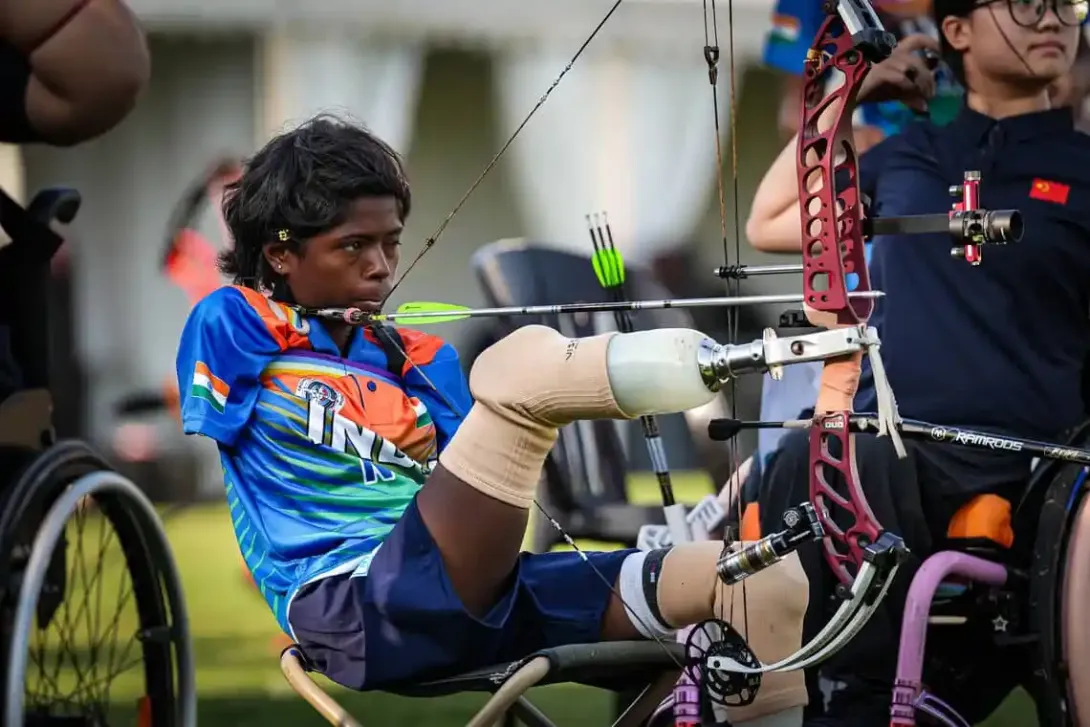
India delivered a standout performance at the World Archery Para Series Bangkok, highlighted by a gold medal victory in the compound women’s team event. The duo of Sheetal Devi and Payal Nag secured the title with a 150–147 win over Kazakhstan, underscoring resilience and technical excellence. Beyond the headline result, India’s broader medal haul reflected growing depth across categories. The performance signals a maturing ecosystem in para sports, where consistent investment and athlete development are beginning to translate into sustained international success.
A Defining Victory on the Global Stage
India’s gold medal in the compound women’s team event marked a defining moment at the World Archery Para Series in Bangkok. Sheetal Devi and Payal Nag delivered a composed and high-precision performance, edging Kazakhstan in a closely contested final.
The narrow margin of victory highlights the competitive intensity at the elite level, where execution under pressure determines outcomes. India’s ability to prevail in such conditions reflects both skill and mental resilience.
Beyond Gold: A Broader Medal Surge
While the gold medal captured headlines, India’s overall performance extended well beyond a single event. The contingent demonstrated strength across both compound and recurve categories, particularly in team competitions.
This depth of performance indicates a shift from reliance on individual success to a more balanced and competitive structure. Multiple athletes contributing across disciplines suggest a strengthening pipeline and improved training frameworks.
Technical Excellence and Competitive Consistency
The success in Bangkok was underpinned by technical precision and strategic execution. In archery, where margins are measured in millimeters, consistency is as critical as peak performance.
Indian archers displayed a high level of discipline, maintaining accuracy across rounds and adapting effectively to match situations. Such consistency is often the hallmark of well-developed systems rather than isolated talent.
The Economics of Emerging Para Sports
India’s growing success in para archery also carries broader implications for the sports economy. Increased international achievements enhance visibility, attract sponsorship interest, and strengthen the case for continued investment in para sports infrastructure.
As performance improves, so does the commercial viability of the discipline. Media coverage, brand partnerships, and institutional support are likely to expand, creating a virtuous cycle of growth and opportunity.
Building a Sustainable High-Performance Ecosystem
The results in Bangkok reflect the impact of sustained efforts in athlete development, coaching, and competitive exposure. For India, the challenge now lies in maintaining this momentum and translating success into long-term dominance.
A structured approach—focusing on grassroots identification, scientific training methods, and international exposure—will be essential to ensure continuity and resilience within the system.
Conclusion
India’s performance at the World Archery Para Series in Bangkok represents more than a collection of medals; it signals the emergence of a robust and competitive ecosystem in para archery. The gold medal triumph of Sheetal Devi and Payal Nag stands as a testament to what can be achieved through precision, perseverance, and strategic investment. As the sport continues to evolve, India appears well-positioned to convert its growing potential into sustained global success.
Comments