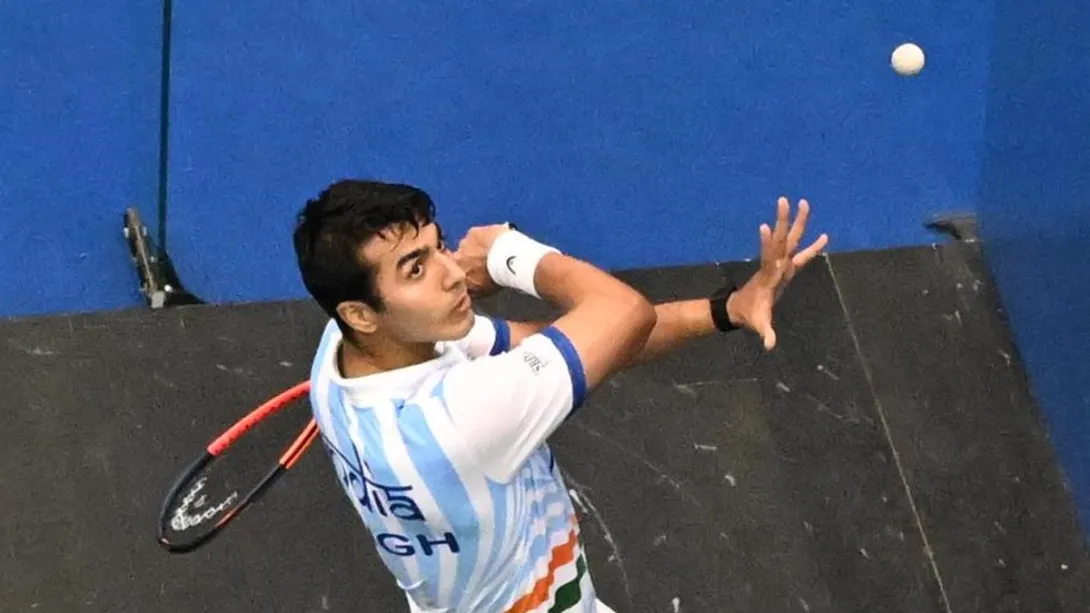
India’s Abhay Singh continues his campaign with a high-stakes clash ahead against Egypt’s Youssef Ibrahim, reflecting the rising competitiveness of Indian squash on the global stage. Meanwhile, Anahat Singh bowed out after a hard-fought match against world No. 1 Hania El Hammamy. The results underscore Egypt’s enduring dominance in the sport while highlighting India’s growing pipeline of talent. As global rankings tighten, such encounters carry not only sporting significance but also implications for sponsorship, rankings progression, and the evolving economics of professional squash.
Abhay’s Next Test: A Strategic Showdown
World No. 25 Abhay Singh now prepares for a challenging encounter against sixth seed and world No. 7 Youssef Ibrahim. The upcoming match represents a critical benchmark in Abhay’s career trajectory, as he faces one of the sport’s most technically accomplished players.
Ibrahim’s aggressive playing style and tactical versatility will test Abhay’s defensive resilience and shot selection. For the Indian player, success will depend on maintaining consistency, controlling rally tempo, and capitalizing on scoring opportunities in key moments.
Anahat Singh’s Exit Against the World No. 1
In the women’s draw, world No. 20 Anahat Singh faced a formidable challenge against top-ranked Hania El Hammamy. Despite demonstrating resilience and composure, Anahat was defeated in four games, with the Egyptian securing victory 11-8, 11-5, 9-11, 11-8.
The match highlighted Anahat’s potential, particularly in the third game where she mounted a strong comeback. However, El Hammamy’s experience and precision ultimately proved decisive, reinforcing her status as the leading force in women’s squash.
Egypt’s Continued Dominance in Global Squash
Egypt’s strong representation at the top of global rankings remains a defining feature of professional squash. Players like Youssef Ibrahim and Hania El Hammamy exemplify a system that combines technical excellence, rigorous training, and competitive exposure.
Their consistent performances not only sustain Egypt’s dominance but also set performance benchmarks for emerging players worldwide. For competitors like Abhay and Anahat, facing such opponents offers invaluable experience and insight into elite-level play.
India’s Emerging Talent Pipeline
India’s presence in international squash continues to grow, supported by improved training infrastructure and increased exposure to global tournaments. Players like Abhay Singh and Anahat Singh represent a new generation aiming to bridge the gap with established powerhouses.
While challenges remain, particularly in terms of consistency at the highest level, these performances indicate steady progress. Continued investment—often running into crores (Rs.) in training, coaching, and international participation—will be crucial for sustaining this upward trajectory.
Commercial and Ranking Implications
Matches at this level have broader implications beyond immediate results. Advancing in international tournaments contributes to ranking improvements, which in turn influence sponsorship opportunities and earnings potential.
For Abhay, a strong showing against a top-10 opponent could significantly enhance his marketability and ranking position. For Anahat, despite the loss, competing against the world No. 1 adds to her experience and visibility on the global stage.
Conclusion: A Narrative of Growth and Competition
The contrasting outcomes for Abhay Singh and Anahat Singh reflect both the challenges and opportunities facing Indian squash. While Egypt continues to dominate, India’s emerging players are steadily closing the gap through exposure and experience.
As Abhay prepares for his next high-profile clash, the focus remains on execution and adaptability. In the broader context, such matches contribute to the evolving narrative of global squash—where rising talent, strategic investment, and competitive intensity converge to shape the sport’s future.
Comments