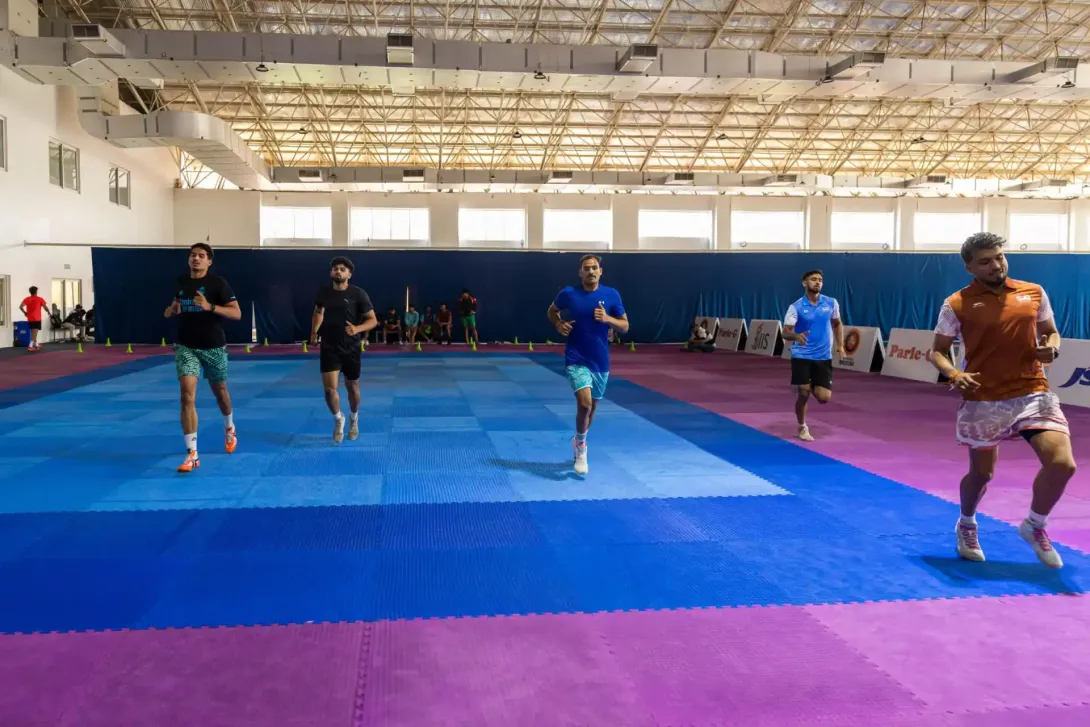
As India gears up for the forthcoming Asian Games, a high-performance training camp at the Inspire Institute of Sport in Bellary has become central to the nation’s kabaddi ambitions. The camp brings together top contenders to enhance fitness, refine tactical execution, and build team cohesion. Among them, defender Shubham Shinde views the initiative as a critical evaluation platform. With experience from the Pro Kabaddi League, Shinde embodies the blend of domestic exposure and international aspiration shaping India’s evolving kabaddi framework.
Strategic Build-Up to the Asian Games
India’s preparation for the Asian Games has entered a decisive phase, with the high-performance camp at the Inspire Institute of Sport serving as a cornerstone of its strategy. Located in Bellary, the facility has emerged as a hub for elite athlete development, offering world-class infrastructure and scientific training methodologies.
The camp’s objective extends beyond routine preparation, focusing on creating a cohesive and tactically adaptable squad capable of maintaining India’s dominance in kabaddi on the continental stage.
Talent Consolidation and Performance Optimization
The ongoing camp has assembled a pool of top probables from across the country, reflecting a data-driven selection process aimed at identifying peak performers. Training modules emphasize physical conditioning, agility, and advanced match simulations designed to replicate high-pressure scenarios.
Such initiatives highlight a shift toward professionalized sports management, where performance metrics and structured planning play a pivotal role in shaping outcomes.
Shubham Shinde: Experience Meets Aspiration
For Shubham Shinde, the camp represents both opportunity and scrutiny. Having competed for the Telugu Titans in the Pro Kabaddi League Season 12, Shinde brings valuable competitive experience.
However, the transition from league-level performance to international excellence demands continuous refinement. His participation underscores the increasing importance of adaptability, strategic awareness, and physical endurance in modern kabaddi.
Bridging Domestic Leagues and International Standards
The integration of players with professional league experience into national camps reflects a broader evolution in India’s sports ecosystem. The Pro Kabaddi League has significantly elevated the sport’s commercial profile, while also serving as a talent pipeline for the national team.
Yet, the international arena imposes higher tactical and physical demands, requiring players to elevate their performance benchmarks beyond domestic competition.
High-Performance Ecosystems and Future Outlook
The role of institutions like the Inspire Institute of Sport is becoming increasingly critical in bridging this gap. By combining sports science, analytics, and specialized coaching, such centers are redefining how India prepares for global competitions.
As the Asian Games approach, the effectiveness of these systems will be tested, with expectations firmly anchored on delivering podium finishes and sustaining India’s legacy in kabaddi.
Conclusion
The high-performance camp in Bellary represents more than preparation—it is a reflection of India’s evolving approach to elite sport. For players like Shubham Shinde, it offers a platform to transition from potential to performance.
As India consolidates its strategy ahead of the Asian Games, the emphasis on structured training, talent integration, and continuous improvement signals a mature and forward-looking sports ecosystem poised for sustained success.
Comments