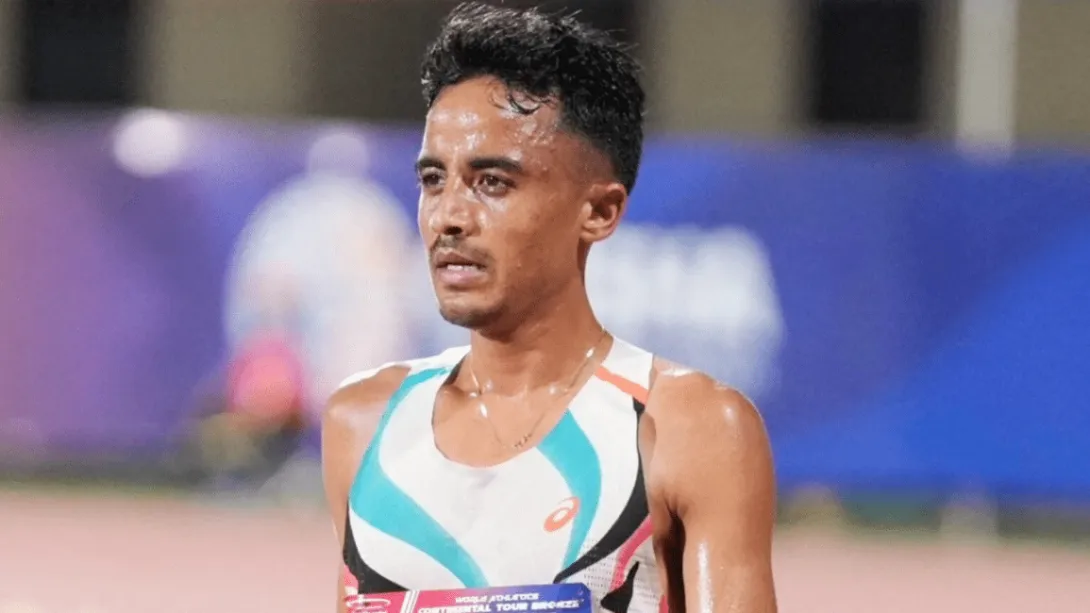
Indian athletics entered a new era as Sawan Barwal set a national marathon record of 2:11:58 at the NN Marathon Rotterdam. The performance eclipsed the long-standing mark of Shivnath Singh, which had endured since 1978. By becoming the first Indian to break the 2:12 barrier, Barwal achieved both a symbolic and competitive milestone. The breakthrough reflects the evolution of India’s training ecosystem, rising global competitiveness, and increasing commercial interest in endurance sports, positioning Indian athletics for sustained growth and international recognition.
A Record That Redefined Indian Athletics
In a landmark achievement, Sawan Barwal has rewritten India’s marathon history with a record-breaking performance at the NN Marathon Rotterdam. His finishing time of 2:11:58 surpassed the previous national record of 2:12:00 set by Shivnath Singh on May 28, 1978.
This record had stood unchallenged for nearly five decades, becoming one of the most enduring benchmarks in Indian athletics. Its eventual fall marks a significant shift in the nation’s long-distance running narrative.
Breaking the Psychological and Performance Barrier
Crossing the 2:12 threshold is widely regarded as a defining benchmark in marathon running. By achieving this milestone, Sawan Barwal has not only improved the national record but also elevated India’s competitive standing on the global stage.
The achievement represents both a psychological breakthrough and a measurable improvement in performance standards, aligning Indian athletes more closely with international elite runners.
Evolution of India’s Endurance Ecosystem
Barwal’s success reflects the cumulative impact of advancements in India’s athletics ecosystem. Over the years, improvements in coaching techniques, sports science integration, and access to international competitions have enhanced athlete performance.
Participation in global events such as the NN Marathon Rotterdam provides Indian runners with exposure to high-performance environments, enabling them to refine strategies and compete against world-class fields.
Economic and Commercial Dimensions
The rise of record-breaking performances in athletics is increasingly translating into economic opportunities. Athletes achieving global recognition often attract sponsorships, endorsements, and institutional funding, contributing to the commercialization of the sport.
Long-distance running, in particular, is witnessing growing participation at both elite and amateur levels, driving revenue streams in event management, sports tourism, and fitness industries. These developments collectively represent a multi-crore (Rs.) growth trajectory for India’s athletics sector.
Strategic Implications for the Future
Sawan Barwal’s achievement sets a new benchmark for aspiring athletes and underscores the importance of sustained investment in endurance sports. The focus now shifts to building on this momentum through structured talent development programs and enhanced infrastructure.
For policymakers and sports administrators, the challenge lies in converting this individual success into a broader systemic advantage, ensuring consistent performance at international competitions.
Conclusion
Sawan Barwal’s record-breaking run marks a turning point in Indian athletics, ending decades of stagnation and signaling a new phase of progress. By surpassing the legendary mark set by Shivnath Singh, he has redefined national expectations and inspired a new generation of runners. As India continues to invest in its sporting ecosystem, such milestones will play a crucial role in shaping its global athletic identity.
Comments