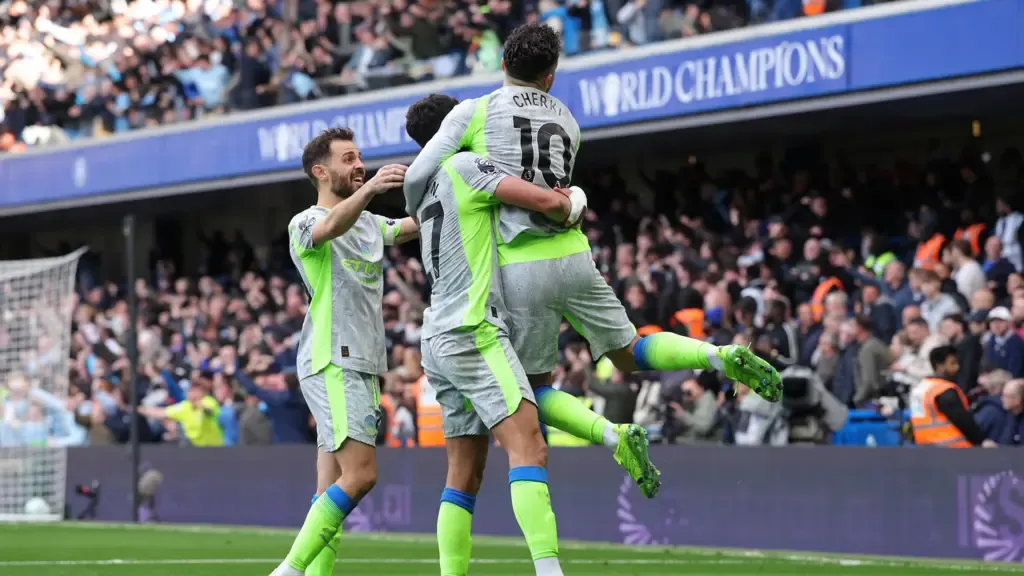
Manchester City and Chelsea FC are navigating a निर्णायक phase of the season, where sporting performance is closely tied to financial outcomes and global brand positioning. While Manchester City continue to demonstrate structural stability and tactical consistency, Chelsea are undergoing a transitional phase marked by rebuilding and strategic recalibration. In a football economy valued in billions (Rs. equivalent), results on the pitch significantly influence revenue streams, sponsorship deals, and long-term valuation. Both clubs now face the challenge of aligning competitive success with sustainable growth in an increasingly demanding and commercially driven landscape.
Manchester City: A Benchmark for Consistency
Manchester City have established themselves as a model of sustained excellence in modern football. Their success is underpinned by a well-defined tactical framework, squad depth, and a data-driven operational approach.
The club’s ability to maintain high performance across competitions reflects a balance between strategic planning and execution. This consistency not only strengthens their competitive position but also reinforces their commercial value in a global market.
Chelsea: Transition and Rebuilding Strategy
Chelsea FC, in contrast, are in a phase of transformation. With a focus on integrating young talent and redefining team structure, the club is working toward long-term stability.
However, this transition has brought short-term challenges, including inconsistent performances and tactical adjustments. The success of Chelsea’s strategy will depend on how effectively they convert investment into cohesive on-field results.
Competitive Dynamics in Elite Football
The modern football ecosystem is characterized by intense competition, where marginal gains can determine outcomes. Both Manchester City and Chelsea FC operate in an environment that demands tactical innovation, player fitness, and psychological resilience.
With congested fixtures and high expectations, adaptability has become a critical factor in sustaining performance throughout the season.
Financial Ecosystem and Commercial Impact
Football clubs today function as global business entities. Revenue streams from broadcasting rights, sponsorships, and merchandising contribute to a multi-billion-pound industry (Rs. equivalent).
For both Manchester City and Chelsea, performance outcomes directly influence financial returns. Success enhances brand visibility and attracts high-value partnerships, while inconsistency can impact stakeholder confidence and market positioning.
Strategic Outlook: Aligning Performance with Growth
Looking ahead, Manchester City will aim to sustain their dominance through continued innovation and consistency. Meanwhile, Chelsea FC must focus on stabilizing their performance and maximizing the potential of their evolving squad.
The ability to align sporting success with financial sustainability will be critical in shaping their future trajectories.
Conclusion
As the season progresses, Manchester City and Chelsea FC stand at contrasting yet equally significant junctures. In a sport increasingly defined by its economic scale and global reach, consistent performance remains the cornerstone of success. Their respective journeys will not only determine their competitive outcomes but also influence their standing in the broader football business ecosystem.
Comments