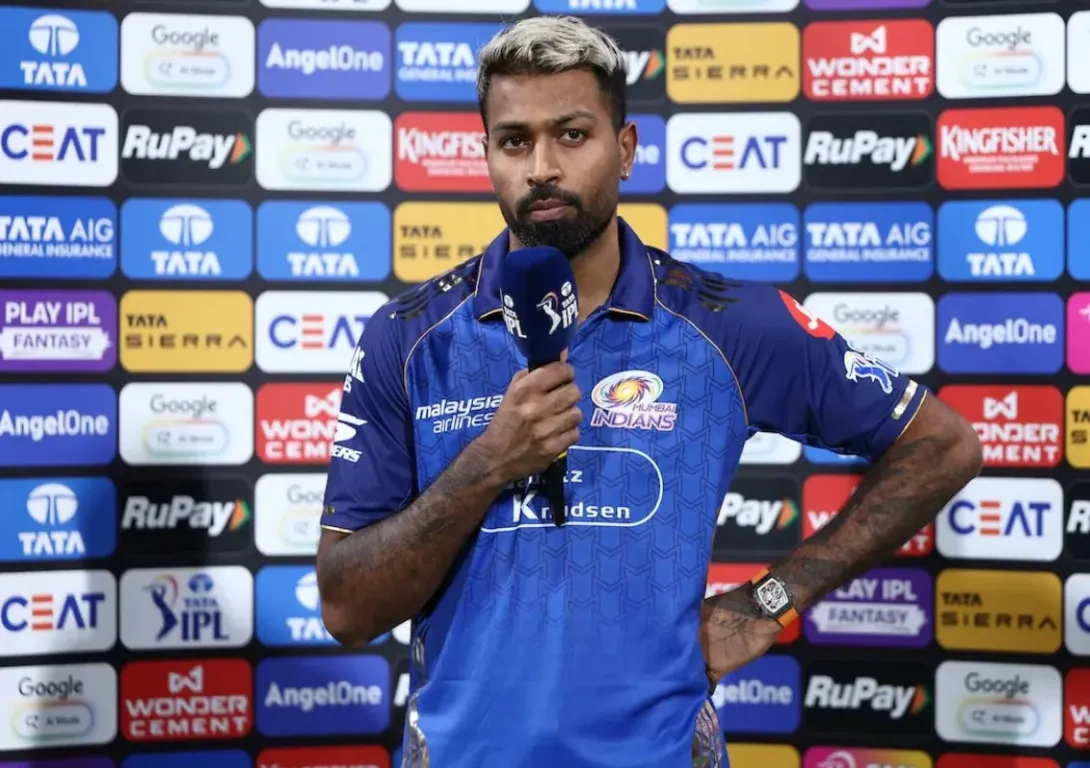
Following a disappointing result for Mumbai Indians, captain Hardik Pandya addressed the team’s shortcomings, emphasizing accountability and the need for strategic recalibration. The loss highlighted gaps in execution across key phases of the match, raising questions about consistency in a high-stakes Indian Premier League campaign. Pandya’s response reflected a leadership approach focused on internal assessment rather than external excuses. In a tournament where performance directly impacts franchise valuation and brand equity, such setbacks underscore the importance of adaptability, discipline, and cohesive team dynamics.
A Candid Assessment from the Captain
Hardik Pandya’s post-match remarks signaled a measured and introspective approach to Mumbai Indians’ defeat. Rather than attributing the result to external factors, the captain acknowledged deficiencies in execution, pointing to areas where the team fell short.
This candid assessment reflects a leadership style that prioritizes accountability—an essential trait in high-performance environments.
Breakdown in Execution
The loss exposed inconsistencies across multiple facets of the game, including batting stability, bowling precision, and fielding efficiency. In the IPL, where margins are often razor-thin, even minor lapses can significantly alter outcomes.
Pandya’s comments suggest that the team is aware of these gaps and is focused on addressing them through tactical adjustments and improved on-field discipline.
Strategic Recalibration in a Competitive League
The Indian Premier League operates within a dynamic and intensely competitive framework, requiring teams to continuously adapt. Pandya emphasized the need for recalibration, indicating that Mumbai Indians will revisit their strategies ahead of upcoming fixtures.
Such adjustments are not merely tactical but also psychological, as teams seek to rebuild momentum after setbacks.
Financial and Brand Implications
In a league driven by substantial financial stakes, match results carry implications beyond the scoreboard. Franchise performance influences sponsorship deals, fan engagement, and overall brand valuation—often measured in millions of rupees.
For Mumbai Indians, maintaining competitive consistency is critical not only for playoff qualification but also for sustaining their commercial stature.
Leadership, Accountability, and Team Culture
Pandya’s response highlights the role of leadership in shaping team culture. By taking responsibility and emphasizing collective improvement, he reinforces a framework of trust and resilience within the squad.
Such an approach can be instrumental in navigating challenging phases, ensuring that setbacks are treated as opportunities for growth rather than points of stagnation.
The Road Ahead
As the tournament progresses, Mumbai Indians will need to translate introspection into action. Consistency in performance, clarity in roles, and effective execution will be key to reversing their fortunes.
Pandya’s measured response provides a foundation for this turnaround, signaling a focus on long-term stability rather than short-term reaction.
Conclusion: Setback as a Strategic Inflection Point
Mumbai Indians’ loss, while disappointing, may serve as a catalyst for recalibration. In the high-pressure environment of the IPL, the ability to respond to adversity often defines success.
Hardik Pandya’s leadership will be central to this process, as the franchise seeks to align performance with ambition in a league where both sporting excellence and financial outcomes are closely intertwined.
Comments