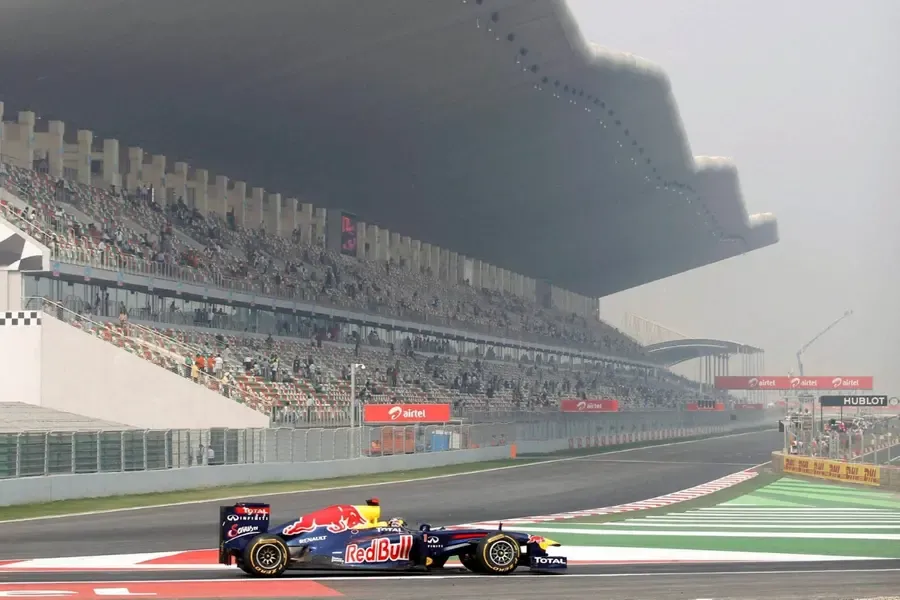
India is positioning itself for a potential return to the global Formula 1 calendar by 2027, signaling renewed ambition to re-enter elite motorsport. Sports Minister Mansukh Mandaviya indicated that efforts are underway, although no formal confirmation has been secured from stakeholders. The proposed revival is expected to center around the Buddh International Circuit, which previously hosted F1 races. Beyond sporting significance, the move reflects broader economic and branding objectives, as India seeks to leverage high-profile global events to stimulate investment, tourism, and international visibility.
Government Signals Intent, Not Confirmation
India’s re-entry into the world of Formula One remains a strategic aspiration rather than a finalized commitment. Sports Minister Mansukh Mandaviya recently clarified that while discussions are progressing, no official agreement has been concluded with Formula 1 authorities.
This cautious positioning reflects the complexities involved in hosting such a capital-intensive event. Negotiations typically encompass commercial rights, infrastructure readiness, taxation frameworks, and long-term financial viability.
Buddh International Circuit: A Potential Comeback Venue
The Buddh International Circuit is widely expected to serve as the centerpiece of India’s F1 ambitions. Once a prominent stop on the global racing calendar, the circuit hosted races between 2011 and 2013 before financial and regulatory challenges led to its exclusion.
Reviving operations at the venue would require substantial upgrades, compliance with evolving Fédération Internationale de l'Automobile (FIA) standards, and alignment with Formula 1’s commercial ecosystem. However, its existing infrastructure provides a strong foundation compared to greenfield alternatives.
Economic Stakes and Investment Dynamics
Reintroducing Formula 1 to India is not merely a sporting decision—it is a high-stakes economic proposition. Hosting rights typically involve significant financial commitments, often running into hundreds of millions in Rs. when accounting for licensing fees, operational costs, and promotional investments.
However, the potential returns are equally compelling. Formula 1 events generate substantial economic activity through tourism, hospitality, media rights, and brand partnerships. For India, the event could act as a catalyst for foreign investment and reinforce its positioning as a global sports destination.
Strategic Branding and Soft Power
From a geopolitical and branding perspective, hosting Formula 1 aligns with India’s broader ambition to enhance its global cultural and economic footprint. High-visibility events serve as platforms for showcasing infrastructure capabilities, technological advancement, and organizational competence.
Moreover, the return of Formula 1 could invigorate domestic motorsport ecosystems, encouraging grassroots participation, sponsorship inflows, and talent development in a niche yet high-growth sector.
Challenges on the Road to 2027
Despite the optimism, several hurdles remain. Regulatory clarity, taxation policies, and sustainable funding models will be critical to ensuring long-term viability. Past challenges, including disputes over tax classification and revenue sharing, underscore the importance of a robust institutional framework.
Additionally, Formula 1’s evolving calendar and commercial priorities mean that India must compete with other emerging markets for inclusion.
Outlook: Ambition Meets Execution
India’s intent to bring back Formula 1 by 2027 reflects a broader shift toward leveraging sports as an economic and strategic asset. While the timeline remains tentative, the initiative underscores the country’s willingness to re-engage with premium global sporting platforms.
The coming months will be crucial in determining whether this ambition translates into a concrete agreement. If successful, Formula 1’s return could mark a significant milestone in India’s journey toward becoming a global hub for sports and entertainment.
Comments