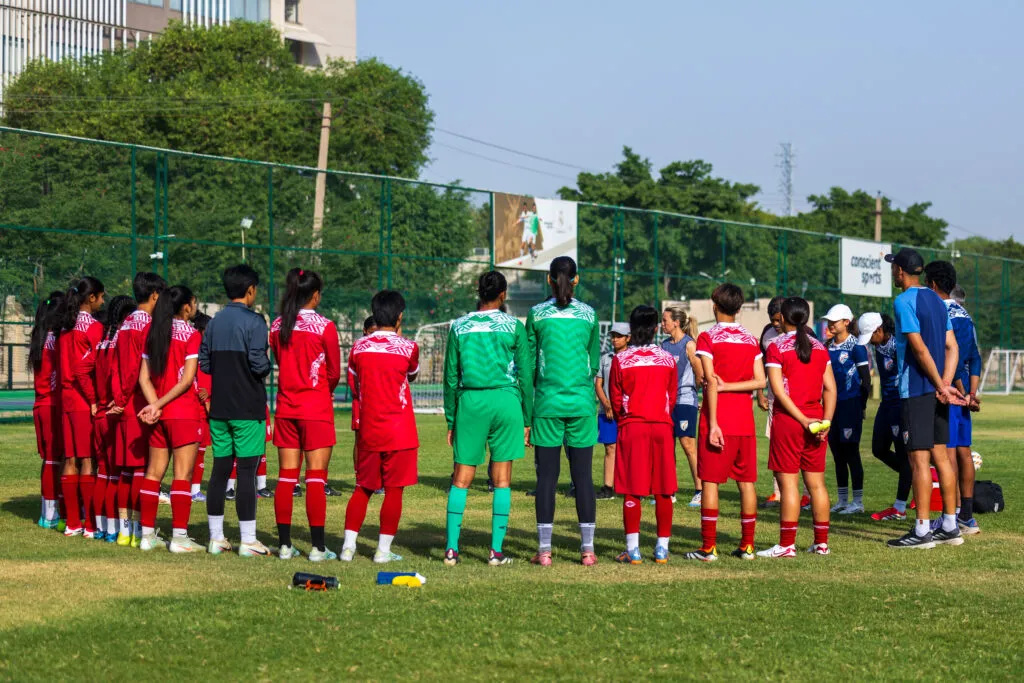
India’s Under-17 women’s football team has arrived in China for the AFC U17 Women’s Asian Cup 2026, marking its return to continental competition after a 21-year hiatus. The squad enters a challenging group featuring Australia, Japan, and Lebanon, reflecting a high-stakes test of its evolving capabilities. Backed by months of structured training and international exposure, the team represents a new phase in India’s youth football development strategy. Analysts view this participation as both a competitive opportunity and a long-term investment in talent cultivation, signaling the country’s intent to strengthen its presence in women’s football across Asia.
A Long-Awaited Return to Continental Competition
The India women's national under-17 football team has reached Suzhou ahead of the AFC U17 Women’s Asian Cup China 2026, signaling a historic re-entry into elite Asian competition after more than two decades.
This return is more than symbolic. It reflects a deliberate effort by Indian football authorities to rebuild the youth pipeline and re-establish competitiveness at the continental level, particularly in women’s football—a segment increasingly recognized for its growth potential and commercial viability.
Challenging Group Draw Tests Competitive Readiness
India has been placed in Group B alongside formidable opponents, including Australia women's national under-17 football team, Japan women's national under-17 football team, and Lebanon women's national under-17 football team.
All matches will be hosted at the Suzhou Taihu Football Sports Centre, a venue equipped to international standards. The group composition presents a rigorous test, with Japan and Australia historically dominant forces in Asian women’s football, while Lebanon continues to emerge as a competitive unit.
Structured Preparation Reflects Strategic Planning
Under the guidance of head coach Pamela Conti, the Indian squad has undergone an intensive preparation cycle exceeding three months. The core training phase was conducted in Bengaluru, complemented by a preparatory camp in Gurugram.
This structured approach underscores a shift toward long-term planning and performance optimization. The emphasis has been on tactical discipline, physical conditioning, and mental resilience—key attributes required to compete at the continental level.
Exposure Through International Friendlies
To bridge the experience gap, the team participated in international friendlies against Myanmar women's national under-17 football team and Russia women's national under-17 football team. These matches provided critical exposure to diverse playing styles and elevated competition intensity.
Additionally, the squad enters the tournament with momentum, having secured victory in the SAFF U19 Women’s Championship earlier this year. Such achievements contribute to confidence building while also validating the effectiveness of current training frameworks.
Broader Implications for Indian Women’s Football
From a macro perspective, India’s participation in the AFC U17 Women’s Asian Cup China 2026 represents a strategic investment in the future of women’s football. Youth tournaments serve as critical incubators for talent, shaping players who may eventually transition to senior international roles.
The renewed focus on grassroots development and international exposure aligns with global trends, where early-stage investment in women’s sport is increasingly linked to long-term competitive success and commercial growth.
Conclusion
India’s return to the continental stage after 21 years is both a milestone and a test of progress. While immediate results will be closely watched, the larger narrative centers on development, resilience, and strategic intent.
As the tournament unfolds in Suzhou, the Young Tigresses carry not just competitive aspirations but also the weight of a broader transformation within Indian football. Their performance may well shape the trajectory of the sport in the years ahead.
Comments