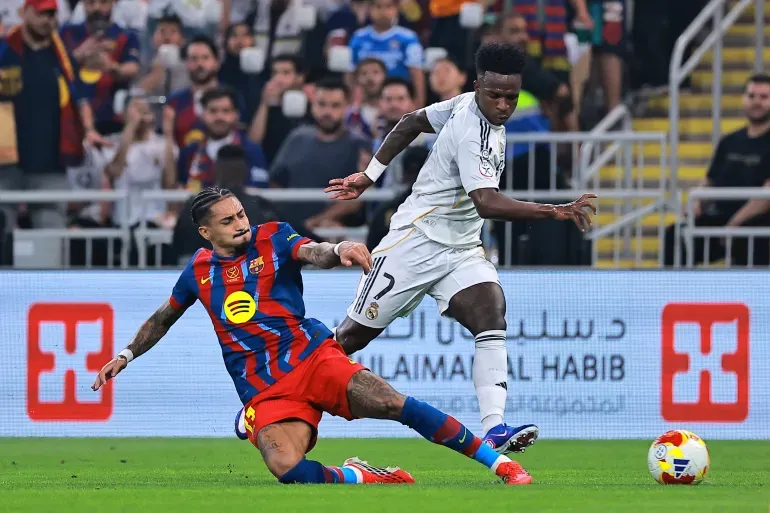
Spanish football’s fiercest rivalry returns to center stage as FC Barcelona and Real Madrid CF prepare for the 264th edition of El Clasico in a potentially decisive La Liga encounter. The match arrives under extraordinary pressure, with Barcelona positioned to move within touching distance of the league title while a struggling Real Madrid side enters the contest amid declining morale and growing scrutiny. The clash carries significance beyond domestic standings, symbolizing a broader battle for prestige, tactical supremacy, and institutional momentum. As European football’s most commercially influential rivalry reignites, the outcome could shape not only the title race but also the strategic narratives surrounding both clubs.
El Clasico Returns With Championship Stakes at the Forefront
The latest chapter of one of world football’s greatest rivalries will unfold on Sunday when FC Barcelona host Real Madrid CF in the 264th edition of El Clasico.
While the fixture has historically carried immense emotional and sporting significance, this encounter arrives under particularly charged circumstances. Barcelona stand on the verge of a major domestic triumph, while Real Madrid travel to Catalonia burdened by mounting pressure, inconsistent form, and the prospect of witnessing their fiercest rivals move closer to championship celebrations.
The contrast in momentum between the two clubs has intensified anticipation surrounding the contest, transforming an already iconic rivalry into a potentially defining moment in the La Liga season.
Barcelona Eye Symbolic and Strategic Victory
For FC Barcelona, the Clasico represents more than an opportunity to secure critical points in the title race. A victory against Real Madrid at this stage of the campaign would carry substantial symbolic value, reinforcing Barcelona’s resurgence as Spain’s dominant domestic force.
The Catalan club has spent recent seasons rebuilding both competitively and financially following periods of institutional instability and economic strain. Success in a high-stakes Clasico could therefore strengthen the perception that Barcelona’s long-term sporting project is regaining stability and direction.
Beyond the emotional significance, securing the La Liga title would also provide important commercial benefits. Domestic championships influence sponsorship leverage, global branding strength, broadcasting value, and overall institutional confidence — areas increasingly crucial in modern football’s financial landscape.
A victory over Madrid in front of a home crowd would represent the ideal statement of sporting authority.
Real Madrid Confront Mounting Pressure
In contrast, Real Madrid CF enter the match under unusually difficult circumstances.
Traditionally defined by resilience and competitive dominance, Madrid arrive in Catalonia facing questions surrounding form, tactical cohesion, and overall morale. The possibility of watching Barcelona move decisively toward the title on the same day adds further emotional weight to the occasion.
For a club built on expectations of perpetual success, such moments generate intense scrutiny from supporters, media, and institutional leadership alike. Every setback at Real Madrid is magnified by the club’s global stature and historical standards.
The Clasico therefore represents not only a football match but also a test of character for a squad attempting to recover confidence amid mounting external pressure.
Tactical Battle Could Define the Outcome
As with many modern Clasicos, tactical execution is expected to play a decisive role.
Barcelona are likely to emphasize structured possession, positional control, and high pressing — hallmarks of the club’s traditional footballing identity. Their ability to dominate midfield spaces and control tempo could prove critical in neutralizing Madrid’s transition threat.
Real Madrid, meanwhile, may seek to exploit counter-attacking opportunities and moments of individual brilliance. Historically, Madrid have often thrived in emotionally volatile encounters by capitalizing on transitional chaos and high-pressure moments.
The strategic duel between the two managerial setups will therefore carry enormous significance. In elite football, especially in fixtures of this magnitude, marginal tactical adjustments often determine defining outcomes.
El Clasico’s Commercial Power Remains Unmatched
Beyond the sporting implications, El Clasico continues to stand among the most commercially valuable events in global sport.
The rivalry between FC Barcelona and Real Madrid CF consistently attracts massive global television audiences, sponsorship activation campaigns, and digital engagement figures that rival major international sporting events.
In an era where football clubs increasingly operate as global entertainment brands, the economic significance of the fixture extends far beyond ticket sales or league standings. Every Clasico influences merchandise revenue, international brand positioning, streaming engagement, and commercial partnerships.
This commercial dimension intensifies the pressure on both clubs to perform, particularly during seasons where institutional narratives and competitive identities are under scrutiny.
Emotional Atmosphere Expected in Catalonia
The atmosphere in Catalonia is expected to be especially intense given the broader context surrounding the fixture.
Barcelona supporters recognize the symbolic opportunity presented by facing a vulnerable Real Madrid side while approaching another league title. The emotional energy surrounding the match is likely to transform the stadium into a highly charged environment from the opening whistle.
For Madrid, managing that atmosphere will become an essential psychological challenge. Elite teams are often judged not merely by technical ability but by their response to adversity in hostile conditions.
How Madrid handle the emotional volatility of the occasion may ultimately prove as important as their tactical execution on the field.
A Rivalry That Continues to Shape European Football
Few sporting rivalries possess the enduring cultural, political, and commercial significance of El Clasico. For decades, meetings between Barcelona and Real Madrid have transcended football itself, reflecting broader tensions involving regional identity, institutional power, and global sporting influence.
Even as football evolves into an increasingly data-driven and commercially sophisticated industry, the emotional intensity of El Clasico remains remarkably intact.
Sunday’s encounter arrives at a moment when both clubs are attempting to shape the next phase of their competitive identities. For Barcelona, victory would symbolize consolidation and resurgence. For Real Madrid, it offers an opportunity to resist decline and restore belief.
Either way, the 264th edition of El Clasico promises to deliver another defining chapter in one of sport’s most compelling rivalries.
Comments