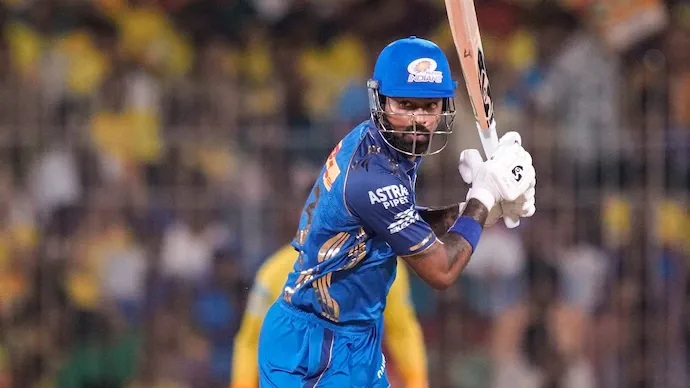
Former India selector and ex-captain Kris Srikkanth launched a sharp criticism of Mumbai Indians skipper Hardik Pandya following the team’s defeat against Chennai Super Kings at the MA Chidambaram Stadium. Srikkanth questioned both Pandya’s leadership style and batting intent, describing him as a “plastic captain” during his assessment of Mumbai’s performance. The remarks came after Hardik’s decision-making during a crucial phase of the run chase drew scrutiny, particularly his approach after arriving at the crease following Tilak Varma’s dismissal. With Mumbai Indians struggling for consistency in IPL 2026, the criticism has intensified debate surrounding Hardik’s tactical leadership and role within one of the league’s most high-profile franchises.
Srikkanth’s Remarks Trigger Fresh Debate Around Hardik Pandya
Former India cricketer and selector Kris Srikkanth has reignited scrutiny surrounding Hardik Pandya’s leadership after Mumbai Indians’ defeat to Chennai Super Kings at Chepauk.
Speaking after the match, Srikkanth delivered a blunt assessment of the Mumbai captain’s performance, questioning both his tactical approach and intent with the bat during a critical stage of the contest. His comments quickly drew widespread attention across cricket circles, adding further pressure on a Mumbai Indians side already navigating an inconsistent IPL 2026 campaign.
The former India opener’s strongest criticism came when he described Hardik as a “plastic captain,” a remark that reflected growing frustration among sections of analysts and supporters regarding Mumbai’s direction under his leadership.
The comments also underscored how leadership in high-profile IPL franchises is increasingly evaluated not only through results but also through visible intent, tactical clarity, and emotional authority on the field.
Match Situation Raises Questions Over Batting Approach
The criticism centered on a key moment during Mumbai Indians’ chase against Chennai Super Kings.
Hardik Pandya arrived at the crease at No. 6 shortly after Tilak Varma’s dismissal, with Mumbai still positioned to remain competitive in the contest. At the time, Naman Dhir was well-set and attempting to stabilize the innings under mounting scoreboard pressure.
According to Srikkanth, Hardik’s approach lacked urgency and intent during a phase where momentum and acceleration were essential.
In modern T20 cricket, captains are often expected to lead aggressively during pressure situations, particularly when chasing competitive totals in hostile away conditions. Decisions regarding tempo, shot selection, and strike rotation frequently shape public perception of leadership quality.
Hardik’s innings, therefore, became symbolic of broader concerns regarding Mumbai Indians’ strategic execution this season.
Leadership Scrutiny Intensifies Around Mumbai Indians
Hardik Pandya’s tenure as Mumbai Indians captain has remained under constant scrutiny since the beginning of the season.
The leadership transition itself generated significant public debate, particularly given the franchise’s historical association with Rohit Sharma, under whom Mumbai established one of the IPL’s most successful dynasties.
As a result, Hardik inherited not only captaincy responsibilities but also the burden of managing expectations attached to one of the league’s most commercially influential teams.
Every tactical decision, batting performance, and on-field interaction has consequently attracted heightened analysis throughout the campaign.
While Mumbai Indians have shown flashes of quality during IPL 2026, inconsistency and uneven performances have prevented the franchise from establishing sustained momentum. Losses in high-pressure matches have only amplified criticism directed toward leadership and team management.
Srikkanth’s Comments Reflect Wider Sentiment
Although Srikkanth’s language was unusually direct, his criticism reflects a broader conversation surrounding captaincy styles in franchise cricket.
Modern IPL leadership increasingly demands visible intensity, adaptability, and emotional engagement alongside tactical competence. Fans and analysts frequently evaluate captains not merely on statistical outcomes but on perceived energy, confidence, and influence during difficult moments.
In Hardik Pandya’s case, questions surrounding body language and batting intent have repeatedly surfaced during challenging matches this season.
Critics argue that Mumbai Indians occasionally appear reactive rather than proactive under pressure, while supporters of Hardik maintain that leadership assessments should account for the broader structural issues affecting the squad.
Regardless of perspective, the scrutiny illustrates how leadership narratives in the IPL can rapidly evolve under public and media pressure.
Mumbai Indians Face Critical Phase of IPL 2026
The timing of the criticism adds another layer of pressure for Mumbai Indians as the franchise attempts to remain competitive in the playoff race.
The team has struggled to produce sustained consistency throughout the campaign, alternating between strong performances and disappointing collapses. With the league entering its decisive stage, Mumbai require both tactical clarity and dressing-room stability to revive their postseason ambitions.
Leadership uncertainty — whether real or perceived — can become particularly damaging during high-pressure phases of T20 tournaments, where momentum and confidence often determine outcomes as much as technical skill.
The franchise management is therefore likely to prioritize restoring composure within the squad while avoiding distractions created by external commentary and public criticism.
Hardik Pandya’s Reputation Remains Under Examination
Hardik Pandya remains one of Indian cricket’s most dynamic and commercially valuable cricketers, but IPL 2026 has become an increasingly important test of his long-term leadership credentials.
His success with Gujarat Titans previously established him as one of the league’s most promising modern captains, admired for aggressive decision-making and fearless tactical instincts. However, leadership environments differ substantially between franchises, particularly when operating under the enormous expectations associated with Mumbai Indians.
Managing a dressing room filled with established international players while simultaneously handling public scrutiny requires a distinct form of authority and communication.
As a result, every performance now contributes to the evolving narrative surrounding Hardik’s captaincy future.
IPL Leadership Debate Continues to Evolve
The reaction to Srikkanth’s comments also highlights the increasingly intense ecosystem surrounding the IPL, where former players, broadcasters, analysts, and fans continuously shape public narratives in real time.
Leadership discussions in franchise cricket are no longer confined to wins and losses alone. They now encompass emotional intelligence, adaptability, media perception, tactical aggression, and the ability to inspire confidence under pressure.
For Hardik Pandya, the remainder of IPL 2026 could prove decisive not only for Mumbai Indians’ campaign but also for broader perceptions regarding his evolution as a captain in elite T20 cricket.
As the tournament approaches its final stages, performances on the field will likely determine whether criticism surrounding his leadership fades — or grows louder.
Comments