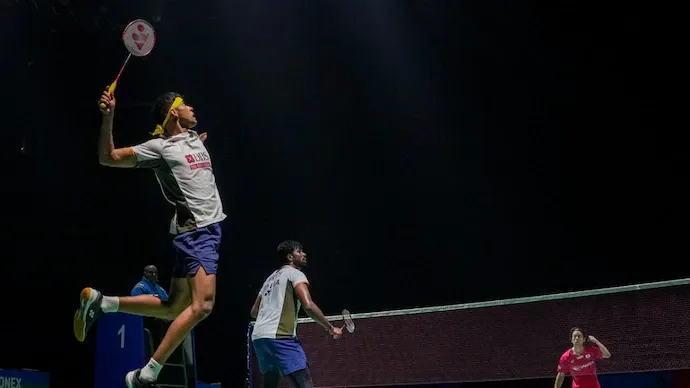
Indian badminton star Satwiksairaj Rankireddy triggered widespread debate after posting an emotional Instagram story following India’s return from the Thomas Cup in Denmark with a bronze medal but little public or institutional recognition. The brief message, expressing disappointment over the apparent lack of attention toward the team’s achievement, quickly went viral across social media platforms. The episode has once again exposed concerns surrounding athlete recognition, administrative engagement, and the uneven visibility of Olympic sports in India. While cricket continues to dominate the country’s sporting ecosystem commercially and culturally, the reaction to Rankireddy’s statement has intensified calls for greater acknowledgment and support for athletes representing India on the global stage.
Satwiksairaj Rankireddy’s Message Strikes a National Nerve
Indian badminton player Satwiksairaj Rankireddy ignited a nationwide conversation on athlete recognition after posting a deeply personal Instagram story upon returning from Denmark with the Indian badminton team.
The message was brief but emotionally charged: “Back home now. As usual, no one knows what happened over the past two weeks, and it seems like no one really cares.”
Within hours, the post spread rapidly across social media, drawing reactions from fans, former athletes, sports analysts, and public figures. The response transformed what initially appeared to be a moment of frustration into a broader debate regarding how India values achievements outside cricket.
The Indian team had returned after securing a bronze medal at the Thomas Cup, one of badminton’s most prestigious international team tournaments. Yet according to Rankireddy’s remarks, the players were met with little public reception or institutional visibility after arriving home.
The contrast between international achievement and domestic indifference became the central point of discussion.
Thomas Cup Success Overshadowed by Silence
India’s bronze-medal finish at the Thomas Cup represented another significant milestone for Indian badminton, reinforcing the country’s growing competitiveness in elite global tournaments.
However, the absence of visible celebrations, official acknowledgment, or widespread media attention following the team’s return has fueled criticism regarding the treatment of non-cricket athletes in India.
For many observers, Rankireddy’s post highlighted a recurring pattern in Indian sport: Olympic disciplines receive intense praise during moments of historic victory but often struggle for sustained recognition once public attention fades.
The issue extends beyond symbolism alone. Public acknowledgment influences sponsorship opportunities, athlete morale, commercial partnerships, and the long-term growth of sporting ecosystems.
Athletes competing at the international level increasingly operate within a system where visibility directly affects career sustainability.
Cricket’s Dominance Continues to Shape India’s Sporting Culture
The reaction to Rankireddy’s statement has once again exposed the structural imbalance within India’s sports economy.
Cricket remains overwhelmingly dominant in terms of media coverage, sponsorship investment, broadcasting revenue, and fan engagement. While the sport’s commercial success has created one of the world’s most powerful sporting industries, it has also unintentionally marginalized achievements in other disciplines.
Badminton, wrestling, boxing, athletics, and hockey have all produced world-class Indian athletes over the past decade, yet many continue to struggle for consistent public recognition outside major international events such as the Olympics.
The disparity becomes particularly visible when athletes return from international competitions without organized receptions or institutional celebration despite representing the country successfully on global platforms.
Rankireddy’s frustration therefore resonated because it reflected concerns shared across multiple Olympic sports communities.
Social Media Has Become the Athlete’s Public Platform
The incident also demonstrates how social media has evolved into a powerful outlet for athletes seeking visibility and accountability.
In previous eras, frustrations surrounding institutional neglect often remained private. Today, athletes possess direct communication channels capable of shaping public discourse instantly.
Rankireddy’s twelve-word post achieved what formal statements often fail to accomplish — it forced an uncomfortable national conversation.
Without delivering a lengthy critique or directly attacking authorities, the badminton player succeeded in capturing widespread public attention and exposing emotional exhaustion felt by many athletes competing outside mainstream sporting narratives.
The viral reaction further illustrated growing public sensitivity toward issues involving athlete welfare, recognition, and administrative support.
Indian Badminton’s Rise Deserves Greater Institutional Visibility
The controversy is particularly striking given Indian badminton’s remarkable transformation over the past decade.
From isolated international success stories, India has evolved into one of the sport’s major emerging powers, consistently producing elite players capable of competing against traditional badminton strongholds such as China, Indonesia, and Denmark.
Athletes like Satwiksairaj Rankireddy have played a central role in that rise, helping elevate India’s global standing through performances in major international competitions.
Such achievements require years of physical sacrifice, international travel, psychological resilience, and intense professional discipline.
The emotional tone of Rankireddy’s post suggested frustration not merely over the absence of celebration, but over what many athletes perceive as a broader lack of sustained appreciation for those sacrifices.
Recognition in Modern Sport Extends Beyond Ceremonies
In today’s sporting ecosystem, recognition carries implications far beyond symbolic gestures.
Visibility directly influences sponsorship negotiations, athlete branding, media opportunities, and long-term financial security. Federations and governments increasingly understand that public engagement is critical to sustaining athlete motivation and attracting future generations to Olympic sports.
When international achievements receive limited domestic attention, the consequences extend into commercial and developmental dimensions.
For athletes competing in sports with comparatively smaller financial ecosystems than cricket, acknowledgment and institutional support become even more significant.
Rankireddy’s remarks therefore resonated not only emotionally but structurally, touching upon broader concerns regarding resource allocation and visibility within Indian sport.
India’s Sporting Future Depends on Broader Cultural Change
While the immediate controversy surrounding the Instagram story will likely fade with time, the underlying issues it exposed remain unresolved.
India’s ambitions of becoming a major global sporting power require not only investment in infrastructure and talent development but also a cultural shift in how athletic success is valued across disciplines.
Sustained recognition for Olympic and international athletes cannot remain event-driven or temporary. It must evolve into a consistent institutional and public practice.
Satwiksairaj Rankireddy’s message may have lasted only twelve words, but it captured a sentiment that resonates far beyond one badminton team returning quietly from Denmark.
For many Indian athletes competing outside cricket’s enormous spotlight, the challenge is no longer merely winning medals.
It is ensuring those achievements are remembered once the competition ends.
Comments