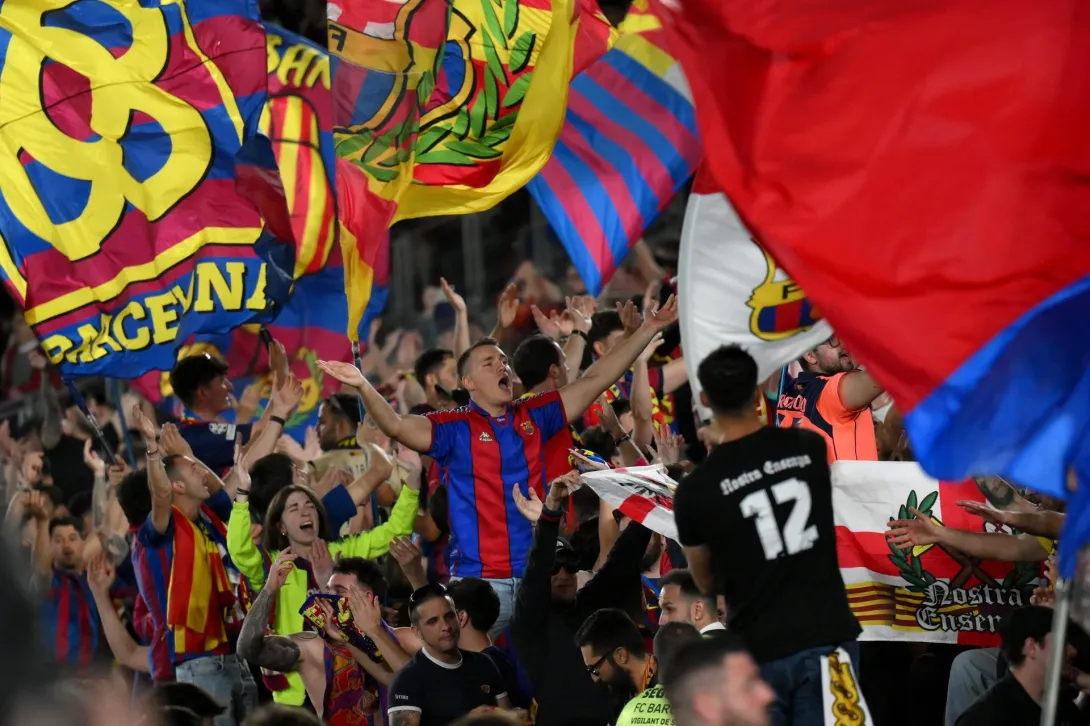
FC Barcelona combined sporting dominance with commercial success after defeating arch-rivals Real Madrid 2-0 at Spotify Camp Nou in a decisive El Clasico that secured another major trophy under manager Hansi Flick. Goals from Marcus Rashford and Ferran Torres sealed the victory in a high-pressure encounter that reinforced Barcelona’s resurgence on the European stage. Beyond the result on the pitch, the club also achieved a significant financial milestone, generating record-breaking revenue from the fixture. The match highlighted the growing economic scale of elite football, where broadcasting rights, sponsorships, hospitality, and global fan engagement increasingly transform marquee rivalries into billion-rupee commercial spectacles.
Barcelona Strengthens Its New Era Under Hansi Flick
FC Barcelona delivered a statement performance against Real Madrid in a high-stakes El Clasico encounter that further cemented the club’s resurgence under manager Hansi Flick.
Entering the match needing only a single point to mathematically secure the title, Barcelona instead produced an emphatic 2-0 victory in front of a packed Spotify Camp Nou crowd. Goals from Marcus Rashford and Ferran Torres ensured the Catalan side lifted what became the fifth trophy of the Flick era.
The result not only reinforced Barcelona’s domestic superiority but also demonstrated the club’s growing tactical stability following a period of institutional uncertainty and financial distress that had overshadowed previous seasons.
For Barcelona supporters, the victory represented more than another title. It symbolized the restoration of competitive authority against their fiercest rivals on one of football’s grandest stages.
El Clasico Evolves Into a Global Commercial Engine
While the football itself captured international attention, the financial implications of the match proved equally significant. According to reports from Spanish media outlet AS, Barcelona generated record revenue from the fixture, underlining the extraordinary commercial power of El Clasico in the modern sports economy.
The match showcased how elite football rivalries have evolved into global entertainment assets capable of generating enormous income through ticket sales, broadcasting agreements, sponsorship activation, premium hospitality, merchandise, and digital engagement.
For Barcelona, the financial success of the occasion arrives at a strategically important moment. The club has spent recent years navigating debt restructuring, wage management concerns, and regulatory financial pressures linked to European football’s sustainability rules.
Record matchday earnings therefore represent more than symbolic success; they contribute directly to broader institutional recovery efforts and long-term operational stability.
Spotify Camp Nou Becomes a Revenue Powerhouse
The transformation of Spotify Camp Nou into a modernized commercial venue has significantly strengthened Barcelona’s earning potential. Large-scale infrastructure enhancements, combined with aggressive global branding partnerships, have enabled the club to maximize monetization opportunities around marquee fixtures.
Premium seating experiences, corporate hospitality offerings, digital fan interaction, and international tourism associated with El Clasico have collectively elevated the event into one of the most lucrative spectacles in global sport.
Industry analysts increasingly view elite football stadiums not simply as sporting arenas, but as multi-purpose entertainment ecosystems capable of generating year-round revenue streams.
Barcelona’s latest financial milestone reinforces that shift. The club’s ability to pair competitive success with commercial optimization reflects a broader trend across European football, where institutional value is now measured as much by economic performance as by trophies won.
Marcus Rashford and Ferran Torres Deliver on the Biggest Stage
The match itself highlighted the growing attacking cohesion within Flick’s squad. Marcus Rashford, whose arrival significantly strengthened Barcelona’s forward line, produced a composed finish that electrified the home crowd and destabilized Madrid’s defensive structure.
Meanwhile, Ferran Torres added a second goal that effectively sealed both the victory and the title celebrations.
The performance illustrated Barcelona’s evolving blend of experienced international stars and tactically disciplined attacking football. Under Flick’s management, the team has developed a more balanced identity built around structured pressing, possession control, and rapid transitional movement.
That tactical clarity has become increasingly visible in high-pressure fixtures, particularly against elite opponents.
Real Madrid Faces Questions After Another Major Defeat
For Real Madrid, the defeat represented another painful setback in a rivalry that continues to shape the competitive narrative of Spanish football.
Despite entering the match with hopes of disrupting Barcelona’s title celebrations, Madrid struggled to impose sustained control over key phases of play. Defensive lapses and limited attacking fluidity exposed vulnerabilities that analysts believe could influence the club’s strategic decisions during the upcoming transfer window.
The defeat also intensified scrutiny surrounding squad depth, tactical adaptability, and long-term succession planning as Madrid attempts to maintain its position among Europe’s dominant football institutions.
Yet even in defeat, the commercial magnetism of Real Madrid remains undeniable. El Clasico continues to thrive precisely because it combines sporting prestige with two of the world’s most powerful football brands.
Football’s Financial Future Lies in Globalized Rivalries
Barcelona’s latest success reflects a broader transformation underway within elite football. Traditional rivalries are increasingly functioning as transnational entertainment products capable of attracting audiences far beyond their domestic markets.
Global streaming platforms, international sponsorships, and digital fan ecosystems have dramatically expanded the commercial reach of fixtures such as El Clasico. Clubs now operate within an environment where audience engagement metrics, brand visibility, and monetization strategies carry strategic importance equal to on-field performance.
For Barcelona, the convergence of sporting triumph and record financial returns offers evidence that the club’s rebuilding process is gaining traction on multiple fronts simultaneously.
The night at Spotify Camp Nou therefore represented more than a title-clinching victory. It served as a demonstration of how modern football’s most successful institutions must now excel both competitively and commercially in order to sustain global relevance.
Comments