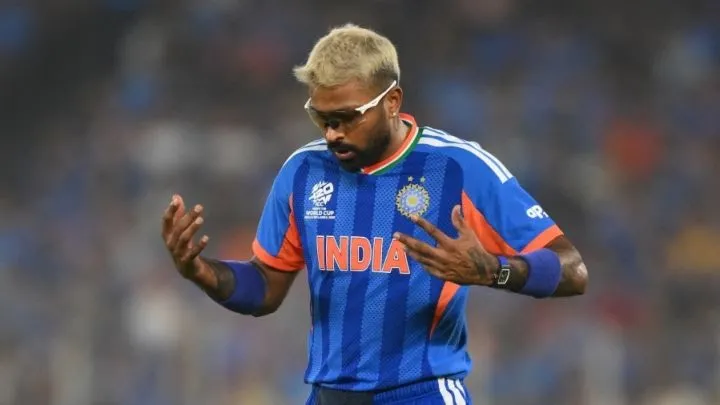
India's preparations for an important stretch of one-day international cricket have suffered a setback, with all-rounder Hardik Pandya likely to miss the upcoming ODI series against Afghanistan due to a leg strain sustained during training. The injury comes at a critical stage as team management seeks to carefully manage the workload of key players ahead of a demanding international calendar. While official confirmation is still awaited, Pandya's absence would represent a significant blow given his importance as a match-winning all-rounder. The development also underscores India's broader strategy of balancing player fitness, squad depth and long-term planning ahead of the 2027 ODI World Cup.
Fresh Injury Concern Disrupts India's Plans
India's ODI preparations appear to have encountered an unexpected hurdle after Hardik Pandya reportedly suffered a leg strain while undergoing training sessions at the Board of Control for Cricket in India's Centre of Excellence in Bengaluru.
The injury is expected to rule the star all-rounder out of the upcoming ODI series against Afghanistan, which is scheduled to begin this weekend in Dharamsala. While cricket authorities have yet to issue an official announcement regarding his exclusion, indications suggest that the management is unwilling to take unnecessary risks with one of the team's most valuable assets.
The timing of the setback is particularly unfortunate, as Pandya was expected to rejoin the national squad following the conclusion of India's recent Test assignment against Afghanistan.
Fitness Monitoring Remains a Priority
Pandya and captain Rohit Sharma were both selected for the ODI squad subject to final medical clearance. Team selectors had adopted a cautious approach, ensuring that both players completed their rehabilitation programs before being integrated into the squad.
Although the exact nature and severity of Pandya's injury were not initially disclosed, cricket officials confirmed that the all-rounder was undergoing rehabilitation and fitness assessment at the Centre of Excellence.
The situation highlights the growing emphasis modern cricket places on sports science, injury prevention and workload management, particularly for players who participate across multiple formats and franchise leagues throughout the year.
India's Dependence on a Unique All-Round Asset
Few cricketers occupy a role as strategically important as Hardik Pandya. His ability to contribute with both bat and ball provides India with valuable balance, flexibility and tactical depth.
Over the past several years, Pandya has evolved into one of the team's most influential white-ball performers. His presence allows the batting order greater freedom while simultaneously providing a genuine pace-bowling option capable of delivering crucial breakthroughs.
Given the scarcity of world-class seam-bowling all-rounders in international cricket, India has increasingly prioritized preserving Pandya's fitness for major tournaments and high-stakes bilateral series.
His likely absence against Afghanistan could therefore force the team management to reassess combinations and responsibilities within the playing XI.
Recent Injury History Influences Decision-Making
The latest setback comes after a period in which Pandya has managed several physical challenges. During the recent Indian Premier League season, he featured in only 10 of Mumbai Indians' 14 league matches after experiencing back spasms.
Although he successfully returned for the team's final fixture of the campaign, concerns regarding long-term fitness management have remained a central consideration for selectors.
Pandya also endured a significant ankle injury during India's 2023 ODI World Cup campaign, an incident that disrupted both his personal rhythm and the team's balance during a crucial tournament.
Those experiences have reinforced the importance of a measured approach to his workload.
Opportunity for Emerging Talent
While Pandya's absence would weaken India's immediate resources, it also creates an opportunity for other players to strengthen their case ahead of future international assignments.
Nitish Kumar Reddy, already included in the squad, could benefit from additional responsibility should the all-rounder's unavailability be confirmed. Team management may also view the series as an opportunity to evaluate alternative combinations and deepen the talent pool before more demanding contests later in the season.
India's growing emphasis on squad depth reflects the realities of modern cricket, where injuries and scheduling pressures often require teams to rotate personnel without compromising competitiveness.
Long-Term Vision Focused on 2027 World Cup
The decision to prioritize Pandya's recovery appears closely linked to India's long-term objectives. The all-rounder remains a cornerstone of the team's strategy for the 2027 ODI World Cup, scheduled to be hosted by South Africa, Zimbabwe and Namibia.
Selectors have already demonstrated a willingness to manage his workload carefully, even opting to leave him out of recent T20I plans despite his contributions to India's success in major global tournaments.
With ODI series against Afghanistan and England forming part of a broader preparation cycle, preserving Pandya's fitness may ultimately prove more valuable than risking aggravation of an injury in the short term.
Strategic Management Over Short-Term Gains
The evolving situation illustrates a growing trend in international cricket: prioritizing player longevity over immediate availability. Elite athletes are increasingly managed through specialized recovery programs designed to maximize performance during marquee tournaments.
For India, ensuring that Hardik Pandya remains physically capable of contributing across major competitions may outweigh the benefits of rushing him back into action.
While his potential absence against Afghanistan is undoubtedly a setback, it reflects a broader commitment to sustainable player management and long-term competitive success.
As the team awaits final medical assessments, attention will remain focused on Pandya's recovery timeline and the impact his absence could have on India's preparations for an increasingly demanding international season.
Comments