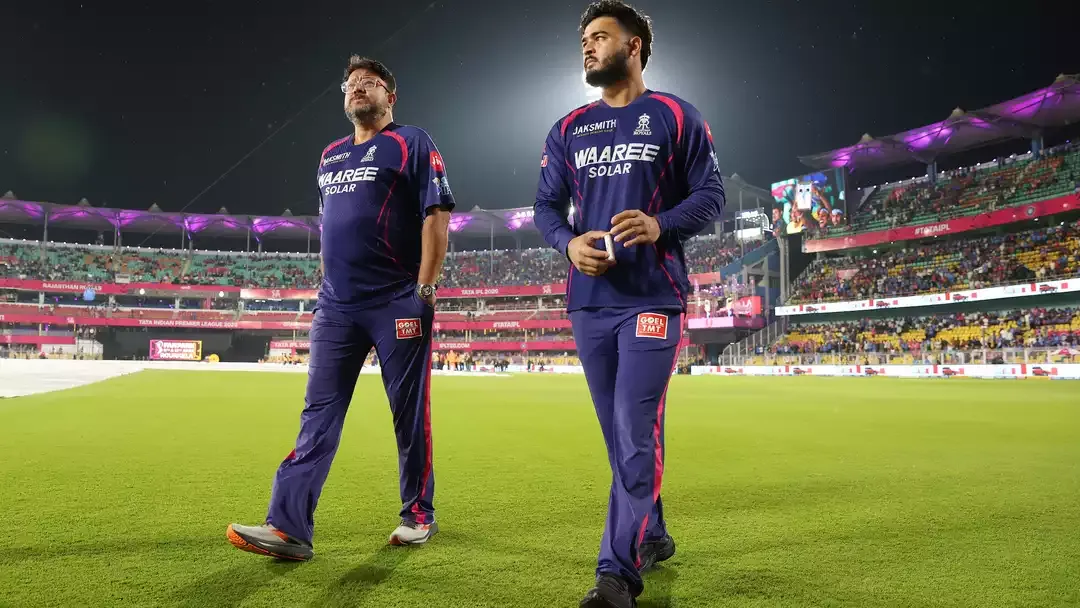
Riyan Parag, captain of Rajasthan Royals, has been fined 25 percent of his match fee following a disciplinary breach during an IPL 2026 fixture. The Board of Control for Cricket in India (BCCI) deemed his conduct—captured on camera inside the dressing room—as detrimental to the sport’s image. Charged under Level 1 of the Player Code of Conduct, the incident underscores the league’s strict governance framework. Beyond the immediate penalty, the episode highlights broader issues of professionalism, brand integrity, and behavioral accountability within one of cricket’s most commercially valuable ecosystems.
Incident Overview: Breach of Professional Standards
The controversy centers on an incident in which Riyan Parag was seen engaging in inappropriate behavior within the team dressing room during a live IPL match environment. The act, widely circulated across broadcast and digital platforms, triggered swift regulatory scrutiny.
Cricket’s governing authorities maintain strict expectations regarding player conduct, particularly in high-visibility settings. The dressing room, though operationally private, remains part of the broader professional ecosystem, where standards of behavior are expected to align with the sport’s public image.
Regulatory Action: BCCI’s Disciplinary Framework
The Board of Control for Cricket in India responded by charging Parag with a Level 1 offence under Article 2.1 of the Player Code of Conduct. This category addresses general breaches that may not fall under more severe classifications but still undermine professional integrity.
The imposed sanction—a fine amounting to 25 percent of his match fee—reflects a calibrated disciplinary response. Level 1 offences typically involve financial penalties rather than suspensions, signaling corrective intent rather than punitive escalation.
Governance and Accountability in High-Value Leagues
The IPL operates within a sophisticated commercial framework, where player behavior directly influences brand perception, sponsorship dynamics, and stakeholder confidence.
Incidents of this nature, even when categorized as minor breaches, carry disproportionate visibility due to the league’s global audience. Consequently, governing bodies enforce strict compliance standards to safeguard the tournament’s reputation.
From a governance perspective, the swift action reinforces the BCCI’s commitment to maintaining professional decorum, aligning individual conduct with institutional expectations.
Leadership Optics: Impact on Rajasthan Royals
As captain of Rajasthan Royals, Parag’s actions assume additional significance. Leadership roles inherently amplify scrutiny, with behavioral standards extending beyond personal accountability to symbolic representation of the franchise.
While the penalty itself may be limited in financial magnitude, the reputational implications are more complex. Leadership credibility, particularly in high-performance environments, is closely tied to consistency in both performance and conduct.
Commercial Implications: Brand Equity at Stake
In a league where franchise valuations run into thousands of crores (Rs.), even isolated incidents can influence brand narratives. Sponsors and commercial partners prioritize alignment with professionalism and positive public perception.
Behavioral lapses, therefore, carry potential downstream effects—ranging from reputational dilution to shifts in stakeholder sentiment. While this incident is unlikely to materially impact long-term valuations, it reinforces the importance of disciplined conduct in sustaining commercial momentum.
Broader Perspective: Discipline as Strategic Capital
Professional sport increasingly mirrors corporate ecosystems, where governance, compliance, and behavioral standards function as critical assets. Players are not merely athletes but brand ambassadors operating within a high-stakes commercial environment.
Maintaining discipline is thus not only an ethical obligation but a strategic necessity. The IPL’s regulatory mechanisms ensure that individual actions do not compromise the collective value of the league.
Conclusion: A Measured Response with Lasting Lessons
The penalty imposed on Riyan Parag reflects a balanced approach—addressing the breach while avoiding disproportionate escalation. However, the incident serves as a reminder of the heightened expectations placed on players, particularly those in leadership roles.
As the IPL continues to evolve as a global sporting enterprise, the intersection of performance, professionalism, and brand integrity will remain central. In this context, discipline is not merely a rule—it is a cornerstone of sustained success.
Comments