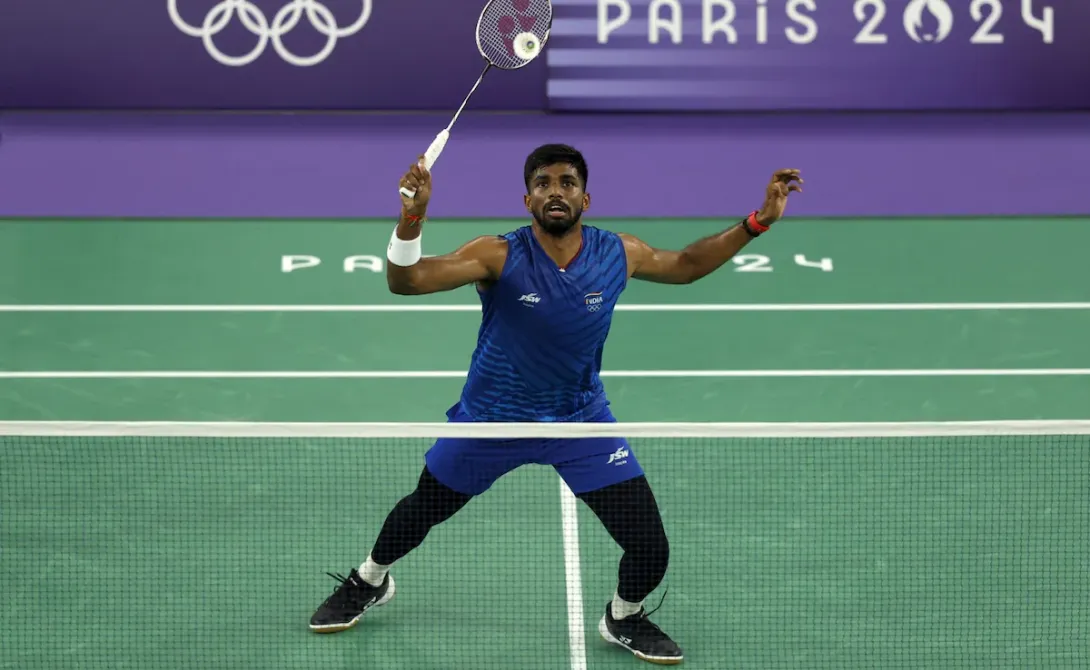
Indian badminton star Satwiksairaj Rankireddy has reignited debate around the recognition and visibility of non-cricket sports after clarifying his recent remarks regarding India’s bronze-medal finish at the Thomas Cup 2026 in Denmark. The doubles specialist emphasized that his comments were not driven by personal ambition or fame, but by a broader concern over the lack of national celebration surrounding major achievements in Olympic sports. His statement has once again highlighted the structural imbalance in India’s sporting culture, where commercial attention, sponsorship investment, and public recognition remain heavily concentrated around cricket despite growing international success across multiple disciplines.
Satwiksairaj Clarifies Remarks Following Thomas Cup Reaction
Indian badminton player Satwiksairaj Rankireddy has issued a public clarification following widespread discussion surrounding his remarks about the limited recognition received by India’s badminton team after their bronze-medal performance at the Thomas Cup 2026.
The Indian doubles specialist had earlier expressed disappointment over what he perceived as muted public acknowledgment of the national team’s achievement in Horsens, Denmark. His comments quickly triggered broader conversations across the sporting ecosystem regarding visibility, media attention, and institutional support for non-cricket disciplines in India.
In his latest statement shared on social media, Satwiksairaj stressed that his observations were never intended to seek individual attention or personal fame. Instead, he said his comments reflected a deeper concern regarding the need to create a stronger culture of celebrating Indian success across all sports.
Thomas Cup Bronze Marked Another Milestone for Indian Badminton
India’s podium finish at the Thomas Cup 2026 represented another significant chapter in the country’s growing badminton success story on the international stage.
The Indian team delivered several strong performances throughout the tournament, reinforcing the nation’s emergence as a serious force in global badminton. Satwiksairaj, widely regarded as one of the world’s leading doubles players, played a critical role in India’s campaign through his consistency, tactical intelligence, and partnership coordination.
The achievement carried added significance given the increasingly competitive nature of international badminton, where Asian powerhouses continue to dominate the sport at elite levels.
For Indian badminton, sustained performances at global tournaments are increasingly becoming indicators of long-term structural progress rather than isolated breakthroughs.
Debate Highlights Recognition Gap in Indian Sports
Satwiksairaj’s comments have once again brought attention to a longstanding issue within Indian sport — the disproportionate concentration of visibility and commercial attention around cricket.
While India has produced growing success in disciplines such as badminton, athletics, wrestling, boxing, hockey, and chess, many athletes and observers continue to argue that achievements outside cricket do not receive comparable public celebration or media coverage.
This imbalance also extends into sponsorship ecosystems and financial investment structures. Cricket remains overwhelmingly dominant in terms of broadcasting revenue, endorsement opportunities, and commercial infrastructure, leaving several Olympic sports fighting for visibility despite international achievements.
As India’s multi-sport ambitions continue to expand, the debate surrounding equitable recognition has become increasingly relevant.
Rise of Olympic Sports Is Reshaping India’s Sporting Identity
The frustration expressed by Satwiksairaj Rankireddy reflects broader changes occurring within India’s sporting landscape.
Over the past decade, India has steadily improved its competitiveness across a range of Olympic and global sports. Athletes in badminton, javelin, boxing, wrestling, and shooting have consistently delivered high-profile international performances, gradually shifting perceptions about India’s sporting capabilities.
This transformation has encouraged increased investment in grassroots development, sports science, infrastructure, and athlete preparation systems. Private sponsors and corporate entities have also begun diversifying their investments beyond cricket, recognizing the commercial and emotional appeal of Olympic success.
However, despite this progress, the gap between performance and public recognition remains a recurring concern among athletes competing outside mainstream cricket ecosystems.
Social Media Amplifies Athlete Voices
One notable aspect of the recent discussion has been the growing role of social media in enabling athletes to communicate directly with supporters and stakeholders.
Unlike previous generations, modern athletes are no longer dependent solely on traditional media platforms to shape public narratives. Social media now provides players with an opportunity to address misunderstandings, express frustrations, and advocate for institutional change in real time.
Satwiksairaj’s clarification demonstrated this evolving dynamic. Rather than focusing on individual criticism, his message attempted to redirect attention toward a broader conversation about national sporting culture and collective recognition.
This direct communication model is increasingly influencing how athletes engage with fans, sponsors, and sporting authorities in India’s rapidly modernizing sports industry.
Commercial Recognition Remains Uneven Across Sports
The issue raised by Satwiksairaj also carries significant financial implications for India’s sporting ecosystem.
Recognition and visibility directly influence sponsorship opportunities, athlete earnings, federation funding, and grassroots participation levels. Sports that receive greater media exposure typically attract stronger commercial backing, creating long-term advantages in talent development and infrastructure investment.
Badminton has emerged as one of India’s most commercially successful non-cricket sports in recent years, aided by international achievements and the rise of professional leagues. However, even within badminton, players often argue that global success does not always translate into sustained mainstream recognition.
For India to establish itself as a genuine multi-sport nation, industry experts increasingly believe that media attention and commercial support must evolve alongside athletic performance.
India’s Sporting Culture at a Crossroads
The conversation sparked by Satwiksairaj Rankireddy arrives at a critical moment for Indian sport.
With major events such as the Commonwealth Games 2026 and Asian Games 2026 approaching, India is entering a phase where international success across multiple disciplines is becoming increasingly achievable.
This evolution presents both opportunity and responsibility. Sustained growth in non-cricket sports will depend not only on athlete performance but also on the willingness of institutions, sponsors, media organizations, and fans to embrace a broader sporting culture.
Satwiksairaj’s remarks, and his subsequent clarification, have therefore resonated beyond badminton itself. They reflect a larger conversation about how India chooses to value sporting excellence in an era where the country’s ambitions increasingly extend far beyond a single game.
As Indian athletes continue to compete successfully on global stages, the demand for wider recognition and equal celebration across sports is likely to grow even stronger.
Comments