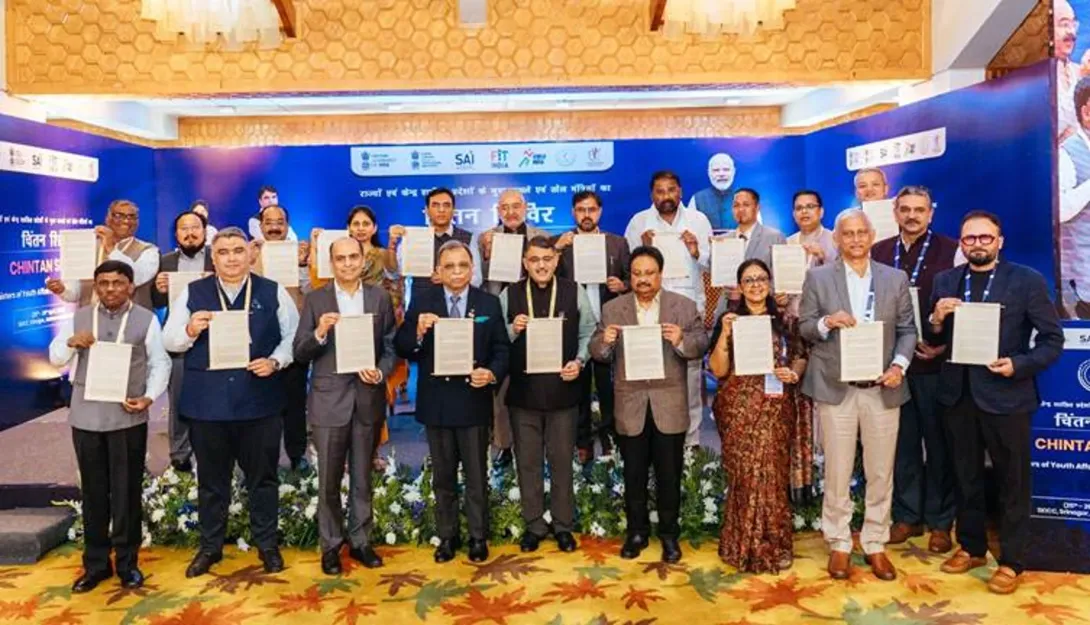
Mansukh Mandaviya unveiled a landmark national framework for sports development with the launch of the Srinagar Khel Sankalp in Srinagar. The initiative formalizes a joint commitment among 28 states and eight Union Territories to align efforts in athlete development, infrastructure expansion, and governance reform. This coordinated approach represents a significant policy shift toward a unified sports ecosystem in India. By integrating diverse administrative units under a shared vision, the framework aims to enhance performance outcomes while unlocking economic and institutional value within the country’s rapidly evolving sports sector.
Policy Breakthrough: A Unified National Vision
The launch of the Srinagar Khel Sankalp marks a defining moment in India’s sports policy landscape. Spearheaded by Mansukh Mandaviya, the initiative establishes a coordinated national framework designed to streamline development efforts across the country.
At its core, the agreement represents a rare instance of consensus among all states and Union Territories, reflecting a shared commitment to elevate India’s sporting standards through collaboration rather than fragmented execution.
Federal Alignment: Bridging Administrative Diversity
India’s federal structure presents inherent complexities, with states and Union Territories operating at varying levels of administrative capacity and autonomy. The Srinagar Khel Sankalp addresses these disparities by creating a unified roadmap for sports development.
By aligning policy objectives across jurisdictions, the initiative aims to reduce inefficiencies and ensure consistent implementation. This harmonization is critical for building a scalable and sustainable sports ecosystem.
Strategic Focus Areas: Athletes, Infrastructure, Governance
The framework emphasizes three key pillars—athlete development, infrastructure expansion, and governance reform.
Investments in athlete development are expected to focus on training systems, talent identification, and performance optimization. Infrastructure initiatives will likely prioritize modern facilities and regional accessibility, while governance reforms aim to enhance transparency, accountability, and operational efficiency.
Together, these elements form an integrated strategy designed to improve both grassroots participation and elite performance.
Economic Implications: Unlocking Sectoral Growth
India’s sports sector is increasingly viewed through an economic lens, with significant potential for revenue generation, employment creation, and investment. A unified national strategy can accelerate this growth by creating standardized frameworks that attract private and institutional capital.
As infrastructure improves and athlete performance rises, the sector’s financial footprint—often measured in thousands of crores (Rs.)—is expected to expand. This positions sports as a viable contributor to broader economic development.
Governance Reform: Enhancing Accountability and Efficiency
One of the most critical aspects of the Srinagar Khel Sankalp is its focus on governance. Historically, inconsistencies in administration have hindered the effectiveness of sports programs.
By introducing coordinated governance mechanisms, the initiative seeks to improve decision-making processes, resource allocation, and performance monitoring. This shift toward accountability aligns with global best practices in sports management.
Long-Term Impact: Building a Competitive Sporting Nation
The success of the Srinagar Khel Sankalp will ultimately depend on execution. However, its design reflects a forward-looking approach that integrates policy, infrastructure, and performance metrics.
If implemented effectively, the framework could significantly enhance India’s competitiveness on the global stage, while also strengthening domestic sports ecosystems.
Conclusion: A Strategic Inflection Point
The unveiling of the Srinagar Khel Sankalp represents a strategic inflection point in India’s sports development journey. By fostering collaboration across all states and Union Territories, the initiative lays the groundwork for a more cohesive and efficient system.
Comments