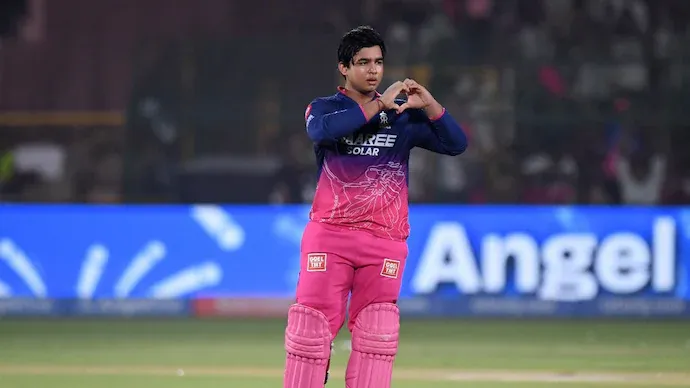
Fifteen-year-old Vaibhav Sooryavanshi has emerged as one of the most compelling stories of the Indian Premier League 2026 season, redefining expectations with a record-breaking performance. Representing Rajasthan Royals, the young opener became the fastest player to reach 400 runs in a single season, achieving the milestone in just 167 deliveries during a match against Punjab Kings. Surpassing established power-hitters, his ascent signals not only a generational shift in cricketing talent but also the rising commercial and strategic value of youth-driven performance in franchise-based leagues.
A Record That Redefines Expectations
Vaibhav Sooryavanshi’s latest milestone places him in elite company—while simultaneously setting him apart. Achieving 400 runs in just 167 balls is a statistic that underscores both consistency and explosive scoring ability.
In surpassing players such as Andre Russell and Abhishek Sharma, Sooryavanshi has effectively rewritten performance benchmarks within the league. For a player of his age, the achievement is unprecedented, challenging conventional timelines for player development in professional cricket.
Youth as a Strategic Asset in Franchise Cricket
The rise of a 15-year-old as a dominant force highlights a broader shift within the IPL’s operational dynamics. Franchise teams are increasingly investing in young talent, recognizing the dual value of long-term performance potential and immediate marketability.
From a financial perspective, early identification of high-impact players can yield substantial returns. Lower initial acquisition costs combined with high on-field output create a favorable cost-to-performance ratio, enhancing team valuation and competitive advantage.
The Economics of Performance and Marketability
In a league driven by broadcasting revenues, sponsorship deals, and fan engagement, standout performances directly influence commercial outcomes. Sooryavanshi’s aggressive batting style and record-breaking feats contribute to higher viewership, increased digital engagement, and stronger brand recall.
For stakeholders, including advertisers and franchise owners, such players represent premium assets. Their ability to capture audience attention translates into tangible financial gains, reinforcing the symbiotic relationship between sporting excellence and economic value.
Competitive Benchmarking in a Data-Driven Era
Modern cricket operates within a framework heavily influenced by analytics and performance metrics. Records such as fastest to 400 runs are not merely statistical milestones; they serve as benchmarks for evaluating efficiency and impact.
Sooryavanshi’s achievement, measured in balls faced rather than innings played, aligns with the IPL’s emphasis on strike rate and scoring velocity. This data-centric approach reflects the league’s evolution into a high-performance, results-oriented ecosystem.
Conclusion: A New Blueprint for Cricketing Success
Vaibhav Sooryavanshi’s breakthrough season is more than a sporting anomaly—it is a signal of changing paradigms within professional cricket. His success illustrates how youth, when combined with opportunity and preparation, can disrupt established hierarchies.
For the IPL, his rise reinforces its reputation as a platform where talent meets opportunity and transforms into commercial success. As the season progresses, Sooryavanshi’s journey will not only be watched for its sporting significance but also for its broader implications on the business and future of cricket.
Comments